



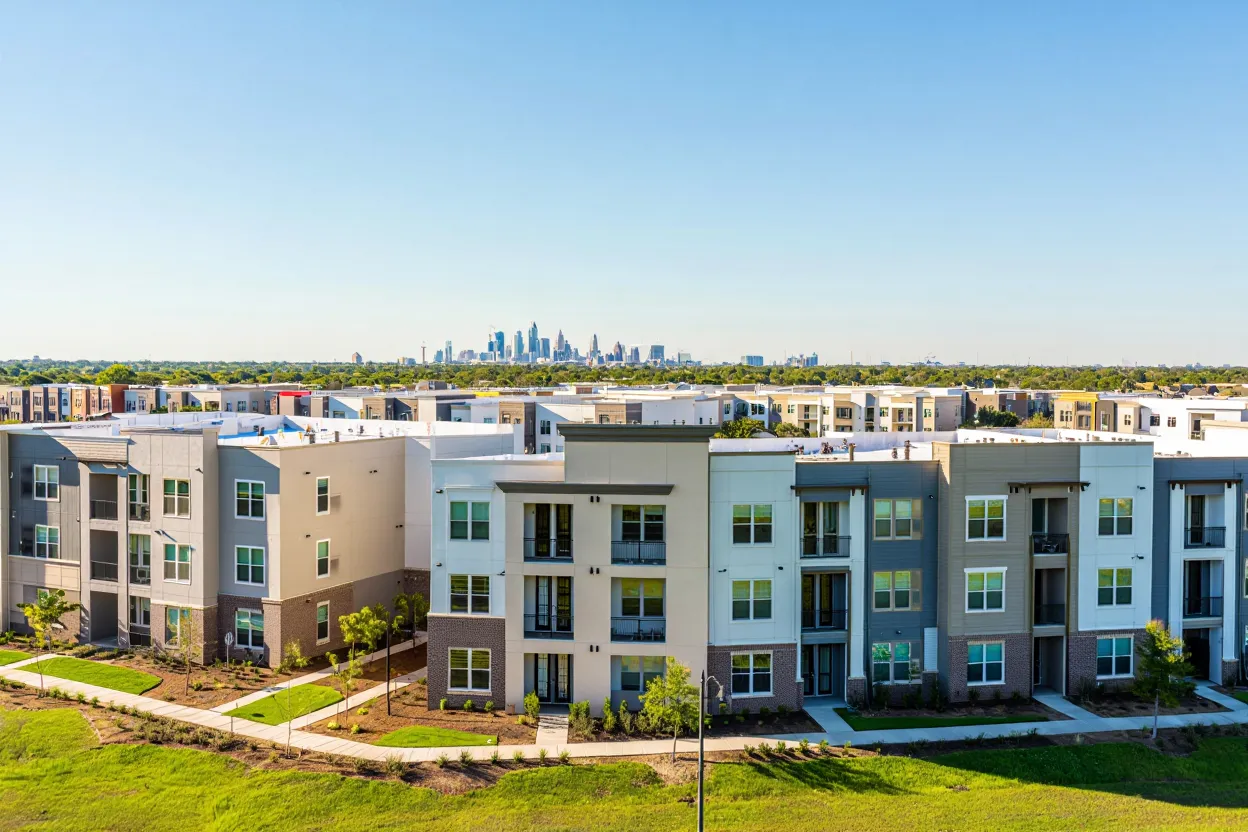
- Median asking rent in Dallas-Fort Worth fell 2.7% year-over-year to $1,461 in June 2026.
- High local multifamily permitting continues, supporting cost relief and tenant choice.
- Renting remains notably more affordable than buying in the Dallas-Fort Worth region.
Construction Push Creates Relief Valve
Dallas-Fort Worth’s rental market continues to cool after years of rapid rent growth. Realtor.com’s June 2026 Rent Report shows a median asking rent of $1,461. That marks a 2.7% annual decline. The region continues a broader trend of price moderation across Texas’ largest metro.
Strong construction activity drives much of the shift. Developers permitted 2.9 new multifamily units per 1,000 residents during 2025. That steady pipeline expands housing supply and gives renters more negotiating power. Dallas-Fort Worth also leads major Sun Belt metros in permitting, making it a standout market for affordability.
Get Smarter About What Matters in Texas
Subscribe to our free newsletter covering the biggest commercial real estate stories across Texas — delivered in just 5 minutes.
The Details
The June 2026 median asking rent of $1,461 reflects sustained rent moderation. A strong development pipeline continues to expand apartment supply. Developers concentrated much of that activity in large multifamily projects. As a result, renters gained more choices before the busy summer leasing season.
The median home price reached $439,990, remaining nearly flat year over year. Meanwhile, list prices per SF fell 2%. Active listings dropped 4.4%, while new listings declined 6.5% from June 2025. Even so, sellers cut prices on 26.8% of active listings. Fewer listings required price reductions than a year earlier.
Rent Moderation Outpaces Other Sun Belt Markets
Dallas-Fort Worth’s rent decline exceeds the broader national slowdown. Across the 50 largest US metros, median asking rent fell 1.5% year over year. The national median reached $1,692. That figure sits $25 below last year and $72 below the August 2022 peak.
Every major apartment type posted annual rent declines. Studio rents fell 2.2%. One-bedroom and two-bedroom rents each declined 1.4%. Builders issued permits for about 302,730 multifamily units during 2025. That total rose 1.9% from 2024 but stayed well below the 2022 peak. Dallas-Fort Worth’s stronger permitting pace accelerated local rent relief.
Why It Matters
Dallas-Fort Worth’s falling rents suggest supply is finally catching up with demand. Realtor.com reports renters now pay about $231 less each month than the national median. That gap strengthens the region’s affordability advantage. The 2.7% annual decline also stands out because rents usually rise during summer.
Landlords now compete harder for tenants, creating more negotiating leverage. Renting also remains far cheaper than buying. Median asking rent stands at $1,461, while the median home price reaches $439,990. Buyers face fewer listings despite slightly lower prices per SF. Sellers still reduced prices on more than one-quarter of active listings.
Nationally, renting remains cheaper than owning across most major markets. Dallas-Fort Worth offers an even stronger advantage. Home prices changed little, while many sellers still accepted price cuts. The market’s uneven performance also mirrors broader commercial real estate conditions, where recovery continues at different speeds across property sectors. Meanwhile, easing rents will pressure new developments as operating costs remain elevated.
Developers may need to adjust future underwriting as rent growth expectations normalize. Construction costs also remain unpredictable. Today’s leasing market differs sharply from mid-2022, when rents and permitting reached record levels. Continued construction should influence underwriting, tenant retention, and asset values for years.
What’s Next
Apartment supply should remain strong across Dallas-Fort Worth during the coming quarters. If permitting stays elevated, rent moderation could continue into 2027. Slower economic growth or weaker migration would reinforce that trend. A sharp slowdown in construction could eventually stabilize rents.
Owners and operators will closely monitor pricing, occupancy, and lease-up performance. Many projects launched during 2025 and 2026 still need to absorb into the market. Dallas-Fort Worth now offers a clear example of how sustained supply growth can lower rents, even in a fast-growing economy.