



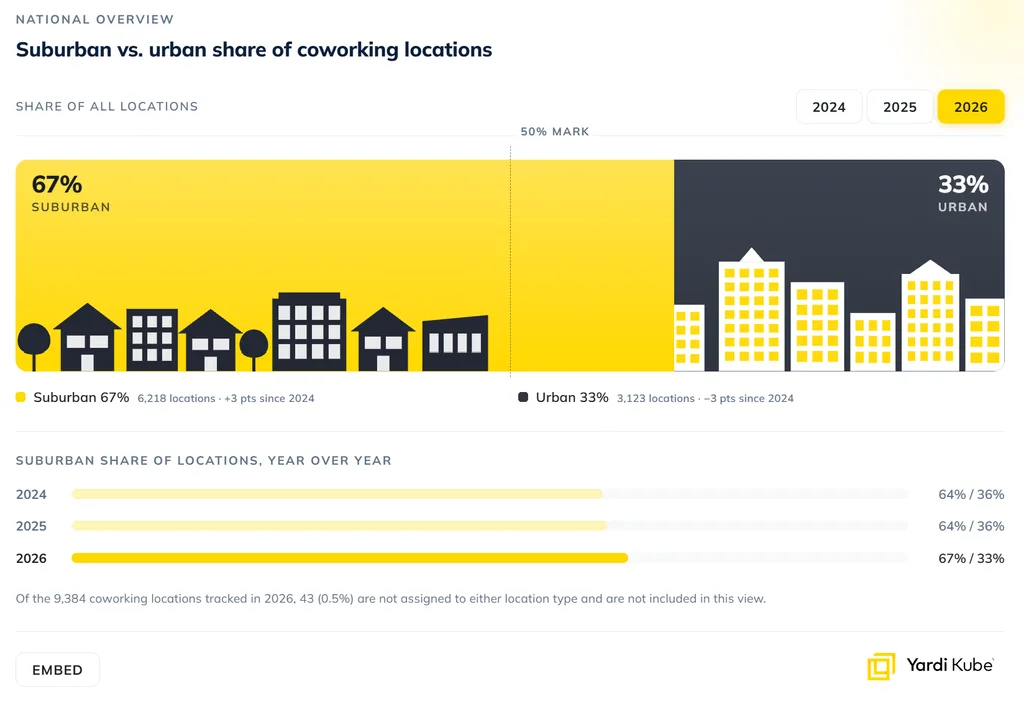
- Suburban areas account for 67% of US coworking locations, with 6,247 spaces versus 3,137 in urban markets.
- Suburban coworking locations grew 39% from 2024 to 2026, compared with 22% growth for urban locations.
- Flexible space is expanding as companies decentralize office footprints and conventional office construction falls sharply.
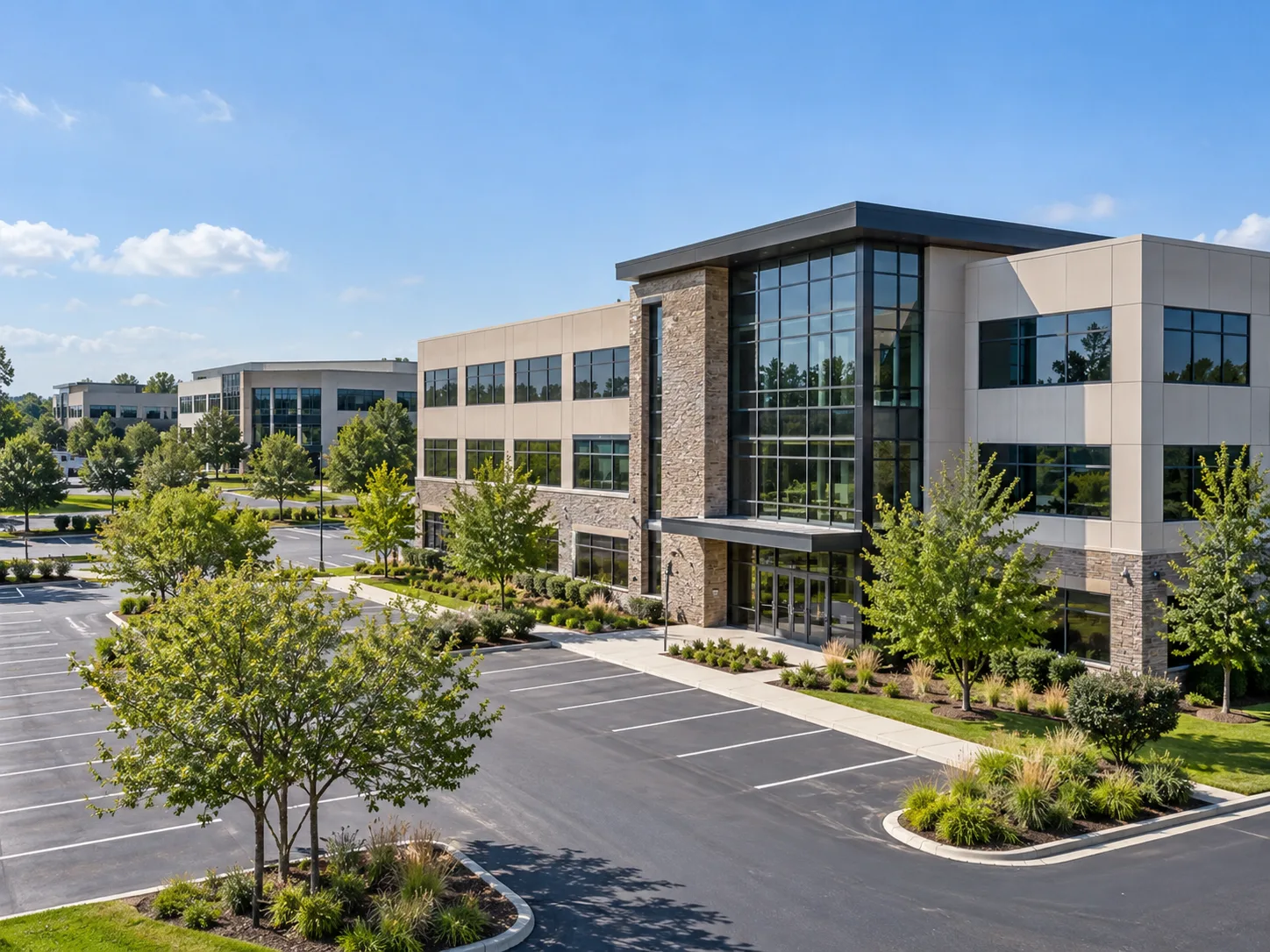
Suburban markets now hold two-thirds of US coworking locations as flexible office growth moves farther from traditional downtown cores. Yardi Kube’s analysis of Yardi Research data found 6,247 suburban locations in July 2026, compared with 3,137 urban spaces. The national coworking inventory totaled 9,384 locations and more than 166M SF.
Get Smarter about what matters in CRE
Stay ahead of trends in commercial real estate with CRE Daily – the free newsletter delivering everything you need to start your day in just 5-minutes
Suburban Coworking Grows Nearly Twice as Fast
Suburban coworking locations increased 39% between July 2024 and July 2026, adding 1,763 locations. Urban inventory grew 22%, or about 563 locations, during the same period. As a result, the suburban share increased from 64% to 67%.
The formats also differ in size. Suburban spaces average 15,185 SF, about one-third smaller than the 22,827 SF average for urban locations. The pattern creates a distributed suburban model with more locations and smaller footprints, while downtown markets retain fewer but larger spaces.
The Details
Total US coworking inventory grew from 7,058 locations and about 127.7M SF in 2024 to 9,384 locations and more than 166.3M SF in 2026. Yardi Kube analyzed more than 50 commercial real estate markets using data extracted in August 2026.
Richmond-Tidewater posted the strongest suburban growth, rising 96% from 28 locations in 2024 to 55 in 2026. Tampa-St. Petersburg-Clearwater followed with 87% growth, from 47 to 88 suburban locations. Philadelphia’s suburban count increased 84%, while Jacksonville grew 68%.
Central Valley led overall two-year growth at 69%, followed by Richmond-Tidewater at 61% and Jacksonville at 60%. Tampa-St. Petersburg-Clearwater grew 59%, while Philadelphia increased 58% across urban and suburban locations combined.
Urban Growth Still Leads in Several Markets
The national shift is not uniform. Central Valley’s urban count rose 200%, from four locations to 12. New Jersey increased 150%, from 20 to 50 urban locations, while Salt Lake City, Charlotte, and Austin also posted stronger growth in their urban cores.
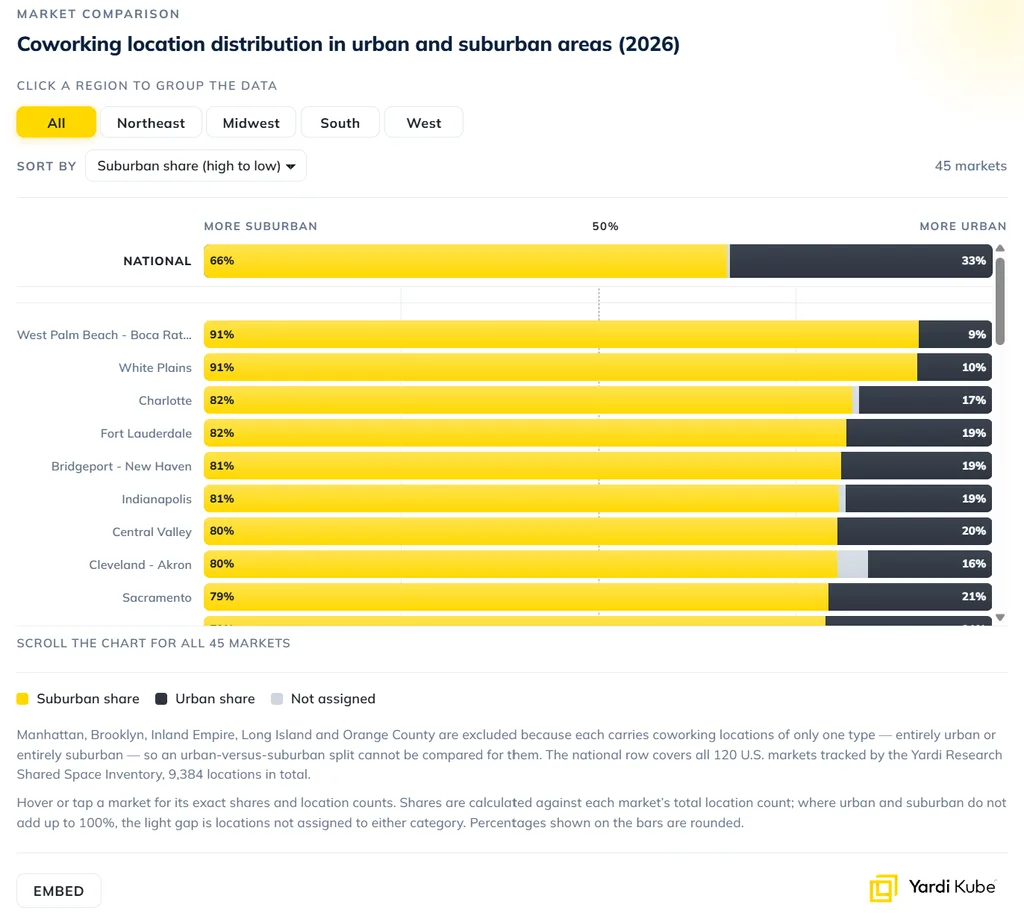
Suburban spaces are usually smaller, but several markets reverse that pattern. Fort Lauderdale’s suburban locations average about 19,800 SF, compared with roughly 15,500 SF in the urban area. West Palm Beach-Boca Raton also has larger suburban locations and 91% of its market outside the core.
Five markets had only one location type in 2026. Manhattan and Brooklyn were entirely urban, while Orange County, Long Island, and Inland Empire were entirely suburban. Yardi excluded those markets from comparisons that require both categories.
Corporate Demand Is Supporting Flexible Space
Yardi Kube points to corporate real estate strategies as another source of demand. Bisnow reported that Allstate cut annual office spending from $382M in 2020 to $138M in 2024 and reduced its footprint from 12M SF to 4M SF. It then gave one-quarter of 54,000 corporate employees access to coworking booked by the day.
Industry surveys cited in the source estimate about 30% of coworking memberships are paid for or subsidized by employers. That gives companies a way to provide workspace near employees without adding a dedicated long-term lease.
The source also cited Pfizer, Amazon, JPMorgan Chase, and Lyft among employers using flexible space for satellite offices. The common goal is to add professional workspace without committing to a full traditional office footprint.
Why It Matters
Flexible office growth is arriving as conventional office development contracts. Yardi Matrix projects annual office deliveries at about 10M SF in 2026, down from roughly 75M SF in 2018. NAIOP also reported conversions and demolitions exceeded new deliveries by 3M SF in the first quarter.
For owners, coworking inventory growth offers another use for space that may be difficult to lease conventionally. The suburban data suggests demand is increasingly distributed around where workers live rather than concentrated only in CBD towers.
What’s Next
Yardi Kube expects suburban momentum to remain part of a broader decentralization of work. JLL describes flexible space as entering a more strategic adoption phase in 2026 and beyond. The key question is how operators balance rapid suburban expansion with urban markets that still support larger spaces and, in some metros, faster growth.