



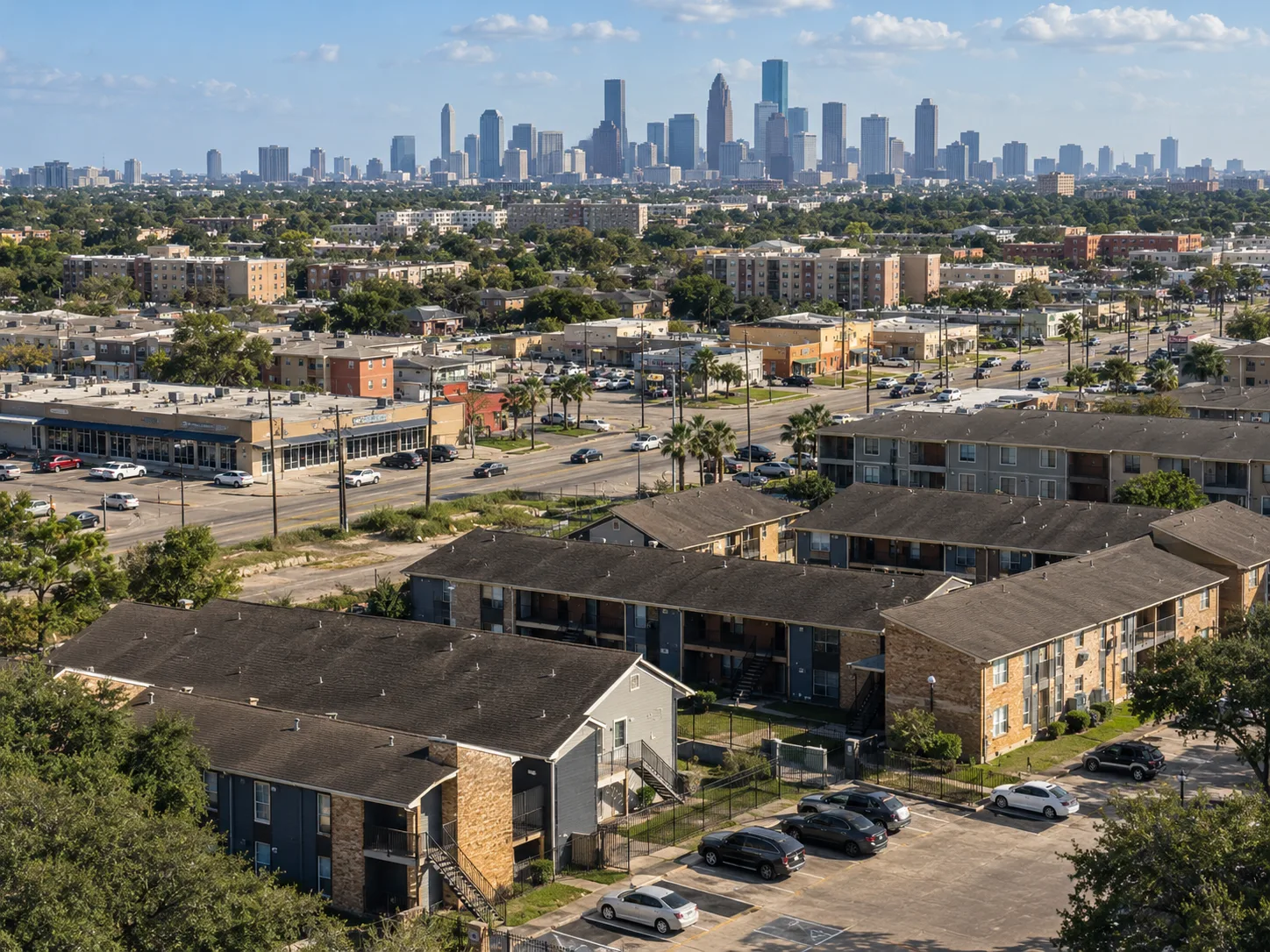
- Harris County grew by just under 1% through July 2025 as international arrivals fell more than 40% and net migration dropped almost 80%.
- Houston-area residential permits fell 14% in the first seven months of 2026, while developers reported labor shortages and slower housing demand.
- Economists and local leaders disagree on how severe the slowdown will become, but fewer newcomers would weaken a growth model built on population expansion.
Bloomberg Businessweek reports that Houston’s immigration slowdown is colliding with its population-driven growth model. The report links the change to the Trump administration’s immigration crackdown and sharply fewer arrivals. Harris County’s population increased by just under 1% in the year ended July 1, 2025. Immigration from outside the US fell more than 40%. Net migration into the county dropped almost 80%. Houston’s metro area has added roughly 3M people this century, and about one-quarter of its nearly 8M residents are foreign-born.
Get Smarter about what matters in CRE
Stay ahead of trends in commercial real estate with CRE Daily – the free newsletter delivering everything you need to start your day in just 5-minutes
A Population Engine Loses Momentum
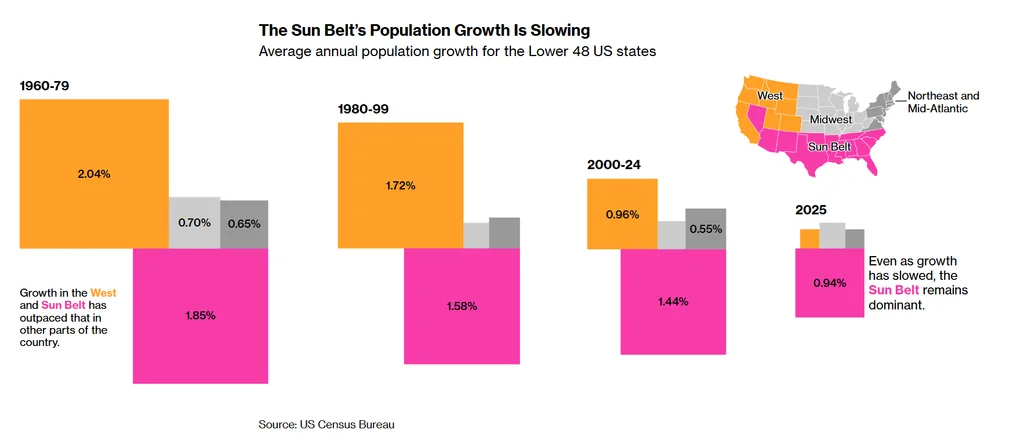
The change extends beyond Houston. Bloomberg’s analysis of Census Bureau data put collective Sun Belt population growth at 0.9% in 2025. It was the region’s biggest slowdown since the 1960s outside recessions and the pandemic. Twelve of 14 Southern and Western Sun Belt states grew by less than 1%, and 13 were below their historical trends.
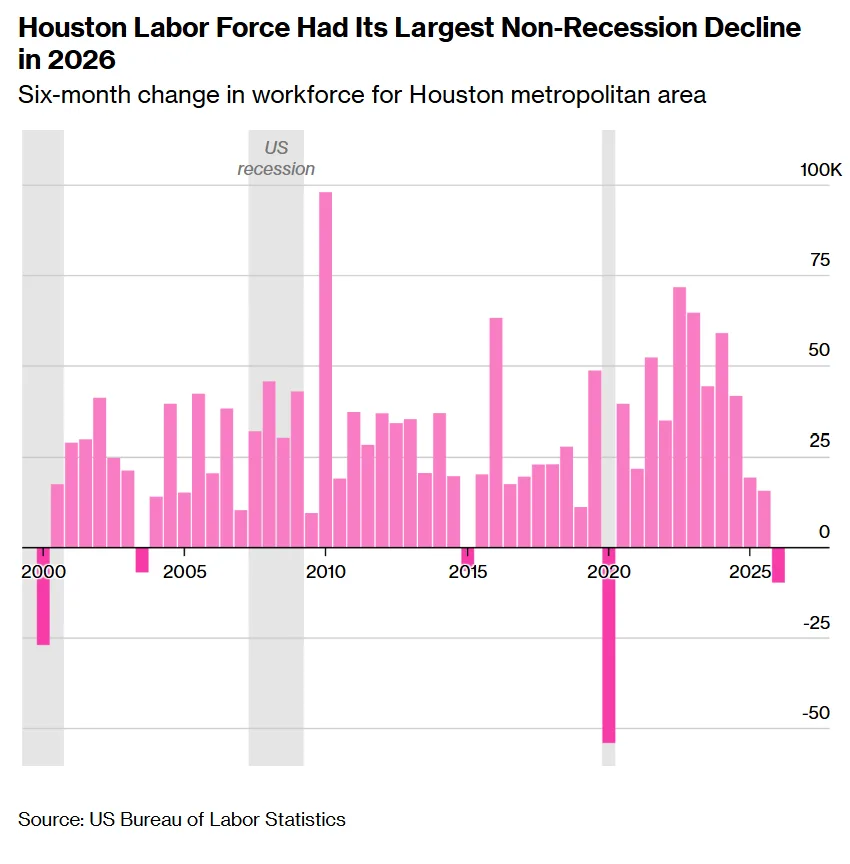
More recent labor data point in the same direction. Bureau of Labor Statistics figures cited in the report showed a sharp first-half workforce contraction. It was Houston’s largest this century outside the pandemic. Preliminary Census survey data also indicated a population decline in the first half of 2026, partly from fewer noncitizens. Demographers and economists cited by Bloomberg said the metro could face its first population contraction since the 1980s oil bust.
The Details
Real estate indicators are beginning to reflect the slowdown. Houston-area residential building permit approvals fell 14% during the first seven months of 2026. Construction contacts also reported difficulty finding roofers and other laborers, with some workers avoiding job sites because of immigration-enforcement concerns.
Dallas Fed economists said developers are recalibrating plans and, in some cases, abandoning projects as population growth cools. The Fed’s Beige Book also noted slower home sales in areas that had attracted immigrants. Redfin data showed pending home sales in Houston falling at the second-fastest rate among major US metros. High interest rates remain an immediate property-market challenge, but slower population growth could meet a supply of homes built for stronger expansion.
That tension is relevant to Texas housing growth and development because demand assumptions often depend on continued household formation.
Labor Pressures Spread Across Property Types
The workforce effect reaches beyond residential construction. Seven Acres Jewish Senior Care Services said two-thirds of its 195 employees are foreign-born. Management is concerned about replacing workers as many approach retirement and elder-care demand rises. Local schools and childcare providers are also seeing fewer new immigrant families. One Gulfton charter school dropped plans for a third campus after enrollment weakened.
The Trump administration argues that enforcement can be paired with apprenticeships and temporary-worker programs to expand opportunities for native-born workers. Economists quoted by Bloomberg take a different view. Dallas Fed labor economist Pia Orrenius said slower immigration reduces the labor pool that supported faster Texas job growth. Houston business leaders also presented different views on whether births, existing population, and investment can offset fewer newcomers.
Suburban Growth Could Cool Next
The slowdown may eventually reach the suburbs and exurbs that benefited from Houston’s expansion. Fulshear was the nation’s second-fastest-growing city last year, with population near 65,000 compared with 17,000 in 2020. Mayor Don McCoy said about half of new residents come from Harris County and other parts of Houston. Many others arrive from abroad.
That means weaker inflows into the urban core can reduce the pool of households moving outward later. Local officials still cite projections for the Houston metro to reach 10.7M residents by 2050. However, researchers quoted in the report question whether those forecasts fit current birth and immigration trends.
What’s Next
The size of the adjustment remains uncertain because population data arrive with a lag. The 2025 figures capture only the early months of the administration’s policy shift. Houston still has major investment drivers, including data center demand and other business expansion. Yet the city is testing how much growth can continue if immigration contributes less to population and labor-force gains.
For CRE, the key variables are household formation, worker availability, housing absorption, and development plans. If population growth stays weak, owners and developers may need to reset assumptions that were built around a steady flow of new residents. If local births, domestic migration, and business investment offset part of the decline, the adjustment could be more limited.