







- Houston’s City Council will take up an ordinance in January that would largely bar new gas stations on roads 80 feet wide or narrower when homes surround the site.
- Of 188 applications in four years, 50 could have been blocked, and Harris County filed 231 tank permit applications since 2023, over four times any other Texas county.
- Low cap rates and quick exits drew capital, but brokers and developers say stations built beside each other hurt returns, so saturation may matter more than rules.
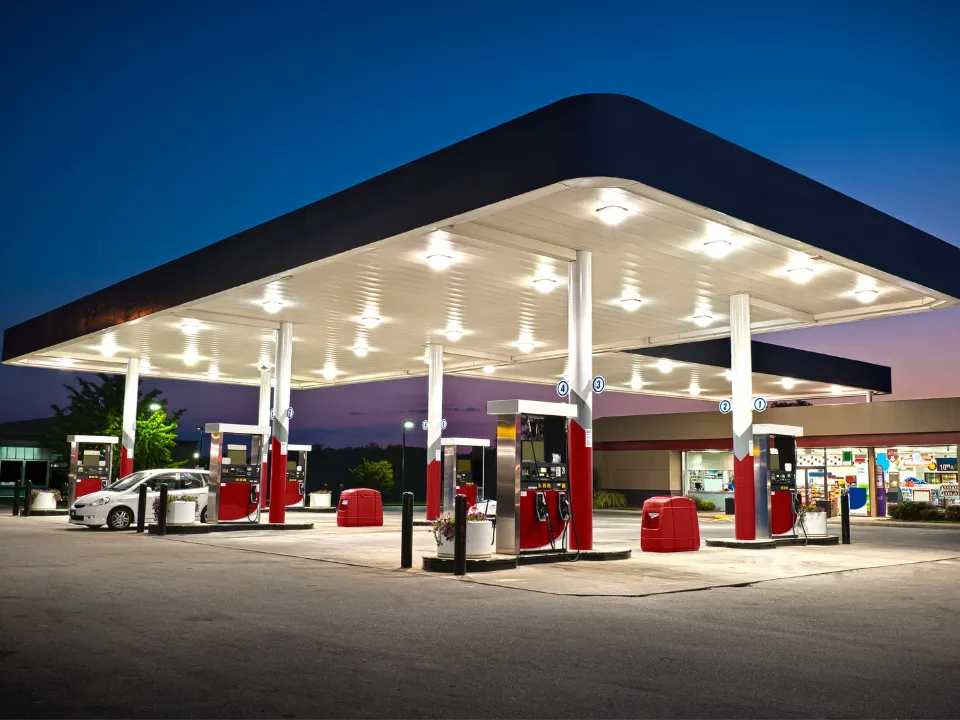
Houston’s gas station building spree may be about to meet its first real rulebook. The City Council will consider location restrictions in January, Bisnow reported, a rare step for a city with no traditional zoning.
According to Bisnow, the draft would have blocked 50 of the 188 projects that applied over the past four years.
Get Smarter About What Matters in Texas
Subscribe to our free newsletter covering the biggest commercial real estate stories across Texas — delivered in just 5 minutes.
What the Ordinance Would Do
New stations would mostly be prohibited on residential streets that are 80 feet wide or narrower, according to Bisnow. Mayor’s office figures show that 27% of applications involve those streets. Additionally, 52% had homes within 100 feet.
Applicants could still seek a variance. However, a Riverside Terrace project opposed by neighbors would not qualify under the proposed rule.
Why Developers Came
No zoning, cheap land, heavy traffic and tax breaks helped make Houston Texas’s top market for the product.
An analysis of Texas Commission on Environmental Quality data found 231 tank permit applications in Harris County since 2023. That was more than four times the total in any other county.
CBRE’s Sai Thakor said the main appeal is speed. A station can often reach stabilization and sell within a year. That’s much faster than apartments or hotels. Meanwhile, aggressive pricing and 100% bonus depreciation support some of the lowest cap rates in retail.
Builders Say It’s Getting Crowded
Nikhil Dhanani, president of Dhanani Private Equity Group, supports spacing rules. His firm has built more than 60 24 Seven stores locally. However, it began diversifying six years ago amid saturation, electric vehicles and rising construction costs.
Dhanani also described investors losing money by building next to rivals simply because no rules prevented it. Thakor added that some developers place stations directly beside competitors. As a result, those locations become harder to sell.
Zoom Out: Cap Rates Stay Tight
Investors haven’t backed off. As we covered, gas station buyers kept paying up despite volatile fuel prices. They continue to bet on income from in-store sales.
Houston’s broader retail market also remains firm. Colliers data we reported showed Houston retail demand outpacing new supply in Q3. Absorption reached 399,400 SF, compared with 339,800 SF of deliveries.
Why It Matters
Brokers say the rules would change where stations can open, not stop development altogether. Lee & Associates’ Brandi Dees said the challenge is finding sites where the use is allowed. Operators already avoid clusters, while suburbs remain a target as housing expands.
Quality is also improving. Newer stations increasingly feature fast-food tenants and Class A-style retail space.
What’s Next
The council will consider the ordinance in January. Councilmember Edward Pollard supports development but wants more varied retail and protected neighborhoods.
Therefore, expect debate over how strictly the city should enforce the road-width requirement.