







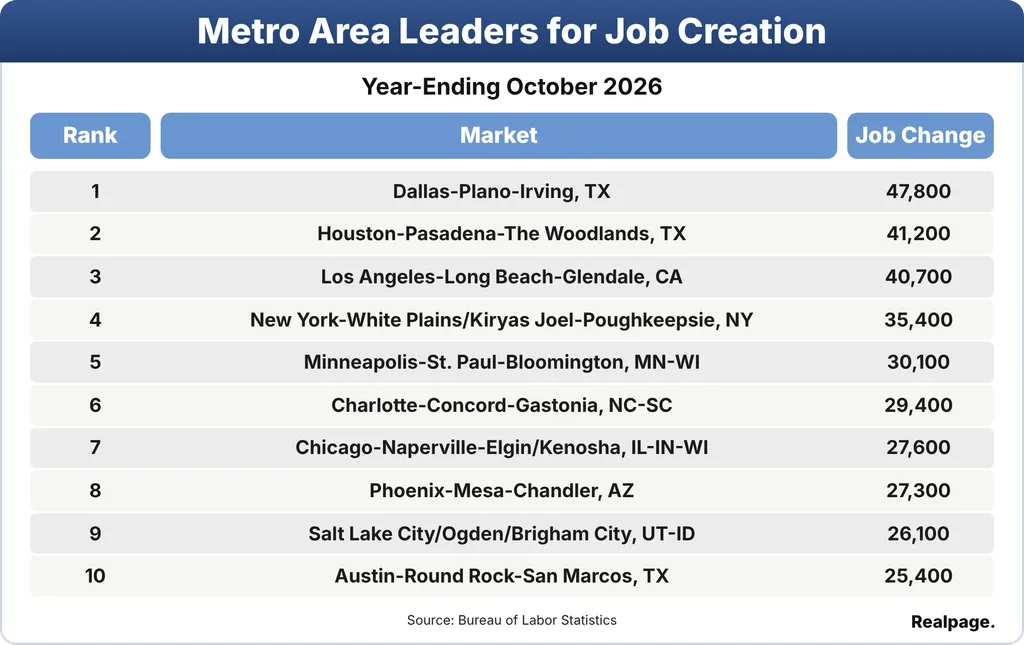
- The 10 largest job-gain metros among the 150 biggest U.S. markets added 331,000 positions in the year ending October, 115,900 more than September’s reading.
- Dallas gained 47,800 jobs and Houston 41,200, while Los Angeles swung from a 30,100-job loss a year ago to a 40,700-job gain.
- Only 23 of the 150 markets lost jobs, 10 fewer than in September, with the remaining weakness concentrated in the Northeast and the industrial Midwest.
Hiring in the biggest U.S. metros is running far ahead of last year: RealPage’s October jobs report shows the 10 metros with the largest job gains added 331,000 positions in the year ending October.
A year earlier, the top 10 combined for 33,400.
Get Smarter about what matters in CRE
Stay ahead of trends in commercial real estate with CRE Daily – the free newsletter delivering everything you need to start your day in just 5-minutes
Texas Leads Metro Job Growth
Dallas ranked first with 47,800 jobs, its strongest showing in more than a year. Houston followed at 41,200, up from 7,100 a year ago.
Austin placed 10th with 25,400, Fort Worth 17th with 21,100 and San Antonio 24th with 13,500. Together the five Texas metros account for close to 149,000 new jobs, or about 16% of everything RealPage’s 150 largest markets added.
Hiring hasn’t rescued rents yet. Yardi Matrix’s November report, which we covered Nov. 24, had Dallas apartment rents down 1.0% from a year ago as the metro works through two record years of deliveries.
The Comebacks
Los Angeles is the turnaround story. It lost 30,100 jobs in the year to last October and gained 40,700 this time. No other market came close to that 70,800-job turnaround.
It moved from ninth to third in a month.
Chicago’s jump was the steepest in a single month: it landed seventh with 27,600 jobs, up from a revised 3,000 in September. New York, long the perennial leader, sits fourth at 35,400.
Minneapolis was shedding jobs in early 2026 and now shows 30,100 added, versus 8,200 a year ago. Charlotte roughly doubled to 29,400, and Salt Lake City went from 3,900 to 26,100.
Phoenix gained 27,300 against just 200 a year earlier, though that’s far below its 2023-2024 peak of about 84,800.
California’s rebound isn’t only LA. San Diego and Anaheim both flipped from losses to gains, and San Jose’s 23,700 is about as strong as anything it has posted since 2023.
Where Jobs Are Still Falling
Twenty-three of the 150 markets lost jobs over the year, 10 fewer than in September. Two were flat.
Losses eased in Washington, DC, Pittsburgh, Portland and Richmond. They deepened in Newark, Toledo, Atlantic City and New Haven.
By percentage, Lansing fared worst at a 1.5% decline, then Atlantic City at 1.4% and Toledo at 1%.
Small Markets, Fast Growth
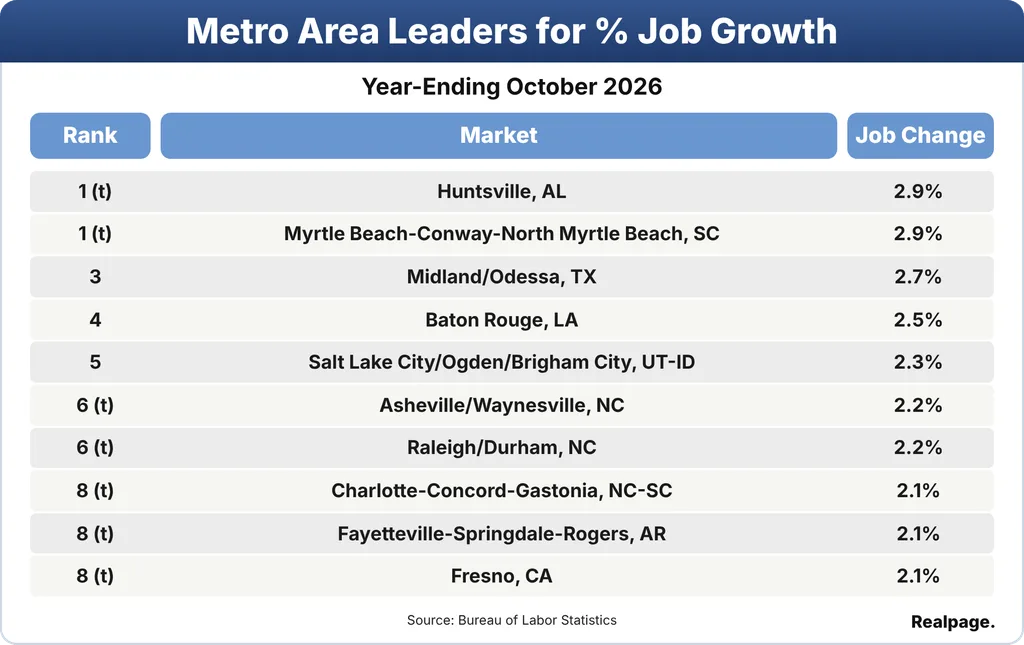
Percentage growth is a different list. Huntsville and Myrtle Beach tied for the top at 2.9%, with Midland/Odessa at 2.7% and Baton Rouge at 2.5%.
The Carolinas hold six of the top 20 spots. Texas has two and California one.
Investors have noticed the Carolinas too. Arbor Realty Trust’s Fall 2026 Top Markets report, which we covered Nov. 6, put Raleigh and Charlotte at the top of its ranking of the 50 largest metros for multifamily investment.
Nationally, jobs grew 0.8%, not seasonally adjusted. Seventy-nine markets matched or beat that, four fewer than a month earlier.
Why It Matters
The gains are broad. Eight of September’s top 10 repeated, the count of shrinking markets dropped, and the improvement reached past the Sun Belt to Los Angeles, Chicago and Minneapolis.
That’s a change for apartment owners in metros that were in the red a year ago, Los Angeles and Anaheim among them.
What’s Next
Watch whether the leaders can clear 50,000. Neither Dallas nor Houston got there in October.
The Northeast and industrial Midwest are the other thing to track, since that’s where RealPage found the job losses clustered.