



- Residential permits are 19.2% below the pre-pandemic trend, with 1.42M approvals in the year ended May 2026 after a 2.2% annual decline.
- Single-family completions fell 2.5% to 817,000 in 2025, the third consecutive annual decline and the lowest total since 2020.
- Builders are shrinking homes and improving construction times, but faster execution cannot replace projects that never enter the pipeline.
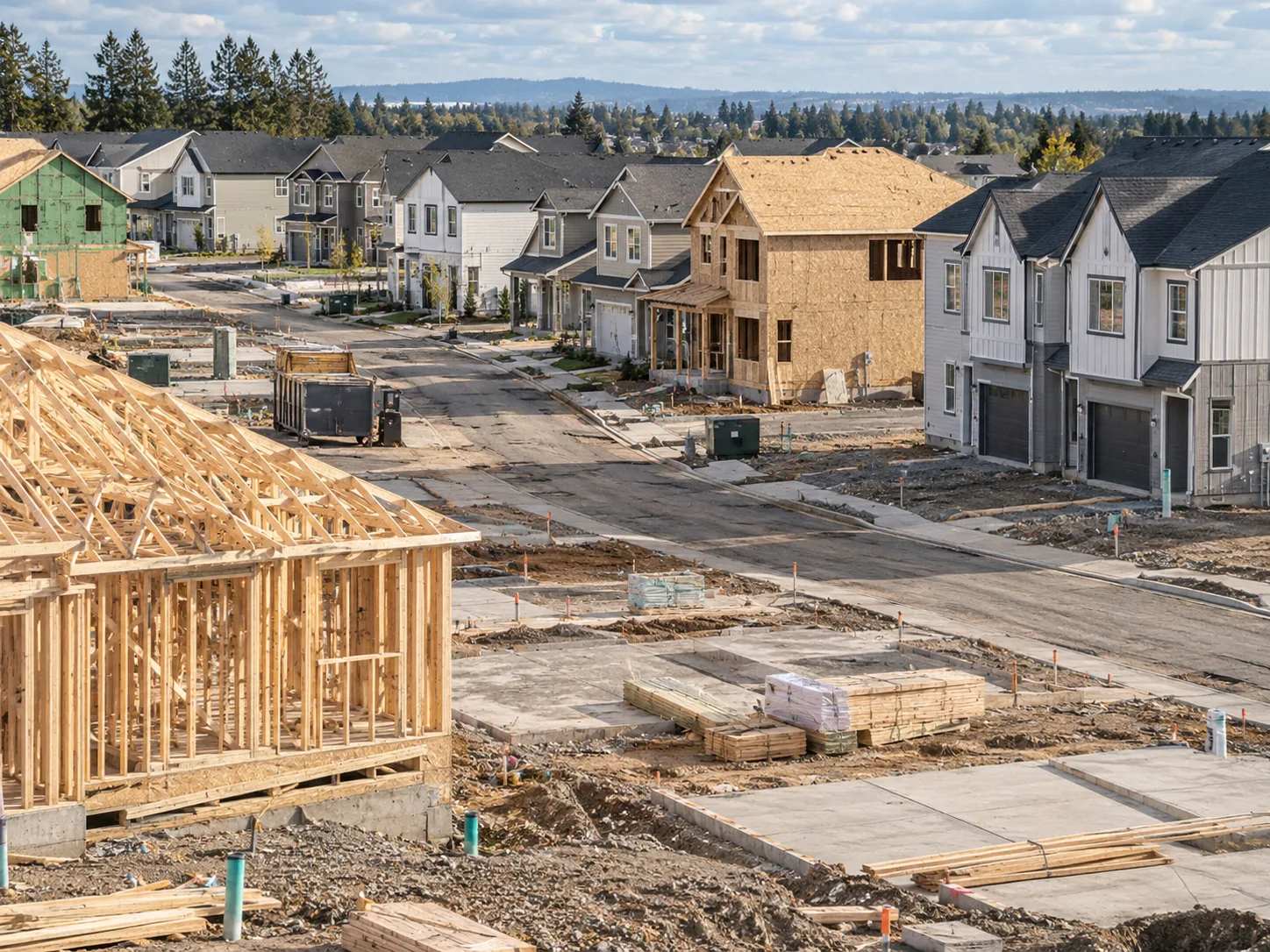
GlobeSt reports that the US housing permit pipeline remains well below its pre-pandemic path even as builders clear earlier construction bottlenecks. Zillow Research estimates residential permits are running 19.2% below the prior trendline. In the year ended May 2026, permits fell 2.2% to 1.42M. That extended a 42-month run of annual declines and pushed permitting to its lowest level since before the pandemic.
Get Smarter about what matters in CRE
Stay ahead of trends in commercial real estate with CRE Daily – the free newsletter delivering everything you need to start your day in just 5-minutes
The Details
The decline is especially visible in several large Sun Belt metros. San Antonio posted the steepest year-over-year drop at 31%, followed by Austin at 27.5%. Baltimore permits fell 24.9%, Las Vegas declined 24.8%, Orlando dropped 18.9%, and Richmond was down 17.1%.
Permits are an early signal for future housing supply. Fewer approvals can limit starts and completions even when builders improve job-site efficiency. That distinction matters because Zillow still identifies a housing shortage. Ending pandemic-era material and labor bottlenecks has not closed it.
Some Coastal Markets Move the Other Way
The national picture is not uniform. San Jose issued 7,866 permits in the year ended May 2026, up from 3,510 one year earlier. That represented a 124.1% increase, although Zillow noted that percentage gains can look unusually large in markets with very low prior construction levels.
Miami permits increased 37.1%, Cincinnati rose 30.9%, Los Angeles gained 26.9%, Seattle was up 26.1%, and Birmingham increased 23.7%. Those gains show that local supply conditions differ widely even as the national pipeline remains below trend.
Single-Family Completions Keep Falling
Detached single-family completions fell 2.5% in 2025 to 817,000. It was the third straight annual decline and the lowest total since 2020. Completions still remained 4.4% above 2019, but the recent direction suggests supply is not expanding fast enough to close the broader shortage.
Attached homes held up better. Completions declined 1.8% in 2025 after jumping 22.6% in 2024. Builders are also adjusting product size. The median new detached home measured about 2,300 SF, roughly 100 SF smaller than before the pandemic. Attached homes declined to 1,700 SF from 1,800 SF. Median detached lot size fell to 8,700 SF from 9,000 SF in 2019.
That shift gives investors another lens on single-family and multifamily permitting trends as builders respond to affordability and cost pressure.
Faster Build Times Cannot Fix the Pipeline
Execution has improved. Zillow said the median detached house took six months to build in 2025, one month faster than during 2022 and 2023. Attached homes took a median of seven months. Shorter timelines can help builders move approved projects through the system with less delay.
However, faster completions do not create more projects at the front of the pipeline. Oxford Economics research cited by GlobeSt found that permits for both single-family and multifamily housing had not fully translated into starts. Other industry research points to the same disconnect. The National Association of Home Builders and Harvard’s Joint Center for Housing Studies reported similar gaps.
Why It Matters
The mismatch leaves housing supply vulnerable even as construction operations normalize. Fewer permits today can mean fewer homes available later, particularly in markets where demand continues to exceed new delivery. Smaller homes and lots can improve attainability, but they do not increase the number of units by themselves.
For CRE investors, the central question is whether permitting rebounds before the supply shortage adds more affordability pressure. A constrained ownership pipeline can also affect rental demand and the appeal of compact residential formats. The data show better project execution, but they do not yet show a broad recovery in the volume of housing moving toward construction.
Zillow’s figures also show builders adapting rather than simply waiting for conditions to improve. Product is getting smaller, lots are tighter, and construction takes less time. Those changes can lower individual project costs and shorten delivery. They still operate within a pipeline where the number of approved homes remains weak, leaving total supply dependent on a permit recovery.