



- DFW industrial leasing reached 40.3M SF in the first half of 2026, a record pace fueled by broad-based demand and data center activity.
- Big-box users accounted for nearly one-third of the 72M SF in new commitments signed over the past 12 months, while rents climbed 13% year over year.
- Tightening space availability could push more occupiers toward build-to-suit projects and keep development active across DFW’s outer submarkets.
DFW’s industrial market is showing little sign of slowing down in 2026. Leasing reached a record 40.3M SF in the first half of the year, according to Bisnow. Data center-related users are adding to strong demand from logistics, manufacturing and e-commerce tenants. Big-box leasing is also gaining momentum as large blocks of available space become harder to find. With rents rising and vacancy holding near 8%, the market is entering the second half with both strong demand and growing pressure on supply.
Get Smarter About What Matters in Texas
Subscribe to our free newsletter covering the biggest commercial real estate stories across Texas — delivered in just 5 minutes.
A record-setting first half:
Dallas-Fort Worth’s industrial market is running at a record pace, with leasing activity reaching 40.3M SF through the first half of 2026. According to Cushman & Wakefield’s Q2 2026 MarketBeat report, quarterly leasing volume increased nearly 4% from Q1, with data center-related demand adding another growth engine to an already diverse occupier base.
The market’s traditional demand drivers — third-party logistics, manufacturing, e-commerce fulfillment and retail wholesale — remain active. Data center suppliers, manufacturers and service providers are now adding meaningful volume to the mix.
The details:
Landlords signed more than 72M SF of new commitments during the 12 months through Q2 2026, another market record. Nearly one-third went to 23 big-box users occupying at least 500K SF, a concentration that is becoming increasingly important as large blocks of available space disappear.
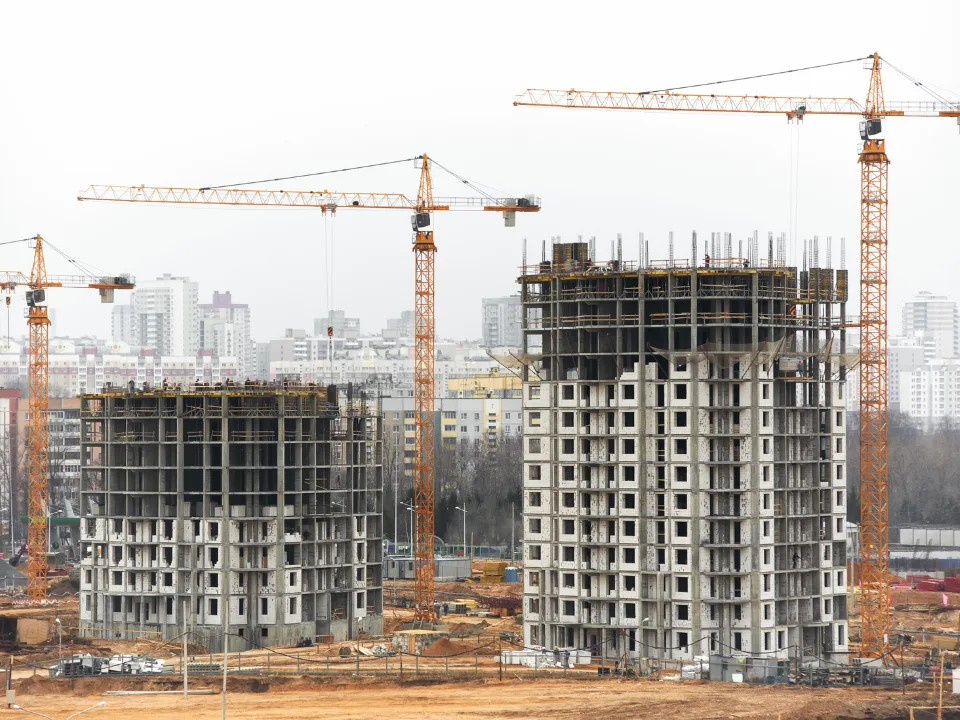
DFW had 29.8M SF of industrial space under construction at the end of Q2, down modestly from Q1 after 13.6M SF delivered during the quarter. The metro’s pipeline represents nearly 10% of the more than 300M SF of industrial space under construction nationally.
As demand pushes into larger blocks, developers are increasingly looking beyond the metro’s core. Cushman & Wakefield expects big-box construction to remain active in South Dallas, the eastern suburbs, Kaufman County, Denton, Alliance, South Fort Worth and the Mid-Cities.
Data centers add another demand engine:
DFW’s industrial leasing surge is notable because it is not riding on a single sector. The market ranked among only nine U.S. markets that recorded more than 10M SF of leasing in Q2 2026, and it led that group by more than 40%.
Data center expansion is helping extend that momentum. The industry’s suppliers and service providers need manufacturing, storage and distribution space, giving DFW’s industrial market an additional source of demand beyond its established logistics base.
The metro’s central U.S. location also remains a competitive advantage. Bradford Commercial Real Estate Services Vice President Luke Clardy pointed to DFW’s combination of rail, air and trucking connectivity as a key reason distribution users continue to favor the region.
Why it matters:
Demand is already translating into higher rents. DFW’s average asking rent reached $9.19 per SF in Q2 2026, up more than 13% from a year earlier, compared with a less than 3% increase nationally to $10.32 per SF.
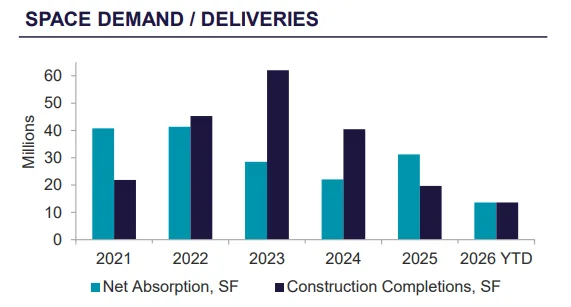
At the same time, the market is not showing the kind of supply-demand imbalance that would normally accompany such rapid rent growth. Net absorption totaled 9M SF in Q2 and 13.6M SF year to date, matching the 13.6M SF delivered during the first half. Overall vacancy edged down to just above 8%, versus just under 7% nationally.
The absorption numbers also understate current demand. About 20M SF has already been leased but remains unoccupied. Because the firm records absorption when tenants physically occupy space, large users with lengthy build-outs can make demand appear softer before their leases translate into occupied inventory.
Build-to-suit becomes more important:
Cushman & Wakefield has already raised its 2026 DFW absorption forecast from roughly 32M SF to about 39M SF. That would put the market within striking distance of its 2022 record of 41.3M SF, with five months remaining in the year, according to Andrew Matheny, the firm’s senior research manager.
Space constraints are already changing how occupiers approach the market. Celestica, a Toronto-based electronics manufacturing services company, plans to invest $876M in a more than 1M SF advanced manufacturing and engineering campus at Hillwood’s AllianceTexas development after determining that existing facilities could not meet its requirements.
Hillwood is also building a 1.2M SF speculative facility, Alliance Westport 16, in the Alliance Logistics District. The project is scheduled for completion in July 2027.
What’s next:
The next test for the DFW industrial market will be whether developers can keep pace with leasing without creating excess supply. Demand is expanding across the size spectrum, with brokers reporting increased activity among users needing as little as 5K to 15K SF alongside the record big-box volume.
For larger occupiers, shrinking availability could make build-to-suit projects increasingly common. For developers, the current leasing environment supports continued speculative construction in DFW’s peripheral submarkets — but the record pipeline means execution and timing will matter as much as demand.