






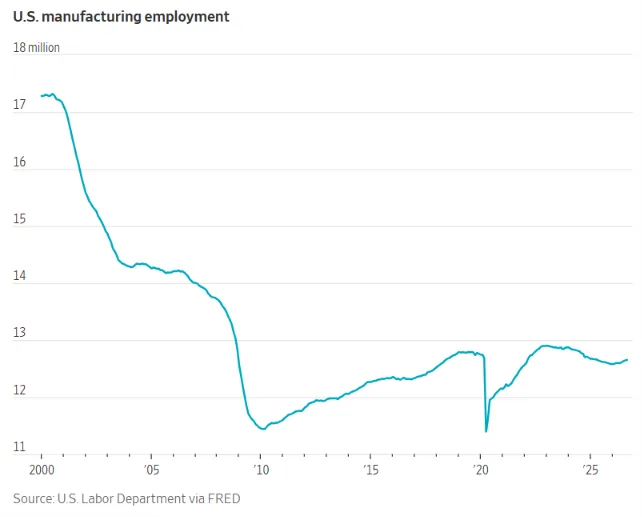
- The Wall Street Journal reports U.S. manufacturers added 72,000 jobs since December, ending years of decline, but the new roles skew toward technical and white-collar work.
- From 2015 to 2025, factories cut 244,000 production jobs while adding 358,000 management, business and financial operations roles, per Labor Department data cited by the Journal.
- Training programs are scaling up, including Arizona State’s plan to grow TSMC technician training to 800 next year, which ties industrial real estate demand to workforce supply.
U.S. manufacturing jobs are growing again, up 72,000 since December, but The Wall Street Journal reports the new roles often require a college degree.
That matters for industrial real estate, because the factories filling new space need a different workforce.
Get Smarter about what matters in CRE
Stay ahead of trends in commercial real estate with CRE Daily – the free newsletter delivering everything you need to start your day in just 5-minutes
The Shift
Per Labor Department data cited by the Journal, manufacturers cut 244,000 production jobs such as assemblers and machine operators between 2015 and 2025. Over the same stretch, they added 358,000 jobs on the management and finance side.
Machines took over many floor jobs, while managers and engineers stayed. Sensors and data also require analysts and technicians to maintain the machines.
Who’s Hiring
Furniture and other legacy industries are shrinking. Aerospace, computer, electrical-equipment and HVAC makers are hiring this year. More than half of airplane manufacturing workers have a four-year degree, per the Census Bureau.
In Phoenix, Swift Coat expects to add two or three staff by year-end, every one needing an engineering degree. CEO Peter Firth told the Journal a more automated line could mean one technician and two engineers instead of five technicians.
Training Scramble
The trade group SME’s CEO, Jeannine Kunz, told the Journal that technology is outpacing the workforce. Arizona State’s manufacturing school is training about 170 equipment technicians for TSMC’s Arizona plant and plans 800 next year.
In Columbus, Ohio, Aspyr Workforce Innovation’s CEO Lisa Patt-McDaniel said programs keep up for now. Intel’s planned two factories east of the city, with 3,000 workers, could test that.
Zoom Out
Hiring patterns are already moving demand. NAR’s third-quarter index, which we covered, showed San Antonio jumping 67 spots to 9th as industrial jobs grew in markets with manufacturing and logistics hiring. In Phoenix, Bloomberg reported TSMC’s $265 billion project is driving a suburban property boom, with industrial vacancy in the northwest suburbs halved to 8% by June, per Colliers.
Why It Matters
Economist Susan Houseman told the Journal higher-skill jobs often pay better and involve less drudgery. Susan Helper, a Case Western economist, worried about access to good jobs since a high-school graduate can no longer walk straight into many plants.
For landlords, labor supply increasingly decides where advanced factories can operate.
What’s Next
Watch whether training pipelines in chip hubs like Phoenix and Columbus keep pace as new fabs open. Where they don’t, expect tenants to cite talent as a reason to delay or move.