



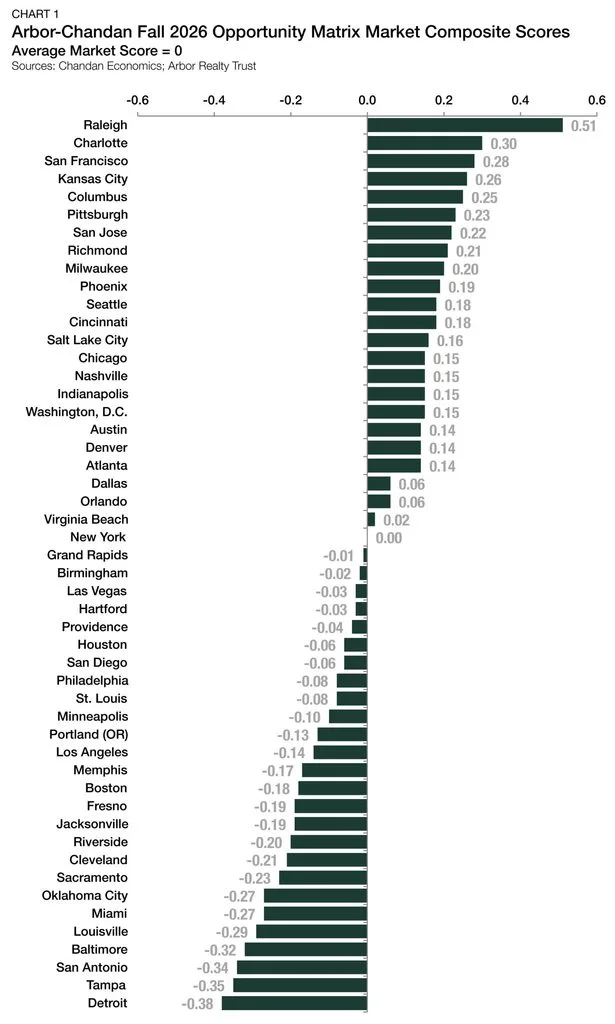
- Raleigh and Charlotte ranked first and second in Arbor’s Fall 2026 Opportunity Matrix, which scores the 50 largest metros, followed by San Francisco in third place.
- Four Midwest markets made the top 10, yet Cleveland, Louisville and Detroit landed in the bottom 10, showing performance varies more within regions than between them.
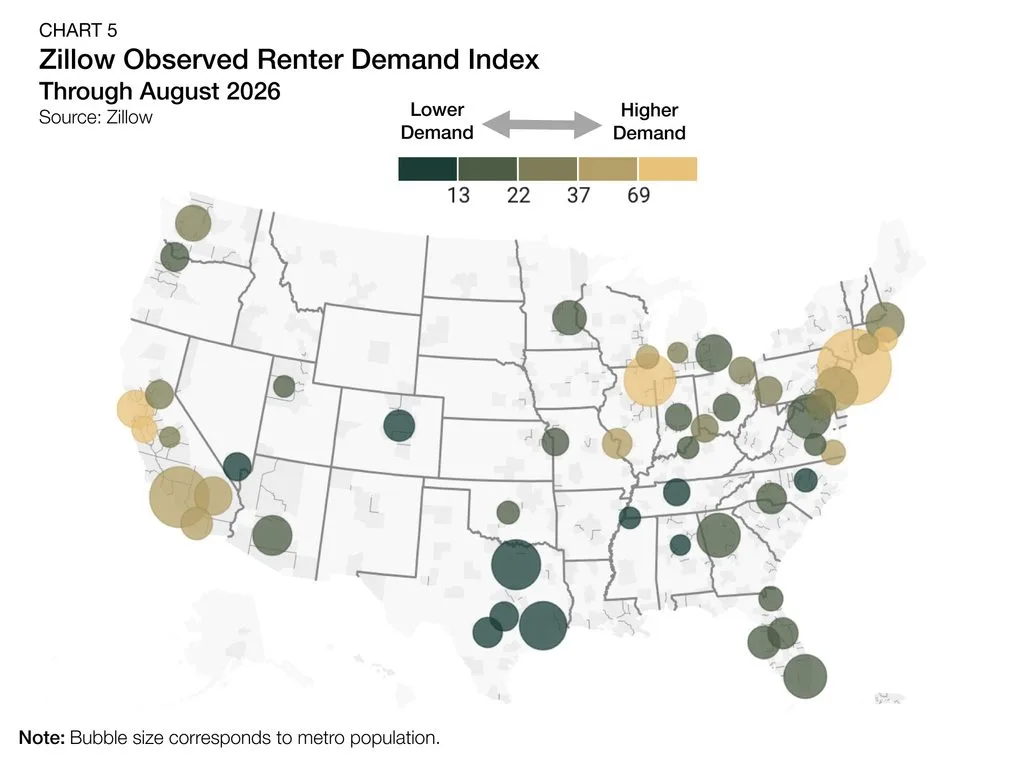
- Renter demand is strongest in supply-constrained, high-wage markets like San Francisco, San Jose and New York, while faster-growing Sun Belt metros show softer demand after heavy construction.
Raleigh and Charlotte rank as the top markets for multifamily investment in Arbor Realty Trust’s Fall 2026 Top Markets report, which scores the 50 largest metros.
San Francisco came in third, and San Jose placed seventh, as AI-related hiring boosts renter demand on the coasts.
Get Smarter about what matters in CRE
Stay ahead of trends in commercial real estate with CRE Daily – the free newsletter delivering everything you need to start your day in just 5-minutes
How the Rankings Work
Arbor’s Opportunity Matrix evaluates each metro across several factors. These include capital markets, operating fundamentals, taxes, labor and population growth. The matrix also considers renter demographics, vacancy, renter demand, affordability, and climate and insurance risks.
According to the report, supply pressures have eased and rent growth has spread to more markets. However, elevated interest rates continue to weigh on valuations and financing.
Carolinas Lead
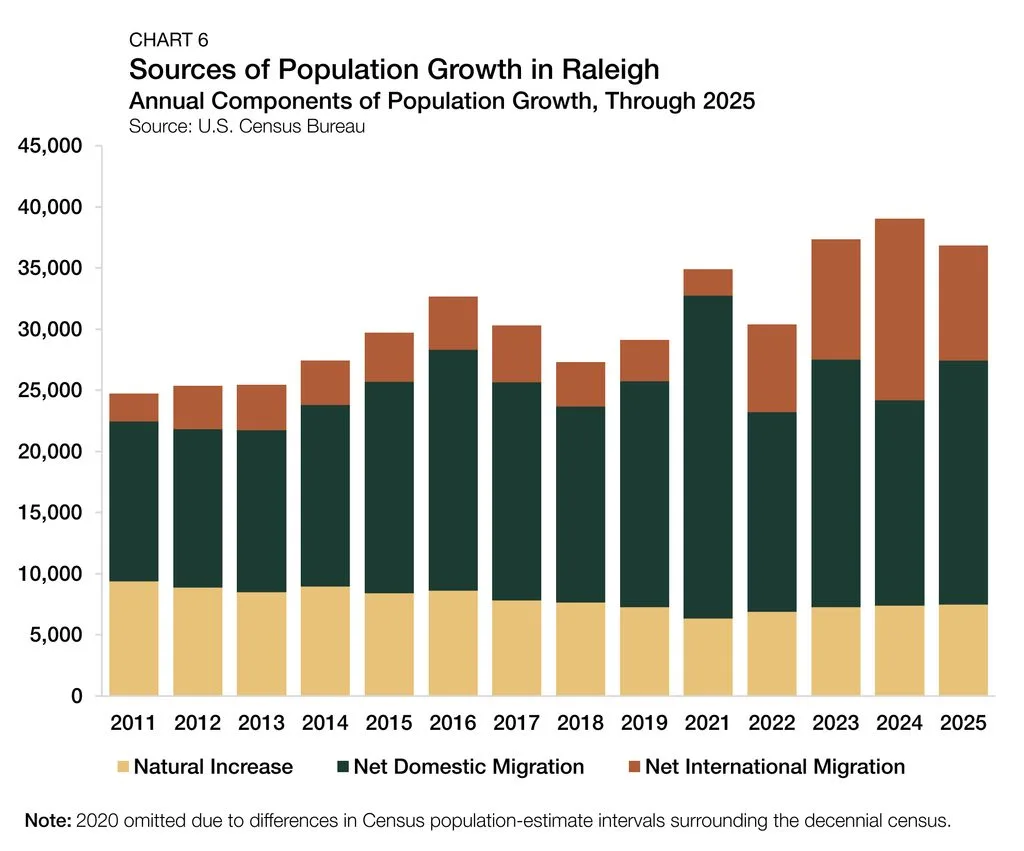
South Carolina had the fastest population growth of any state in 2025, at 1.5%. North Carolina ranked third at 1.3%, adding nearly 146,000 residents.
Meanwhile, Raleigh and Charlotte combine population growth with favorable labor and tax conditions. Both markets also offer relative affordability.
Among the 50 largest metros, Austin had the fastest population growth through 2025. Nashville followed, then Raleigh, Charlotte and San Antonio.
Geography Matters Less
Midwestern markets performed well overall. Kansas City, Columbus, Pittsburgh and Milwaukee all ranked in the top 10. Additionally, six metros placed in the top 15.
However, Cleveland, Louisville and Detroit landed in the bottom 10.
The Sun Belt showed a similar split. Phoenix remained in the top 10, while several other fast-growing markets ranked much lower. This suggests local supply and demand matter more than regional labels.
Jobs, Vacancy and Demand
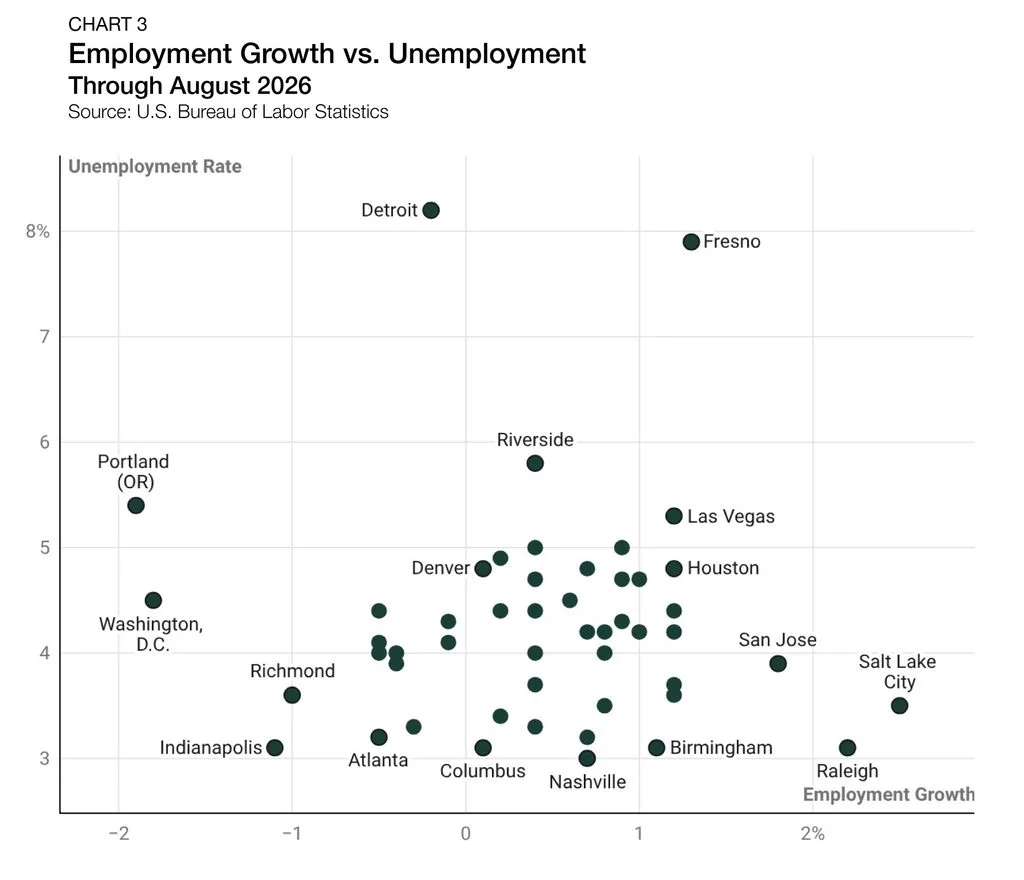
Salt Lake City and Raleigh led in job growth, at 2.5% and 2.2%, respectively. Both also had unemployment near 3%.
Austin combined 1.2% job growth with 6.1% wage growth. Meanwhile, Kansas City posted nearly 8% wage growth.
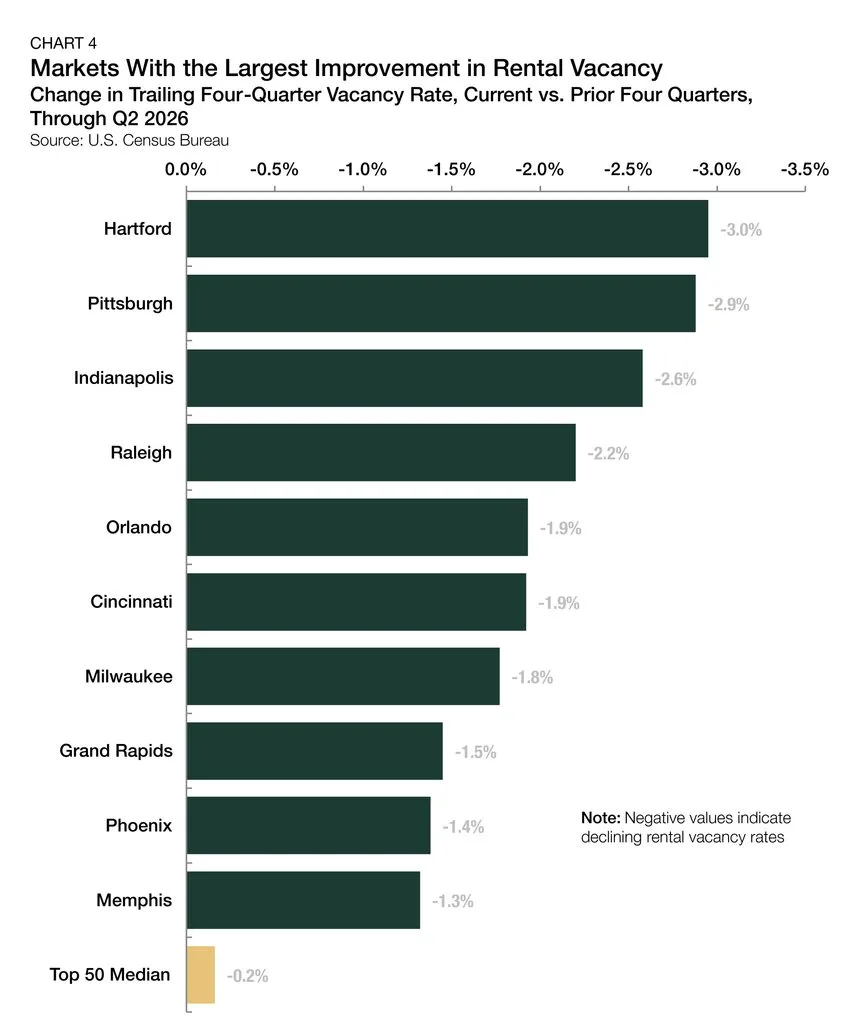
Vacancy also improved in several markets. Hartford’s trailing four-quarter vacancy fell to 2.8%, the lowest among the 50 metros. That marked a decline of about three percentage points. Raleigh’s vacancy also dropped 2.2 points, reaching 6.2%.
On the renter demand front, San Francisco, San Jose, New York and Chicago stood out through August 2026. These figures come from Zillow’s renter demand index, which Arbor uses in its matrix.
Why It Matters
The Bay Area’s performance aligns with activity we covered in September. At the time, Silicon Valley apartments attracted fresh capital. That included Keech Properties’ $45 million purchase of the 87-unit Sunsweet Apartments in Morgan Hill.
More broadly, Arbor says supply pressures have eased and vacancies have improved across more markets. Still, elevated rates continue to weigh on valuations and financing.
What’s Next
Arbor’s main takeaway is that investment opportunities are becoming more localized. As a result, capital is likely to follow market balance. Key factors include supply, renter demand and affordability, rather than broad regional labels.