




- Charter Hall, GPT, Dexus and IFM Investors see tenant experience and wellness as increasingly important to premium office demand.
- Dexus is testing reusable turnkey fitouts to reduce capital costs, waste, downtime and incentives across successive leases.
- IFM expects AI-related growth to favor Prime and A-grade offices with strong amenities even as lower-grade submarkets face pressure.
CBRE’s discussion with four leading Australian office owners shows how premium buildings are being repositioned around experience, service, fitouts and AI. Executives from Charter Hall, GPT, Dexus and IFM Investors see quality offices pulling ahead. Occupiers are placing more weight on location, wellness, amenities and workplace experience.
Get Smarter about what matters in CRE
Stay ahead of trends in commercial real estate with CRE Daily – the free newsletter delivering everything you need to start your day in just 5-minutes
The Details
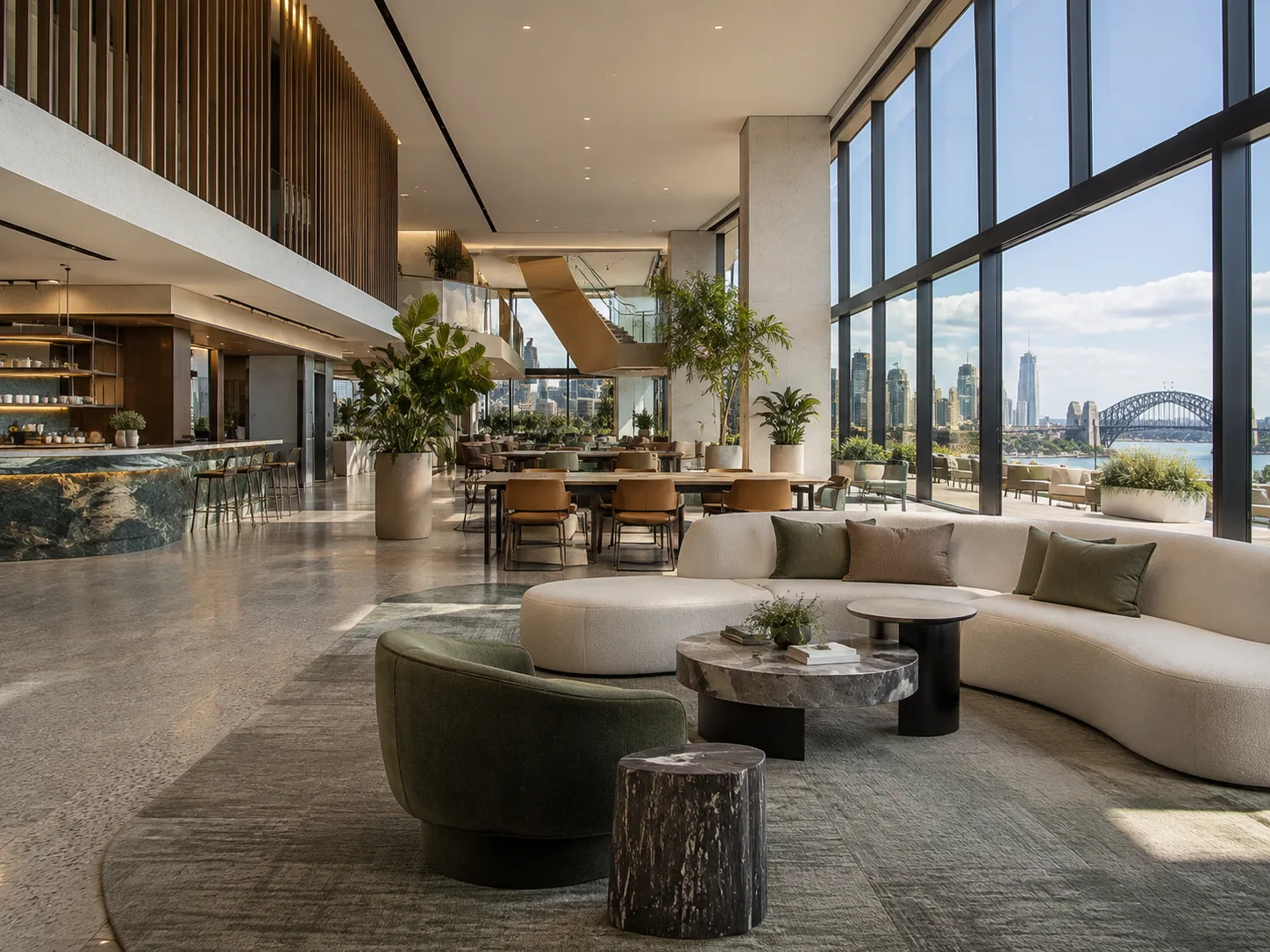
Charter Hall’s Fiona Denison compared office portfolio management with running a hotel, except the buildings have desks rather than beds. She said premium offices now compete through experience as much as workspace. That shift is raising costs and rents because owners are adding more amenities.
Denison said tenants are not pushing back on those costs when the workplace helps attract and retain talent. Premium buildings are adding Pilates studios, basketball and pickleball courts, stronger end-of-trip facilities and even ice baths. She does not see every amenity as essential. However, tenant expectations around wellness are higher than at any point she has seen in the portfolio.
Office as a Service Reframes Ownership
GPT Group head of office Matthew Brown said the company follows an experience-first approach. It increasingly views office as a service rather than a commoditized product. Tenants want employees to feel connected to a building community. That puts more responsibility on landlords to curate the experience.
Wellness is another priority, with owners expected to support healthier workplace routines. Brown said innovation in London and New York has helped upgraded buildings achieve higher occupancy. He also linked those gains to better forward returns for owners. His operating message is straightforward: landlords need regular dialogue with tenants about business and workforce needs.
Reusable Fitouts Target Cost and Waste
Dexus is approaching leasing through what executive general manager Andy Collins calls Forever Fitouts. The model aims to reduce the financial and environmental cost of traditional fitouts. Those interiors are often removed after a five- to seven-year lease. Collins said more core-market lease transactions over the past 12 to 24 months involved fitted space than clear space.
Dexus wants turnkey interiors that can adapt for a second or third tenant. The goal is less downtime between leases and lower incentives over time. Its first pilot at 1 Bligh Street was co-designed with Woods Bagot and the Clean Energy Finance Corporation, which occupies the space. Dexus now wants more data to test the model’s financial and environmental performance.
AI Could Widen the Quality Split
IFM Investors head of property Amanda Steele said AI creates both risk and growth opportunities for office owners. She sees B- and C-grade assets in submarkets facing pressure. Some administrative roles are being offshored or replaced by AI. At the same time, Steele expects companies using AI effectively to take more Prime and A-grade space with strong amenities. IFM is investing in its own team’s AI skills. Steele also argued that critical thinking and creativity still require human involvement. That reinforces the workplace strategy around high-quality space rather than suggesting offices become unnecessary.
Why It Matters
The comments point to a broader shift in the landlord proposition. Premium office competition is moving beyond location and base building quality. Service, wellness, community and flexible fitted space are becoming more important. Owners are also trying to reduce the capital intensity of tenant turnover by preserving fitouts for multiple leasing cycles.
AI may deepen the divide between high-grade and lower-grade assets. Prime buildings are being positioned for collaborative and creative work, while some administrative demand is under pressure. For landlords, operating capability is becoming more closely tied to leasing performance.
What’s Next
Dexus plans to expand its Forever Fitouts experiment and collect more performance data. IFM will continue building AI capability within its workforce and watching how technology changes tenant demand. GPT and Charter Hall are also signaling that amenity and service investment will remain central to premium office strategy. The next phase is a test of execution. Owners will be looking for more data on occupancy, rent performance, downtime and incentives as these strategies scale.