


Downtown Manhattan’s Office Comeback Gains Steam
Midtown’s tight supply and soaring rents are sending more office tenants Downtown, fueling Lower Manhattan’s strongest leasing momentum in years.

Nina Dale
September 09, 2026
In partnership with

Good morning. Midtown’s office boom is spilling Downtown. Lower rents, tight premium supply and growing AI demand are giving Lower Manhattan a long-awaited boost.
🎙️ This Week on No Cap: Why America is still 10 million homes short, according to The Community Builders' CEO. (Thanks to our sponsor, Warespace)

CRE Trivia 🧠
Which 1922 Kansas City development became the U.S.'s first planned shopping center designed specifically to accommodate the automobile?
IN PARTNERSHIP WITH MERICLE
Class A Industrial Space at Roughly Half the Cost in Northeastern Pennsylvania
Mericle designs, builds, leases, and manages its entire Northeastern Pennsylvania portfolio with in-house teams. Your build-out is handled by the same architects and engineers who designed the building's shell, and the same construction crews who built it. The general contractor layer and subcontractor markup that add cost in most deals don't exist here. Fixed price, and every tenant occupancy deadline met across 31.5 million square feet and 21 business parks since 1985.
*This is a paid advertisement. Please see the full disclosure at the bottom of the newsletter.
Market Snapshot
|
|
||||
|
|
*Data as of 09/08/2026 market close.
Manhattan Momentum
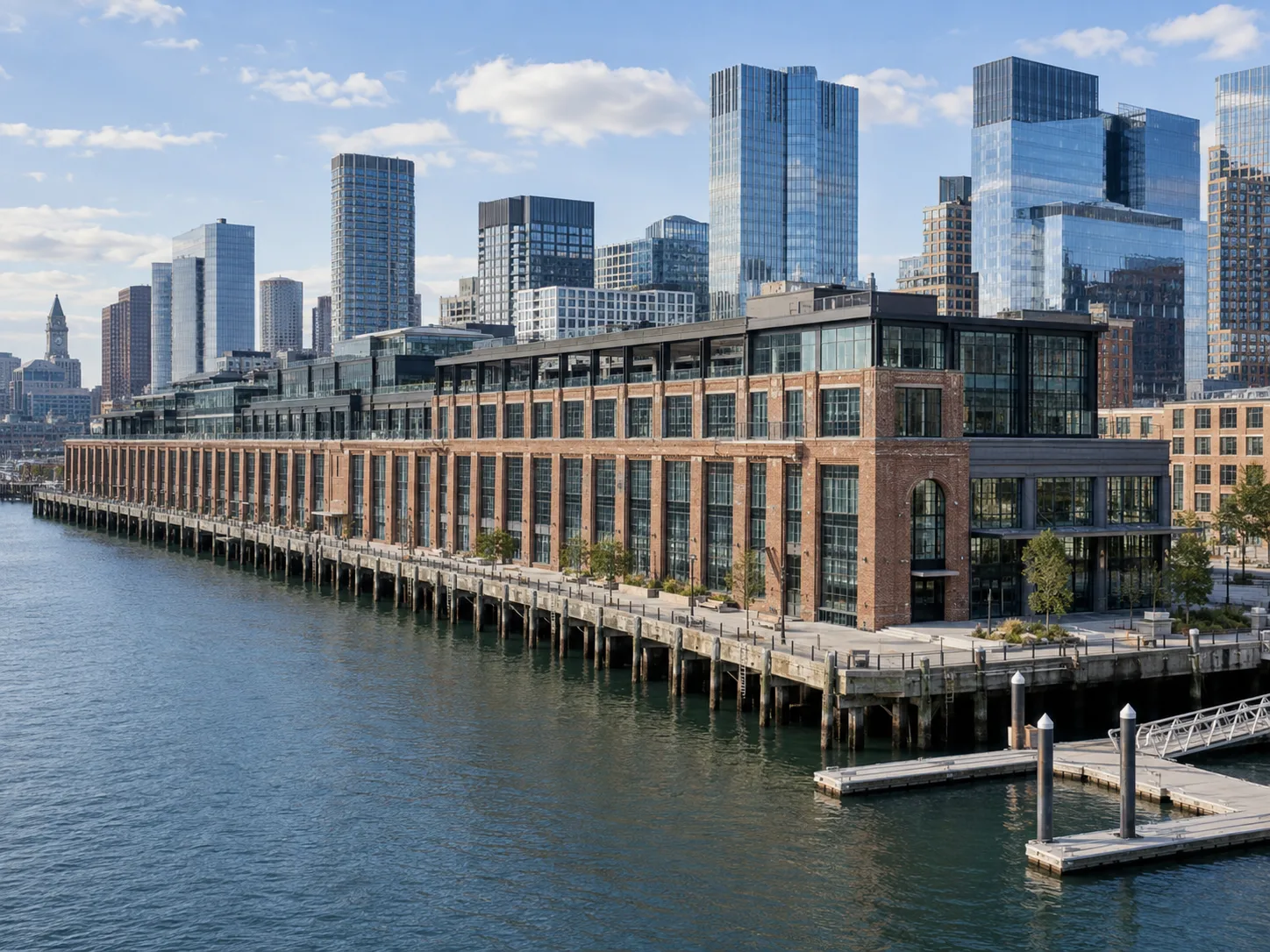
Downtown Manhattan’s Office Comeback Gains Steam
Lower Manhattan is finally catching more of New York’s office recovery, as tight Midtown supply and record-setting rents push tenants toward cheaper downtown space.
Leasing rebounds: Tenants leased roughly 4 million square feet south of Canal Street during the first half of 2026, excluding renewals, according to Cushman & Wakefield. That was more than double the year-earlier volume and Downtown’s strongest first half since 2019.
The value proposition: Midtown remains Manhattan’s office hot spot, but at a premium. Downtown asking rents averaged $61.91 per square foot in July, compared with $85.77 in Midtown and $86.34 in Midtown South, making Downtown an increasingly attractive bargain as premium space tightens.

Rents are responding: Downtown asking rents climbed 8% year over year in July to their highest level since 2020, according to CBRE. That outpaced rent growth of 4% in Midtown and 2% in Midtown South, signaling that the leasing rebound is starting to translate into pricing power.
AI joins Wall Street: Tech and AI firms are adding momentum to the traditionally finance-heavy district. Mercor, Norm Ai and Scale AI have taken space at 1 World Trade Center, which is now 97% occupied and seeing competing offers for some space.
World Trade Center gets another boost: American Express’ decision to establish its headquarters at 2 World Trade Center allowed Silverstein Properties to move ahead with the final major office tower planned for the World Trade Center site. Construction broke ground in July, adding another vote of confidence in Downtown’s long-term trajectory.
Less obsolete space helps: Office-to-residential conversions are also tightening the market. Older properties left behind as financial firms migrated uptown—including Goldman Sachs’ former offices at 55 Broad Street—are being converted to housing, removing outdated inventory and helping reduce Downtown office vacancies.
Midtown still wears the crown: Midtown still has Manhattan’s lowest vacancy rate, with trophy rents hitting records. HBeyond paid $327.50 per square foot at 9 W. 57th St., topping Nscale’s $320 at One Vanderbilt. With little new premium supply coming, more tenants may be pushed elsewhere.
➥ THE TAKEAWAY
Midtown’s squeeze could be Downtown’s opportunity: Lower Manhattan doesn’t need to dethrone Midtown to win. A roughly $24-per-square-foot rent discount, AI demand and shrinking obsolete inventory are fueling Downtown’s strongest leasing momentum in years.
A MESSAGE FROM LANDING
Occupancy On Demand

Landing is the leading provider of occupancy solutions for multifamily owners and operators.
We furnish your vacant units, fill them with vetted members, and send you the revenue each month.
Occupancy On Demand is a risk-free, month-to-month pilot agreement that lets you turn on occupancy when you need it.
Enter your address and get an underwritten offer in about a minute.
Turn vacancy into revenue.
*This is a paid advertisement. Please see the full disclosure at the bottom of the newsletter.
✍️ Editor’s Picks
-
How healthy is your investor funnel? Get a personalized assessment, built on expert best practices, that shows exactly where your funnel is losing capital. (Sponsored)
-
Treasury squeeze: Rising 10-year Treasury yields threaten to keep CRE borrowing costs elevated, intensify refinancing and valuation pressures, and delay a broader transaction-market recovery.
-
Rate reset: CRE enters fall facing higher borrowing costs, refinancing pressure and uncertainty after stronger job growth, rising Treasury yields and geopolitical turmoil upended expectations for rate cuts.
-
Off-market edge: A Florida builder reached landowners that brokers had overlooked and hit a 23% response rate on the first send. The case study breaks down the play. (Sponsored)
-
Valuation rebound: CRE valuations edged higher in Q2 while transaction volume accelerated, driven by larger deals and stronger sectors such as storage, even as multifamily activity lagged.
🏘️ MULTIFAMILY
-
Rental migration: Rising rents are pushing renters toward more affordable markets, with Buffalo, Chicago and Houston seeing strong out-of-town demand that could signal future home sales.
-
Supply repricing: Garden apartments face rising supply risk as cap rates widen and pricing remains pressured, favoring assets with stronger barriers to new development.
-
Student housing: Investors are concentrating capital in universities with strong enrollment growth and limited supply as demographic shifts create a widening divide across student housing markets.
-
Anaheim premium: TA Realty acquired Anaheim’s 315-unit Zia apartments for $147.5M, highlighting strong pricing for newer multifamily assets despite broader market caution.
🏭 Industrial
-
Industrial balance: Industrial demand is improving as absorption narrows the supply gap, but restrained rents and weak flex fundamentals are making investors more selective by market and property type.
-
R&D resurgence: Lone Star and partners invested over $1.1B in 2.2M SF of specialized R&D properties, betting on Silicon Valley’s tech resurgence and demand for advanced facilities.
-
Miami logistics: Ares acquired two fully leased Miami-Dade warehouses for $108.7M, expanding its South Florida industrial footprint with long-term tenants Target and LaserShip.
-
Tariff exposure: U.S.-Canada tariffs could reshape industrial CRE demand unevenly, with manufacturing and logistics markets facing supply-chain shifts that may create new opportunities.
🏬 RETAIL
-
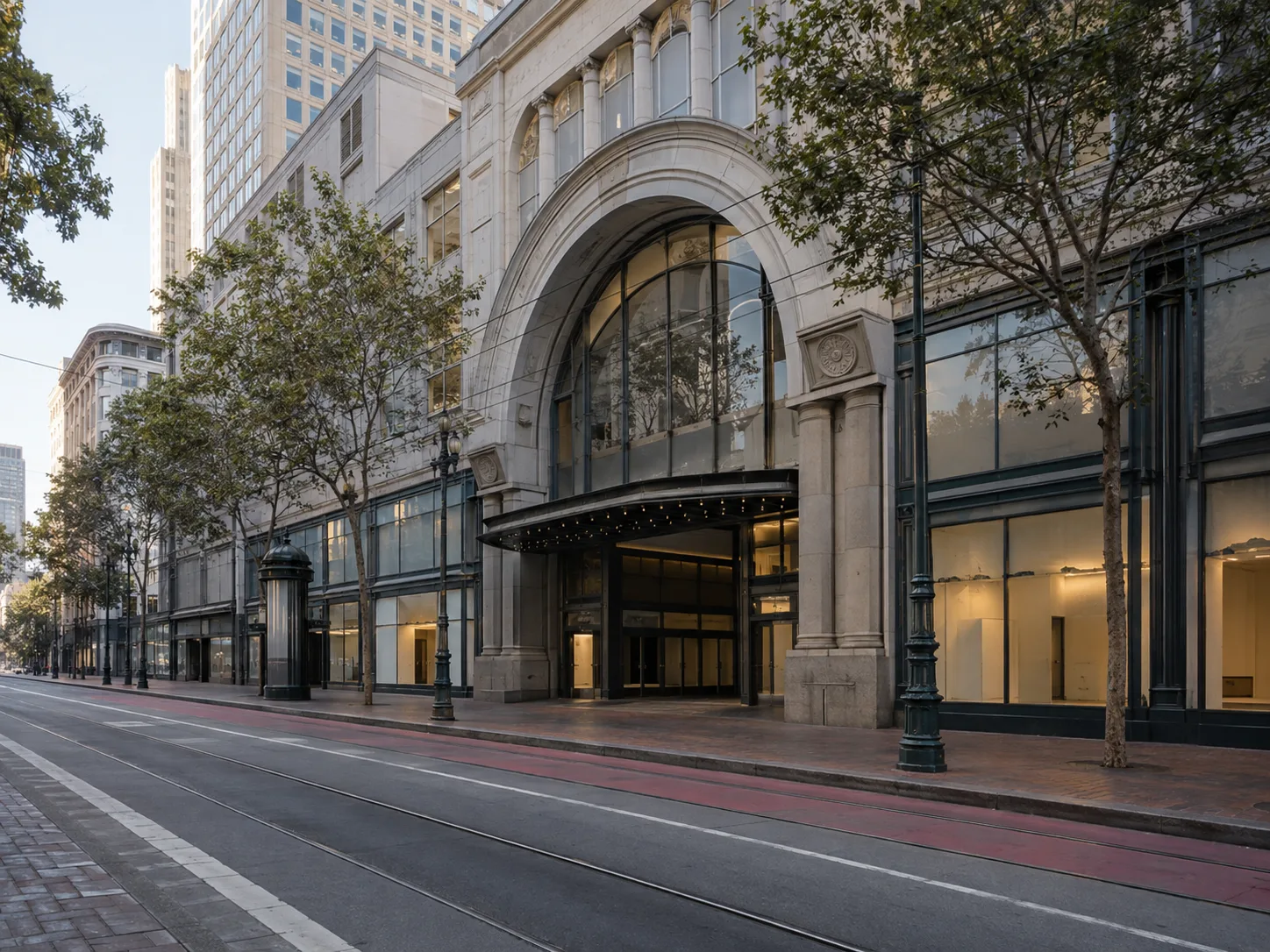
Mall collapse: San Francisco Centre could sell for under $130M after falling from a $1.2B valuation, highlighting the steep challenges facing troubled urban retail assets.
-
Drive-thru strategy: Dutch Bros’ lost Salad & Go bid highlights the growing value of second-generation drive-thru sites as the coffee chain seeks faster, cheaper expansion.
-
Retail momentum: Costco’s August sales rose 9.9% to $23.7B, supported by higher fuel prices, strong digital growth and resilient consumer demand across its global warehouse network.
🏢 OFFICE
-
Office reset: Fidelity opened a 735,000-SF Boston headquarters and now requires five-day office attendance, reinforcing demand for amenity-rich space despite elevated vacancies.
-
Office rebound: Tishman Speyer sold 400 Castro for $121.5M, underscoring strong demand for high-quality Silicon Valley offices as AI-driven leasing lifts rents.
-
Atlanta recovery: Atlanta’s office fundamentals are improving, with vacancy falling to 18.6%, rents rising 2.7% and limited new supply supporting gradual market stabilization.
🏨 HOSPITALITY
-
Hotel strategy: Hotels compete on convenience and consistency, while lodges command value through nature-driven experiences, longer stays and more personalized pricing, distribution and marketing.
📈 CHART OF THE DAY

Population growth slowed across cities of all sizes in 2024–25, with the largest cities (250,000+ residents) seeing the steepest drop—from 1.13% to just 0.31%.
CRE Trivia (Answer)🧠
Country Club Plaza. Developer J.C. Nichols integrated off-street parking with coordinated retail from the start, pioneering the auto-era shopping center model adopted nationwide.
More from CRE Daily
-
📬 Newsletters: Stay ahead of the market with local insights from CRE Daily Texas and CRE Daily New York.
-
🎙️Podcast: No Cap by CRE Daily delivers an unfiltered look at the biggest trends—and the money game behind them.
-
🗓️ CRE Events Calendar: The largest searchable calendar of commercial real estate events—filter by city or sector.
-
📊 Market Reports: A centralized hub for brokerage research and market intelligence, all in one place.
-
📈 Fear & Greed Index: A fully interactive sentiment tracker on the pulse of CRE built in partnership with John Burns Research & Consulting.

You currently have 0 referrals, only 1 away from receiving Multifamily Stress Test Model.
What did you think of today's newsletter? |