



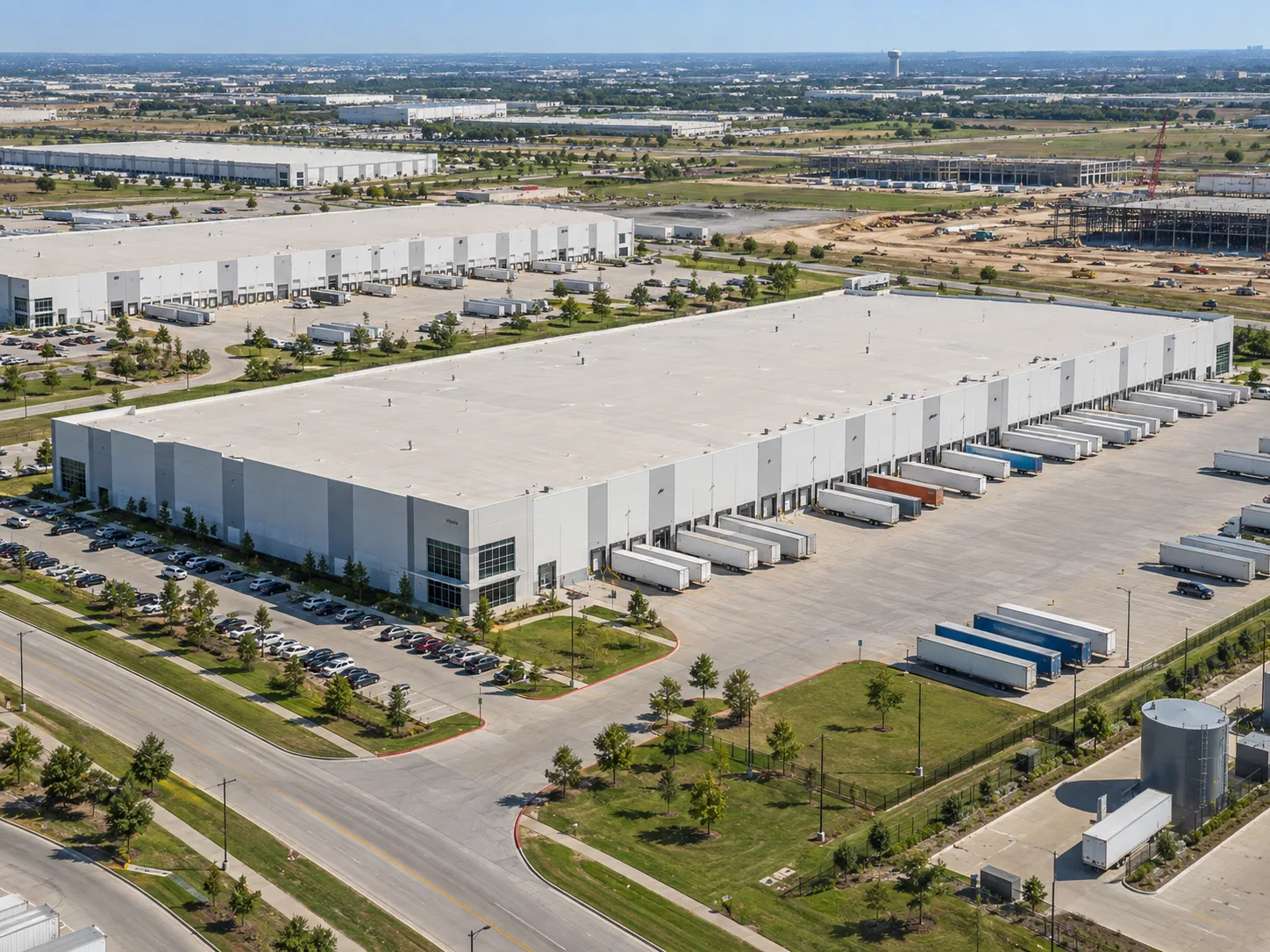



- New industrial supply still exceeds demand, but the gap has narrowed substantially from a year earlier, according to NAR.
- Dallas-Fort Worth led 12-month net absorption at 34.49M SF in Q3 2026, followed by Phoenix and Houston.
- Logistics and specialized industrial remain stronger than flex space, which continues to post move-outs and the highest vacancy.
GlobeSt.com says the industrial market is moving from a supply-led correction toward a more balanced phase, although the recovery remains uneven. The National Association of Realtors data cited in its industrial supply and demand review show new construction still exceeds demand. However, the gap has narrowed sharply from a year earlier as tenants absorb space in large distribution and growth markets.
Get Smarter about what matters in CRE
Stay ahead of trends in commercial real estate with CRE Daily – the free newsletter delivering everything you need to start your day in just 5-minutes
Major Markets Absorb New Space
Dallas-Fort Worth led the country with 34.49M SF of 12-month net absorption in Q3 2026. Phoenix followed with 22.89M SF, while Houston posted 19.23M SF. Indianapolis added another 12.57M SF, according to NAR.
Chicago, Washington, DC, Cincinnati, Philadelphia, and Atlanta also ranked among the leading absorption markets. Most of the top metros improved from a year earlier. That wider group suggests tenant demand is strengthening across several industrial hubs rather than in only one or two markets.
The strongest markets also carry meaningful development pipelines. Their ability to lease newly delivered space matters because it shortens the period when excess supply can weigh on occupancy and property performance.
Product Type Drives the Divide
Logistics properties account for the bulk of annual industrial absorption. Specialized industrial facilities have the lowest vacancy among the three major product categories discussed by NAR. Flex space remains the weakest segment, with continued tenant move-outs and the highest vacancy.
Those differences make the broad industrial label less useful for underwriting. Specialized properties can benefit from tenant requirements that generic buildings cannot easily satisfy. Logistics facilities remain central to regional and national distribution networks. That role supports a deeper demand base. It also helps explain why absorption has concentrated in logistics even while the broader market still carries excess space.
Flex owners face a tougher operating environment. Tenant retention, building functionality, location, and repositioning costs become more important when occupiers have more choices.
Vacancy Is Stabilizing, Not Disappearing
The narrowing supply gap is helping industrial vacancy stabilization, but it has not restored broad landlord pricing power. NAR said rent growth remains restrained because tenants still have available options and new supply continues to reach the market.
That distinction matters for acquisition assumptions. Better absorption can reduce the risk of another sharp vacancy increase. It does not automatically justify aggressive near-term rent growth. Investors still need assets that can capture current demand. They also need buildings that can defend occupancy through the rebalancing period.
Owners in stronger submarkets may be able to lease space before pricing power fully returns. That can make today’s softer rent environment transitional rather than permanent. The harder cases are properties where new deliveries continue to outpace local demand.
High Supply Is Not Always a Red Flag
Large supply pipelines can be manageable when local demand is deep enough to fill the new space. Dallas-Fort Worth, Phoenix, and Houston illustrate that point. All three combine significant development with high levels of absorption.
Investors therefore need to compare deliveries with the size and durability of the tenant base. A high-supply market can improve faster when logistics activity continues generating enough leasing demand to absorb new space.
The Investment Case Gets More Selective
The industrial reset is creating a clearer hierarchy. Logistics buildings in high-absorption metros have stronger demand support. Specialized facilities retain occupancy advantages, while flex properties and weak submarkets remain exposed to move-outs and excess availability.
The market has not returned to the rapid rent growth that defined the earlier cycle. The better signal is that tenant demand is catching up. Owners who can lease space during this transition may benefit as vacancy tightens. The aggregate improvement will not reach every property at the same pace.
NAR’s data therefore support a selective investment case rather than a broad sector rebound. High absorption matters. Product type matters. Local supply matters. The strongest opportunities are where those three factors are beginning to align.