




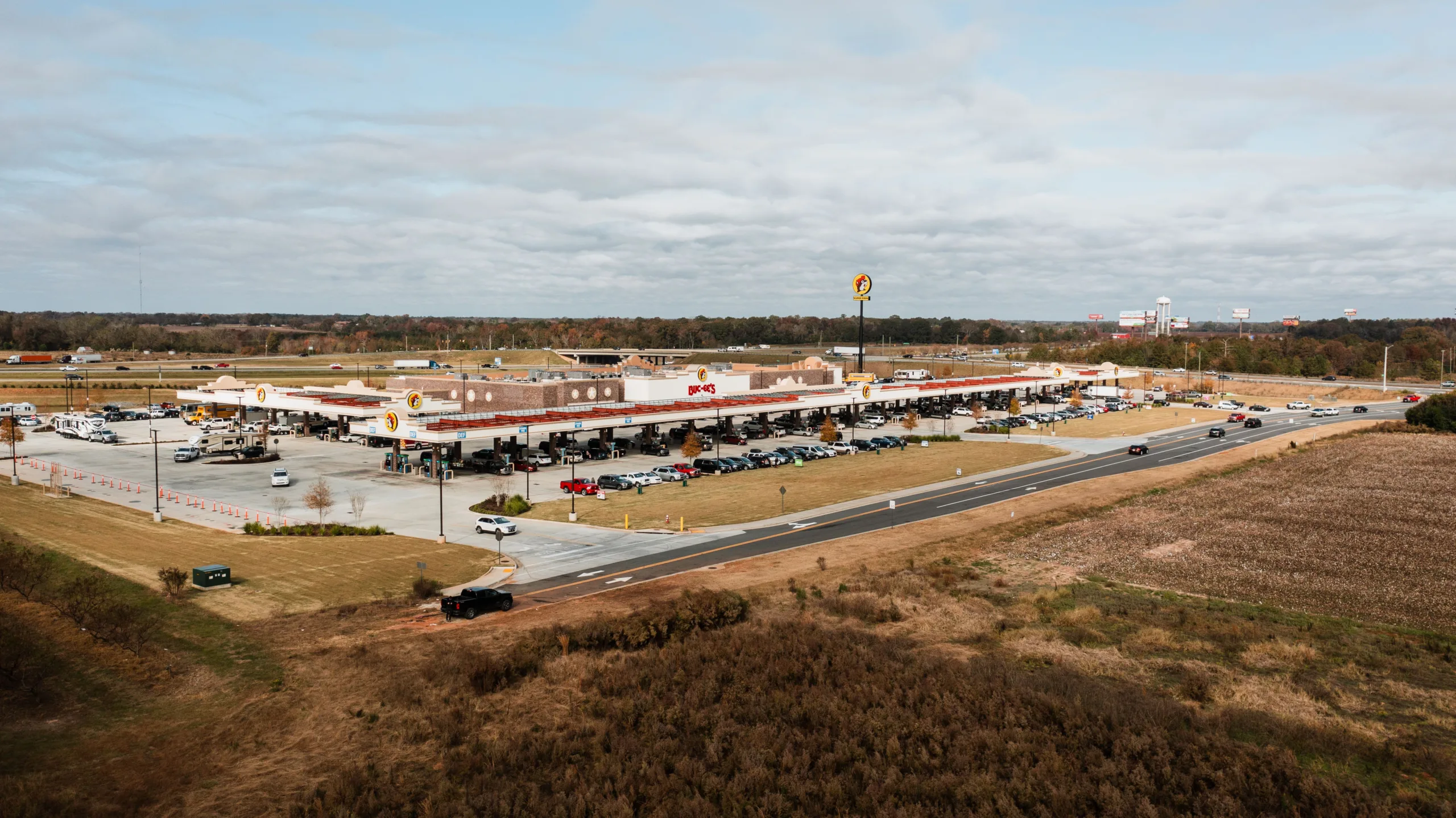



- Buc-ee’s is concentrating growth in Southern, business-friendly, car-dependent markets, with 37 of its stores in home-state Texas.
- Its travel centers can span 73,000 SF with up to 120 fuel pumps. None yet operate in New York, Illinois, or New England.
- Studies tie chain-heavy foodscapes to rural, car-dependent, lower-income areas, aligning with the chain’s Southern site strategy.
Globe St reports that Buc-ee’s is pushing its oversized travel centers deeper into the South, not the Northeast. At a recent opening in Benton, CEO Aplin praised locating in a conservative, business-friendly state with a strong workforce. The chain’s growth map leans heavily toward car-dependent, highway-linked markets.
Get Smarter about what matters in CRE
Stay ahead of trends in commercial real estate with CRE Daily – the free newsletter delivering everything you need to start your day in just 5-minutes
A Business-Friendly Site Strategy
Aplin tied the brand’s fit to local leadership and culture. He said a conservative, family-oriented concept works best when it runs from the governor’s office down to the mayor. He was blunt about where Buc-ee’s will and will not build. Life is too short, he said, to build where people do not appreciate what you are bringing. That philosophy has steered the company toward friendly Southern markets.
The Data Behind the Map
Research backs the pattern. A 2026 WalletHub study found the top fast-food-spending states sit mostly in the South. The leaders were Mississippi, Arkansas, Louisiana, New Mexico, and West Virginia. Many rank among the lowest for median household income. States spending the least include New Jersey, Maryland, Massachusetts, Utah, Connecticut, and New Hampshire.
Georgia Tech researchers Xiaofan Liang and Clio Andris studied 800,000 restaurants in 2023 for what they called chainness. They linked chains to car-dependency, low walkability, nearby highways, and college-age populations, mostly across the Midwest and Southeast. Independent restaurants clustered in dense, walkable, higher-income, and coastal areas.
The Details
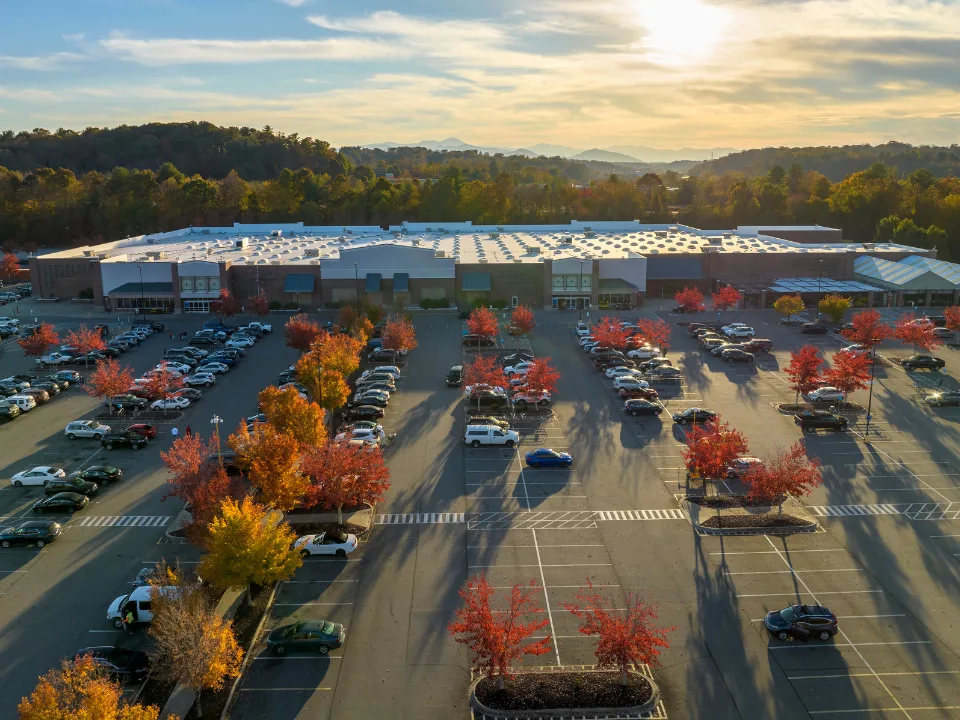
Buc-ee’s runs 56 stores across 12 states, with 37 in home-state Texas. None operate in New York, Illinois, Massachusetts, or anywhere in New England. The stores themselves are hard to miss. Newer locations can cover about 73,000 SF, with as many as 120 fuel pumps and some EV charging.
The brand also attracts international visitors, with World Cup tourists making Buc-ee’s a destination alongside other iconic US chains. A typical large store keeps 40 to 60 restroom stalls, cleaned around the clock. Nearby-state sites feed those absent markets. They include Mt. Crawford, VA, about 350 miles from New York, plus Oak Creek, WI, and a Central Indiana location along I-65.
Why It Matters
The strategy is a read on retail geography. Buc-ee’s targets rural, car-dependent corridors where highway traffic and chain demand run highest. Georgia Tech’s Liang told the Washington Post that the foodscape is very political. He added that politics does not fully explain it. In more rural places, he noted, incomes and education fall while chain demand rises. For retail developers, the takeaway is about traffic patterns and site economics, not ideology. The best Buc-ee’s markets pair cheap land, heavy car travel, and strong local demand.
What’s Next
The beaver is about to reach new territory. In 2027, Buc-ee’s plans stores in Ruston, LA, Mebane, NC, Kansas City, KS, Gallaway, TN, and Fayette County. In 2028, openings are set for West Memphis, Ocala, FL, Lafayette, LA, and Oak Grove, KY. More sites await approval, including Tallahassee, FL, Springville, UT, Hardeeville, SC, and Monroe County, GA. In all, the emblem will land in six new states for the first time.