




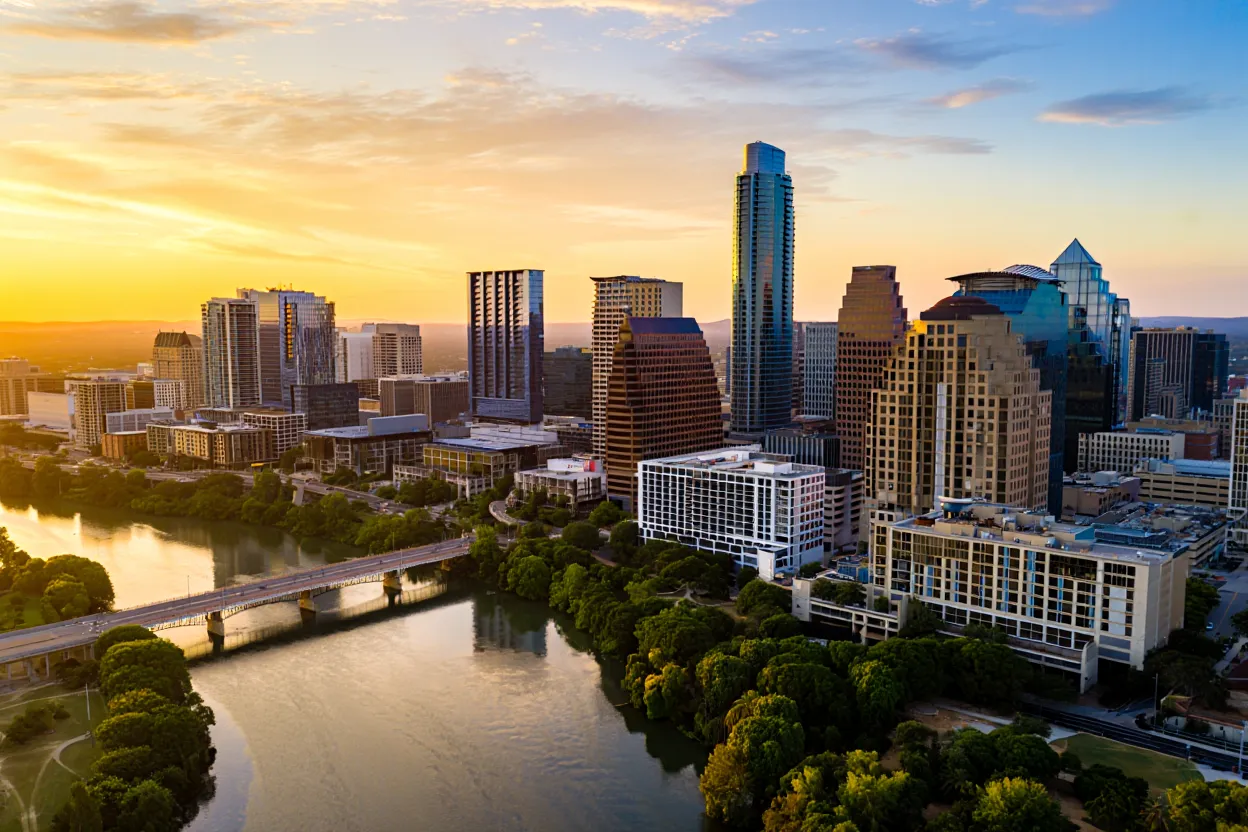
- Apollo Global Management has chosen Austin for its new second headquarters, per the Financial Times.
- The firm evaluated Miami, Palm Beach, and Nashville but landed on Austin, citing talent and business climate.
- This move highlights Austin’s emergence as a key financial and corporate hub and the ongoing shift away from New York.
Wall Street Eyes Texas Expansion
Apollo Global Management is adding momentum to the exodus of Wall Street institutions heading to Texas, with plans to select Austin as its official second headquarters. According to Globe St, the alternative asset giant—managing around $1T in assets—finalized Austin after weighing other contenders, including Miami, Palm Beach, and Nashville. Senior partners have reportedly been briefed, but Apollo has yet to make a public announcement or share detailed plans. This expansion would mark a significant pivot for a firm long anchored in Manhattan, where it currently remains headquartered at 9 West 57th Street.
The selection underlines the growing role of Texas cities as financial power centers. Houston and Dallas have already lured several banking and corporate players; Austin, known for its tech sector, has joined the ranks by attracting heavyweight financial names seeking room to grow.
Get Smarter about what matters in CRE
Stay ahead of trends in commercial real estate with CRE Daily – the free newsletter delivering everything you need to start your day in just 5-minutes
The End of the Single-Hub Model
Apollo’s decision to establish a second headquarters fits a broader trend of financial institutions diversifying beyond New York. The firm has more than doubled headcount since 2020, now employing over 4,000 staff worldwide. Its operational footprint covers multiple US cities and international hubs, but until now, New York has remained the unchallenged command center for investment and leadership. The formal addition of Austin would create a new locus for senior talent, strategy, and growth, reflecting how the post-pandemic workforce has grown both geographically and functionally distributed.
With technology facilitating remote work and talent pools increasingly located outside the northeast, extending operations into cities like Austin has become a logical, cost-effective move for firms under pressure to hire and retain skilled professionals at scale.
The Details
Per the Financial Times, Austin emerged as the clear favorite after an internal review that assessed finalist cities on talent availability, quality of life, and long-term hiring prospects. Miami, Palm Beach, and Nashville were in contention, but Austin prevailed, credited with a deep talent pool, tech proximity, favorable business conditions, and relatively moderate operating costs. Apollo’s process included input from executives across divisions, and, although the move is not yet public, senior staff have been notified.
The exact office location, size, and timing for the Austin HQ have not been disclosed, and Apollo declined to comment. However, its activity mirrors recent Texas expansions by high-profile firms, with the state capturing significant market share among corporate and financial relocations in the past three years.
Financial Firms Scale Up in Austin
Austin’s transition from tech haven to broader corporate powerhouse has been years in the making. CBRE shifted its global headquarters there in 2020, followed by a surge of tech, finance, and professional services migration. According to the Austin Chamber of Commerce, over 170 companies relocated or expanded in Austin between 2021 and early 2026. Notable financial and energy names like JPMorgan Chase, Goldman Sachs, and Charles Schwab have all expanded substantial Texas operations, adding thousands of jobs and fresh capital to the region. Per Moody’s Analytics, Austin posted a 5.1% annual employment growth rate for professional services in 2025.
This puts Apollo’s selection in line with a rising trend of asset managers seeking to diversify their US footprints. Rising NYC costs, hybrid work, and competition for top talent have accelerated geographic dispersion—making Texas, and Austin in particular, a magnet not just for back-office functions but for strategic headquarters investments.
Why It Matters
Apollo’s selection of Austin signals a deeper reconfiguration of the old Wall Street map. It pushes more financial power into the US Sun Belt. Apollo’s wider Sun Belt push also shows how regional growth markets now support its long-term expansion strategy. By anchoring a second headquarters in Texas, Apollo validates a wave of multi-city financial models. Many firms have already planted operations across the south and west. According to CBRE, Texas now claims three top-ten US cities for headquarters relocations.
This move could catalyze even more movement from both New York-based and coastal firms tuned in to recruiting, operational, and regulatory opportunities outside traditional epicenters. For Austin landlords and developers, a new financial anchor tenant of Apollo’s scale could drive further Class A office demand and reset expectations for new project types—mixing tech and finance talent. State and local incentives may also come under sharper focus as more firms weigh Texas launches over southeast alternatives like Miami. Ultimately, Apollo’s move reinforces the bet on Texas as a magnet for ambitious capital and talent, a shift that could continue to erode New York’s singular dominance in finance.
What’s Next
Industry sources suggest that Apollo will continue refining its Austin plans over the next several months, with a formal announcement potentially arriving before the end of 2026. Site selection, buildout, and leadership appointments remain in flux. The broader sector will watch closely to see whether other major institutional investors—following in Apollo’s wake—choose Austin or challenge it with alternative sunbelt locations. As labor preferences, recruiting, and remote work trends evolve, expect the migratory momentum to accelerate. Austin’s rising profile could spark further Class A office investment and corporate expansion throughout central Texas.