



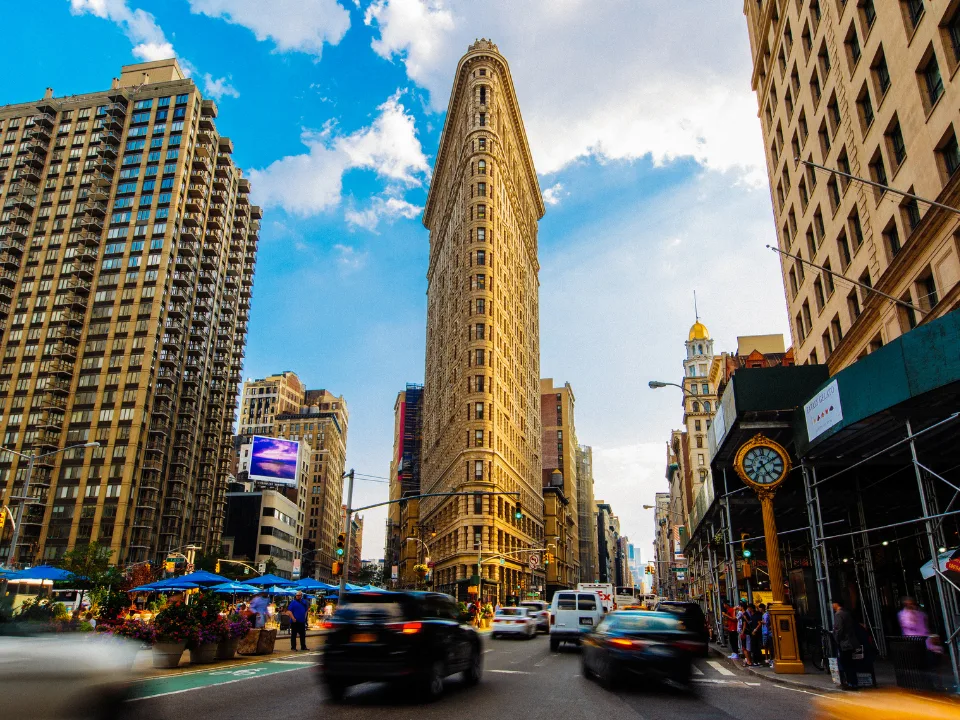
- Flatiron NoMad’s Business Improvement District has invested in public spaces, programming, and neighborhood improvements to support office, retail, and restaurant activity.
- The district operates with a $7.9 million 2025 budget and is preparing to add a 26,000-square-foot immersive event venue that expands its activation strategy.
- The neighborhood’s performance highlights how curated mixed-use districts are becoming a competitive advantage for office landlords seeking tenants in a shifting market.
Manhattan’s office recovery isn’t being driven solely by leasing activity or capital markets. In Flatiron and NoMad, neighborhood investment has become an increasingly important piece of the equation, with the Flatiron NoMad Partnership using placemaking, public events, and streetscape improvements to strengthen one of New York City’s most active mixed-use districts, as reported by GlobeSt.
Get Smarter About What Matters in New York
Subscribe to our free newsletter covering the biggest commercial real estate stories across the five boroughs — delivered in just 5 minutes.
The Business Improvement District (BID) has emerged as a model for how property owners can collectively invest in amenities that benefit office tenants, retailers, restaurants, and residents. The organization now oversees one of the city’s most active commercial neighborhoods while preparing for another round of public space improvements and destination-focused attractions.
How Business Improvement Districts reshape neighborhoods:
Business Improvement Districts allow commercial property owners within a defined area to collectively fund services that cities often cannot provide at the same level. Those investments typically include sanitation, landscaping, security, marketing, cultural programming, and public events that improve the customer experience while making neighborhoods more attractive for employers and investors.
There are more than 1,000 BIDs across the U.S., with New York City operating 76 active districts that collectively invest millions of dollars each year. Flatiron NoMad stands out as one of the city’s largest, operating with a 2025 budget of $7.9 million and supporting more sales tax-generating businesses than any other New York BID.
The details:
The Flatiron NoMad Partnership has focused its strategy on making the district a destination rather than simply an office corridor. Projects range from landscaped medians and decorative street furniture to kiosks and neighborhood programming designed to increase pedestrian activity throughout the year.
Private-sector participation has played a major role in those efforts. Williams Equities principal Michael Cohen, who also serves as chair of the Flatiron NoMad Partnership, said the neighborhood continues attracting technology firms, legal practices, healthcare professionals, and creative companies looking for highly amenitized office locations.
Another major addition is scheduled for January 2027, when Convene Hospitality Group plans to open The Aperture at 120 East 23rd Street. The 26,000-square-foot venue will feature a 165-foot digital projection canvas capable of hosting immersive brand activations, product launches, and events for up to 1,000 attendees.
Placemaking becomes an office leasing advantage:
Flatiron NoMad reflects a broader trend across major office markets where landlords increasingly compete on neighborhood quality as much as building quality. Walkability, outdoor gathering spaces, retail options, and year-round programming have become meaningful differentiators as employers encourage workers back to the office.
The district has also benefited from high-profile activations. One example cited by GlobeSt. featured fintech company Ramp hosting a public installation outside Flatiron North Plaza that generated significant foot traffic while showcasing the company’s expense management platform to both live audiences and online viewers.
Meanwhile, New York City’s Department of Transportation continues collaborating with the BID on expanding pedestrian plazas along Broadway, further reinforcing the neighborhood’s live-work-play appeal.
Why it matters:
Office recovery increasingly depends on more than occupancy statistics. Employers evaluating locations are also considering whether surrounding neighborhoods offer amenities that help recruit and retain talent, particularly younger workers who prioritize walkable environments and vibrant public spaces.
Cohen argues that demand has also challenged early pandemic assumptions about older office buildings. Rather than becoming obsolete, many character-rich properties located within active mixed-use neighborhoods have remained resilient because tenants value authentic urban environments over newer buildings in less dynamic locations.
For investors, the story reinforces the importance of evaluating district-level fundamentals alongside individual assets. Public-private partnerships that improve neighborhood appeal can strengthen leasing performance, retail demand, and long-term asset values across an entire submarket.
What’s next:
Flatiron NoMad’s next chapter will center on expanding public amenities and experiential destinations. The opening of The Aperture in January 2027, combined with Broadway’s ongoing pedestrian plaza improvements, should further increase visitor traffic and enhance the district’s appeal for office tenants, retailers, and hospitality operators.
As Manhattan’s office market continues to recover, neighborhoods that pair quality buildings with coordinated placemaking strategies may outperform competing business districts. Flatiron NoMad’s experience suggests that investing beyond property lines can create lasting advantages for both landlords and the broader commercial real estate ecosystem.