



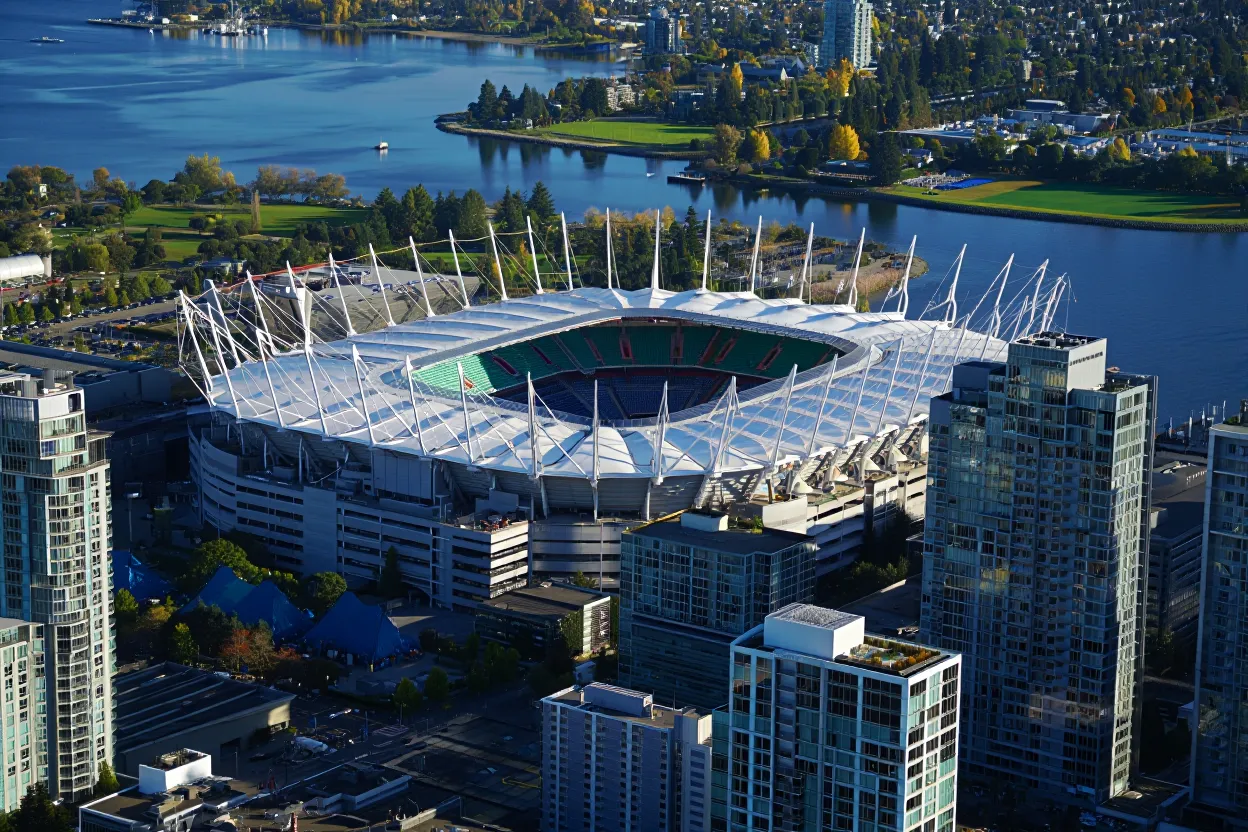
- US hotel bookings for the FIFA World Cup trail Canadian and Mexican counterparts, with Vancouver and Guadalajara leading at 48% occupancy per CoStar.
- High prices, visa concerns, and US travel hurdles deter international visitors despite sizable city investments in stadiums and infrastructure.
- Flat bookings risk disappointing the economic boost expected from the World Cup, creating uncertainty for US hosts banking on last-minute reservations.
US World Cup Cities Trail in Pre-Event Hotel Demand
With the FIFA World Cup set to kick off across 16 North American cities this week, preliminary hotel demand in the US is leaving much to be desired, reports The WSJ. Canadian and Mexican cities like Vancouver and Guadalajara are outpacing almost all US hosts, posting the highest pre-event occupancy at 48%, according to CoStar. San Francisco is the only US market breaking the 40% threshold, highlighting a slower ramp-up than expected in the lead-up to FIFA’s signature event.
Get Smarter about what matters in CRE
Stay ahead of trends in commercial real estate with CRE Daily – the free newsletter delivering everything you need to start your day in just 5-minutes
Higher Costs and Access Challenges Dampen US Bookings
Local hotel operators point to several factors putting US cities on the back foot. Record-high ticket prices—some US final seats are reselling for over $20,000, per TicketData—combine with steep transportation costs to deter all but the most dedicated travelers. Compounding this are visa concerns, a tougher US political climate, and the perception of less accommodating travel infrastructure. By contrast, cities like Toronto offer downtown stadium access with $4 public transit, while New York’s initial $150 round-trip fare to MetLife Stadium only recently dropped to a still-pricey $98.
Lower Prices in Mexico and Canada Attract Travelers
Affordability is fueling stronger demand south of the border. According to AirDNA, short-term rental bookings in Mexico are climbing fast, with typical nightly rates near $100 compared to $300 in US cities like Miami and Boston. Canada is seeing similarly robust demand, buoyed by easy stadium access and cheaper hotel and transit costs. Some US host cities also face growing concerns about housing availability as the tournament approaches. Rising accommodation costs and tighter supply could add pressure in already constrained markets. These dynamics are driving higher occupancies in non-US cities while US bookings remain dependent on travelers booking closer to each match day. Hosts like Host Hotels & Resorts still expect some late-stage spikes, with 40% of bookings for events like these often materializing within six days, according to CEO Jim Risoleo.
Expectations vs. Reality for Hosts and Investors
For US markets banking on a World Cup windfall, the gap between investment and realized demand is significant. Cities hosting matches have spent hundreds of millions on security, stadium upgrades, and transit—outlays now in jeopardy of being under-recouped given stagnant bookings. Pebblebrook Hotel Trust, with hotels in four US host markets, is seeing room revenue increases of just 9% in Miami, with flat occupancy year-over-year and fewer World Cup room nights than events like the World Baseball Classic. Out-of-pocket visitors are shifting to more affordable markets or short-term rentals abroad, leaving some US hotel owners hoping late bookings materialize to avoid a missed opportunity.
What’s Next
The weeks ahead will put last-minute travel patterns to the test. Owners will be watching closely for a demand surge in the days ahead of each match—an especially critical window as 40% of bookings can happen inside six days, per Host Hotels & Resorts. Success in capitalizing on the World Cup will depend on how quickly, and at what price point, late traveler demand appears, affecting not just hotel performance but the perceived ROI on large-scale city investments. The lesson for future mega-events: price sensitivity and ease of access may be as critical as the event itself for translating international buzz into local gains.