









- Blackstone limited investor redemptions from its BCRED fund after requests hit 10% in Q2 2026.
- A 5% quarterly cap aims to stem outflows as broader private asset markets face rising redemption pressure.
- Liquidity fears are moving from private credit into private equity, signaling stress for semi-liquid vehicles industry-wide.
Withdrawal Restrictions Hit Flagship Fund
Blackstone is blocking investor withdrawals from its $79B Blackstone Private Credit (BCRED) fund after a sharp increase in redemption requests in Q2 2026. The move caps redemptions at 5% of shares outstanding for the quarter, following requests that reached 10%, or roughly $7.9B. This follows similar activity by Partners Group, which restricted redemptions in a European private equity vehicle just a day earlier.
Get Smarter about what matters in CRE
Stay ahead of trends in commercial real estate with CRE Daily – the free newsletter delivering everything you need to start your day in just 5-minutes
Private Vehicle Caps Are Spreading
Private credit and equity funds have offered semi-liquid terms, promising access to institutional strategies for individual investors. However, as redemptions spike, these structures are facing real-world tests. In Q1, BCRED saw a record 7.9% redemption rate, prompting Blackstone to temporarily raise its withdrawal cap and cover shortfalls with employee capital. Partners Group’s warning that liquidity pressure is migrating from private credit to private equity amplifies these concerns.
Private Credit Vehicles Show Stress
Private credit was pitched as a stable, yield-driven alternative to public markets, drawing $1B in new investments to BCRED just last quarter. Ultimately, however, net outflows have materialized as investors reevaluate commitments amid uncertainty. Blackstone and Partners Group have commented that withdrawal caps are built-in protections for long-term investors—not flaws—intended to stabilize portfolios against short-term flows and market swings.
Broader Market Pressure Emerges
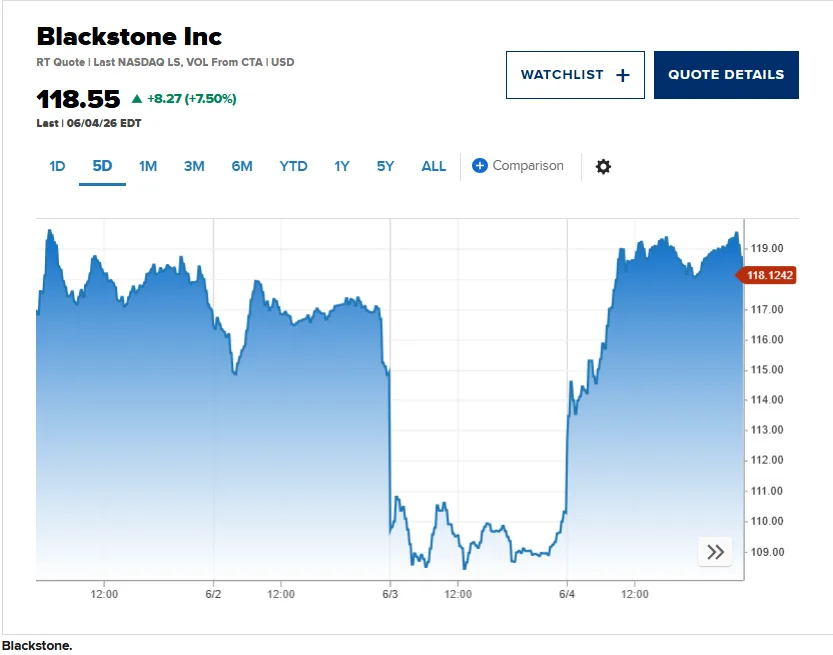
According to Daniel Ivascyn, chief investment officer at Pimco, the credit industry is entering its first sustained loss cycle in years, with underlying weaknesses surfacing. Blackstone’s move, and similar responses from private asset managers, reinforce that semi-liquid structures are vulnerable in periods of elevated stress. Blackstone shares climbed over 5% Thursday, recouping Wednesday’s drop, as markets digest the new caps and search for stability.
Why It Matters
The private markets industry has spent years promoting semi-liquid funds as a way for individual investors to access institutional-quality assets. Those products have become one of the fastest-growing segments of alternative investing. Their success depends on balancing investor liquidity with the long-term nature of private assets.
Withdrawal limits are part of that design. Blackstone President Jon Gray defended the structure earlier this year, telling CNBC that redemption caps are a feature rather than a flaw. Fund managers argue that gates protect long-term investors by preventing forced asset sales during periods of market stress.
Still, rising redemption requests often signal changing investor sentiment. When investors seek liquidity at elevated levels, markets begin to question whether asset values fully reflect underlying risks. The timing is particularly important because credit investors are also facing signs of deterioration in loan performance.
Pimco Chief Investment Officer Daniel Ivascyn recently warned that the credit market is entering its first sustained default cycle in years. If defaults rise and economic conditions weaken, investor demand for liquidity could increase further.
What’s Next
The industry’s next test will come during upcoming redemption windows. Investors will watch closely to see whether withdrawal requests stabilize or continue climbing. Additional restrictions could fuel concerns that liquidity pressures are becoming more widespread.
Fund managers are likely to emphasize that redemption gates are functioning exactly as intended. Whether investors accept that explanation may depend on broader market conditions. Continued inflows would help offset withdrawals and ease concerns.
For now, Blackstone’s decision serves as a reminder that private assets remain fundamentally illiquid. As redemption requests rise across both private credit and private equity, liquidity management is moving back to the center of the investment conversation.