





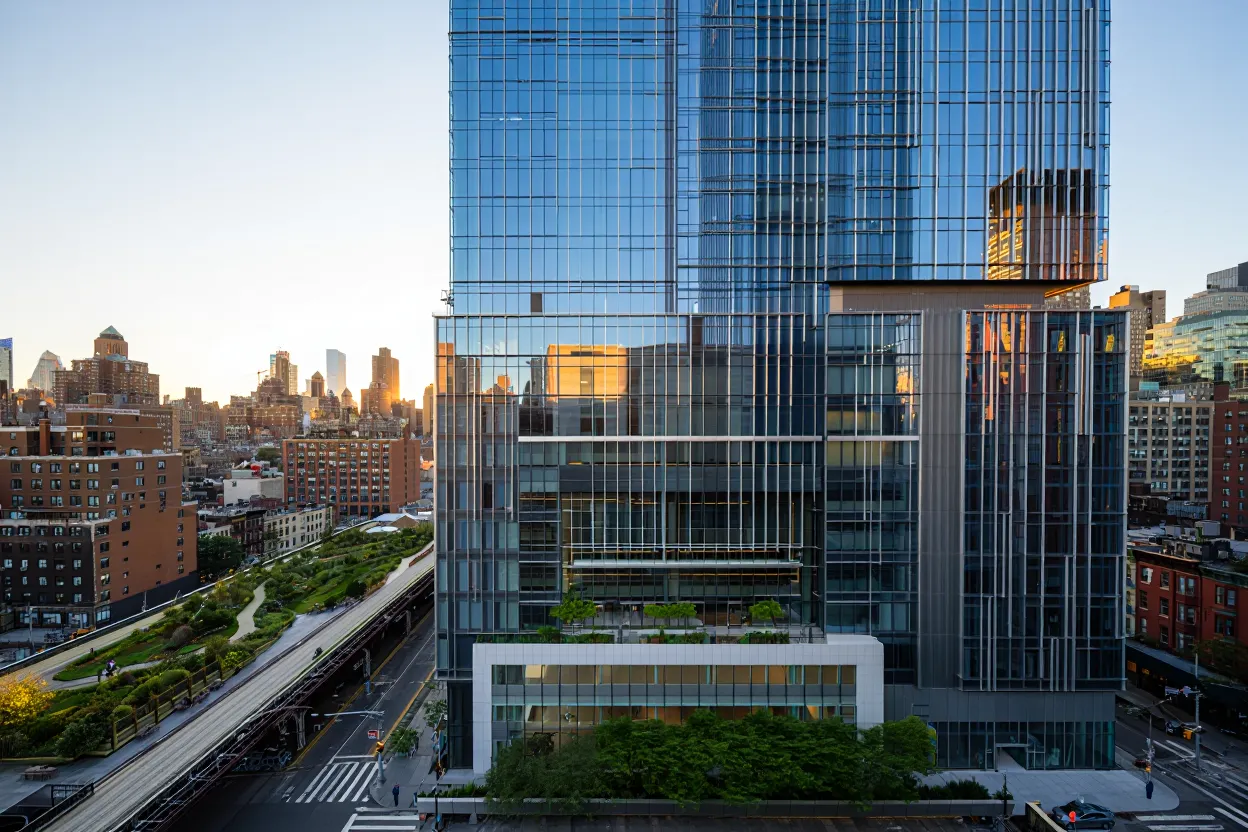
- A Related Cos. JV is finalizing a $1.4B CMBS refinancing for 10 Hudson Yards, with closing set for June 24.
- The 1.8M SF tower is fully leased, but 80% of its tenancy is concentrated among three major firms.
- The deal highlights continued lender confidence in top-tier Manhattan offices, even as sector originations lag other asset classes.
The financing arrives as lenders remain selective on office properties. They continue to back premier assets with strong occupancy and institutional ownership. The tower was fully leased as of May. That performance stands out in a market where many office buildings still face leasing and refinancing pressure.
Get Smarter about what matters in CRE
Stay ahead of trends in commercial real estate with CRE Daily – the free newsletter delivering everything you need to start your day in just 5-minutes
Former Debt Issuance Sets Up New Financing
10 Hudson Yards debuted in 2016 as the first office asset to open in the transformative Hudson Yards district, and the first to receive LEED Platinum v2009 certification in New York City. Its existing debt stems from a 2016 CMBS note maturing in June. The forthcoming CMBS loan, structured by Wells Fargo, Goldman Sachs, Morgan Stanley, and Deutsche Bank, will feature a 5.5-year, interest-only, fixed-rate at 5.5%, maturing in 2031.
Manhattan Office Debt vs Broader CRE Market
The new CMBS loan is being originated by Wells Fargo, Goldman Sachs, Morgan Stanley, and Deutsche Bank. Bloomberg first reported the refinancing, which is expected to feature a 5.5-year interest-only structure with a fixed rate of 5.5% and a maturity date in 2031.
Proceeds will refinance a $1.2B CMBS loan issued in 2016 that matures this month. Additional funds will cover reserves and transaction costs.
The tower is nearly fully leased. Tenant concentration remains a notable feature of the asset. Tapestry, L’Oréal, and Boston Consulting Group collectively occupy nearly 80% of the building’s space, providing ownership with a roster of large corporate tenants but also creating significant exposure to a handful of occupiers.
Why It Matters
The 10 Hudson Yards refinancing highlights the continued bifurcation of the office market. Lenders are not broadly reopening the credit spigot for office properties. Instead, they are concentrating capital on buildings that combine strong sponsorship, modern construction, high occupancy, and prime locations.
For borrowers facing upcoming maturities, that distinction is increasingly important. Properties with weaker leasing profiles or significant capital needs may continue to face refinancing challenges, while top-performing assets can still secure large-scale financing from both banks and CMBS lenders.
The deal also reinforces the durability of Hudson Yards as an investment destination. Since opening its first office building a decade ago, the development has grown into a major office hub with roughly 11.6M SF across five office properties. Related and Oxford are continuing that expansion through the development of 70 Hudson Yards, which secured a reported $2.5B financing package earlier this year.
What’s Next
If the deal closes on June 24, ownership will eliminate a major near-term maturity. The refinancing could also establish a benchmark for pricing and lender appetite in the trophy office segment.
Investors and lenders will watch closely to see whether similar properties can secure comparable financing. Hundreds of billions of dollars in commercial mortgages will still mature this year. As a result, refinancing activity will remain a key theme throughout 2026.
The bigger question is whether lenders expand beyond a small group of elite assets. For now, 10 Hudson Yards remains firmly within that top tier.