



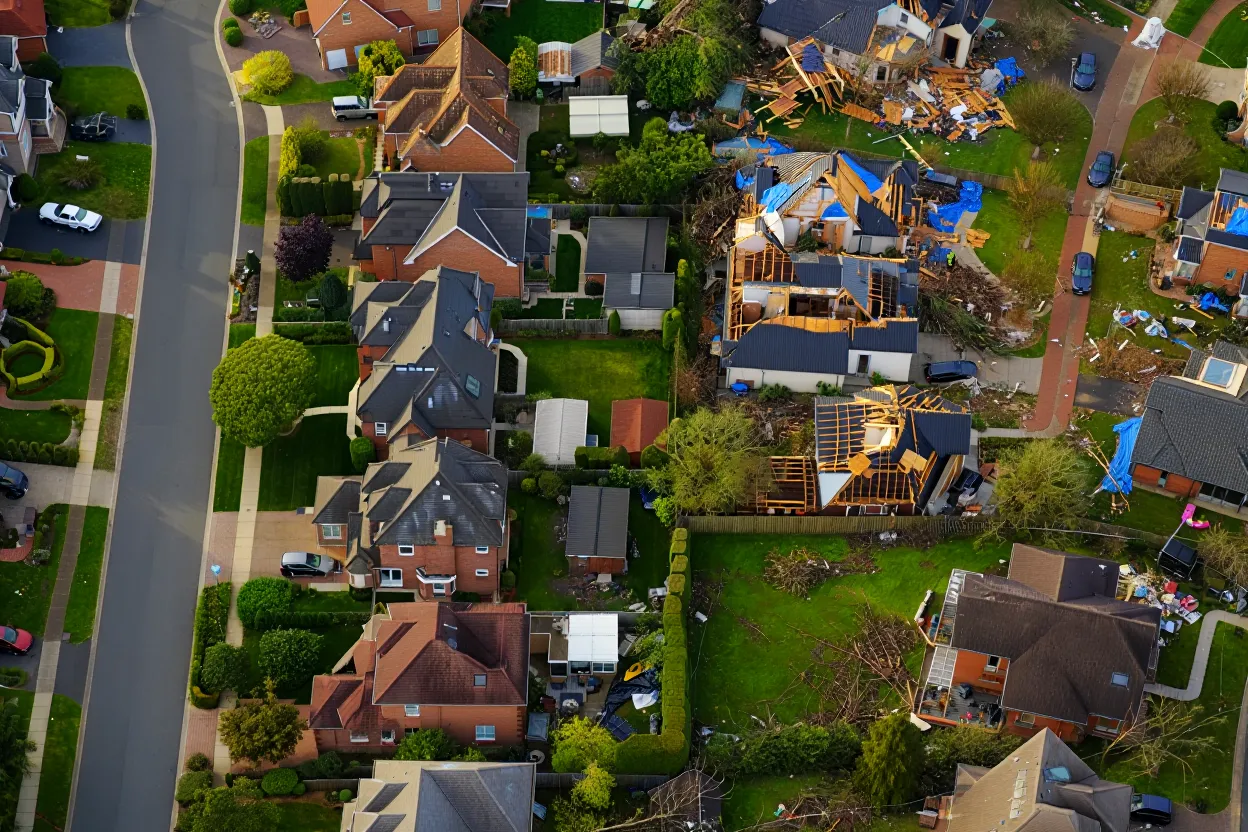
- Insurance premiums tied to climate risk are starting to drive Americans out of high-risk markets, reversing longstanding migration trends.
- Sun Belt states like Texas, Arizona, and Florida are seeing net out-migration as property values drop and insurance costs climb.
- High-risk properties now account for 12% of US residential stock and $4.6T in replacement cost, a figure expected to rise as climate risk mounts.
Insurance Costs Begin to Reshape Migration
Americans are rethinking where they call home, as surging insurance premiums in climate-exposed markets start to outweigh the allure of fast-growing Sun Belt cities, per Bisnow. New data from Cotality shows that migration patterns are shifting, with states previously drawing the most new residents losing ground as homeowners reevaluate the true cost of climate risk.
Get Smarter about what matters in CRE
Stay ahead of trends in commercial real estate with CRE Daily – the free newsletter delivering everything you need to start your day in just 5-minutes
Climate Risk Upends Sun Belt’s Draw
For a quarter century, Americans have flooded southern states seeking jobs, sunlight, and affordable homes. But the tide is shifting. Cotality’s analysis of US Census Bureau data reveals net out-migration in Texas, Arizona, and Florida. Rising premiums, tied to a growing risk of floods and extreme heat, are eroding property values and making relocation less attractive. Meanwhile, Midwest and Northeast states with fewer climate threats, such as Illinois, Michigan, and New York, are gaining residents.
The Details
Since 2020, US residential real estate values have jumped by over $20T. Yet, those gains come with a catch: insurance premiums for property owners have climbed by double digits annually since 2017. Cotality data shows for every 10% rise in insurance premiums, property values fell by about 4.6%. Properties classified as high risk—those scoring 70 or higher out of 100 for climate event likelihood—make up 12% of the national housing stock, representing $4.6T in replacement costs. That figure is expected to grow to $7.8T as climate risk expands.
Inflation and Climate Combine to Raise Costs
According to Cotality, the rising cost of rebuilding after disasters is compounding the insurance squeeze. Inflation for construction inputs outpaces the broader Producer Price Index nearly two-to-one, driving up the expense of restoring damaged property. Even as insured losses for weather events moderated in the past year, this construction inflation ensures that premiums continue their upward trajectory—intensifying migration out of the most vulnerable markets.
Why It Matters
The commercial and residential real estate sectors are both exposed to these shifts. Cotality’s research echoes First Street’s findings, which reported 17% lower commercial property values in high climate-risk markets. As John Rogers of Cotality noted at the National Association of Real Estate Editors conference, a fifth of US homes could fall into the highest climate risk tier in coming years, with a potential $7.8T replacement cost. For perspective, the replacement cost for all US residential real estate is $43.8T, underscoring the scope and scale of the assets now at risk.
What’s Next
Market observers should watch for further migration swings as insurance pressures filter into buyer decisions. If climate risk continues to escalate, we could see an even greater concentration of value erosion in the Sun Belt and growth in migration toward the Midwest and Northeast. Rising construction costs and shifting insurance models will remain critical variables for both investors and property owners. Data-driven rating systems, like those from Cotality, will likely play a larger role in underwriting and market analysis across asset types.