



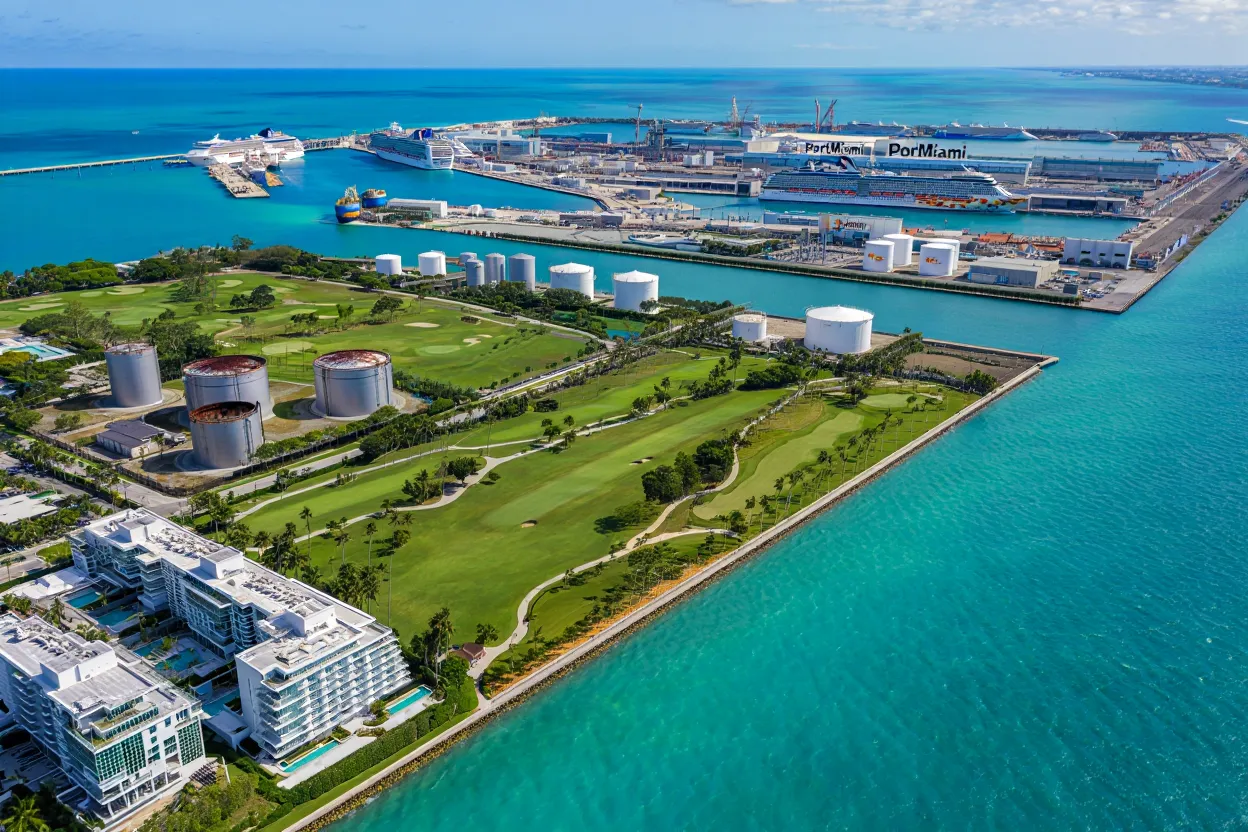
- An investor group’s $180M purchase of a Fisher Island fuel terminal has triggered lawsuits and competing offers from Miami-Dade County.
- The parcel is key to PortMiami’s fuel supply, with cruise operators and labor groups warning of major operational risks if access is lost.
- The dispute highlights Miami’s rising tension between luxury real estate interests and the needs of the working port economy.
Fisher Island Fuel Terminal Sale Sparks Power Struggle
A high-profile dispute is unfolding over a 10-acre former fuel terminal on Fisher Island, just off Miami Beach. In early 2025, an investor group led by HRP Group, Related Group, and Raycliff Capital paid $180M for the site with plans to build luxury condos. The deal threatens a critical supply chain for PortMiami, among the world’s busiest cruise ports, which has relied on the terminal for fueling ocean liners for nearly a century.
Get Smarter about what matters in CRE
Stay ahead of trends in commercial real estate with CRE Daily – the free newsletter delivering everything you need to start your day in just 5-minutes
Luxury Development Clashes With Critical Infrastructure
The fuel depot, installed in the 1920s and valued mostly for its location, has long ranked as an eyesore and environmental worry for Fisher Island’s ultra-wealthy residents, where the typical home lists for $12M according to Realtor.com (2026). Many welcomed the idea of condos with penthouses targeting $100M. But the cruise industry, which depends on the site’s flow, raised alarms. Losing direct fuel supply could force costly alternatives, including barge shipments from Fort Lauderdale or new fueling infrastructure. County officials consider both options expensive and logistically difficult.
County Reaction and Lawsuits Escalate
Miami-Dade County scrambled to stop the deal, pursuing direct negotiations and, when rebuffed, voted to authorize eminent domain. However, the purchase closed before they could act. Residents’ groups and the Fisher Island Club promptly filed suit to block a county seizure, citing environmental concerns about the old tanks and contractual claims to part of the land. New state court litigation and allegations of a $200M county buyback deal—plus another $200M payable over 20 years—add further complications. Labor unions supporting maritime workers have joined the opposition, demanding the fuel supply remain intact.
Port Operations Threatened by Potential Depot Loss
PortMiami generates $61B in annual economic activity for the region (per Miami-Dade County, 2026). Cruise operators point out that no major US port runs without a dedicated fuel center, warning of competitive disadvantage and severe disruption if the terminal is shuttered. County officials face scrutiny for moving late, while local hearings have underscored rising friction between Miami’s luxury boom and the region’s workforce. Anti-billionaire protests signal a broader anxiety: Miami’s status as a business gateway may be undermined by the very wealth transforming its coastline.
What’s Next
The county and HRP remain in active talks, and new lawsuits could complicate any resolution. Watch for court rulings on eminent domain, negotiations over a possible county acquisition, or escalation toward a costly delay in condo construction. The broader trend—a standoff between high-end developers, CRE investors, and key port infrastructure—will set precedents for Miami and other fast-gentrifying markets balancing real estate gains with operational demands.