




- Industrial cap rates averaged 6.44% in Q4 2025, after a mid-year dip.
- The overall repricing cycle appears complete as cap rates stabilize above 2022 lows.
- Strong fundamentals—low distress and manageable vacancy—support the sector.
- Yield compression is unlikely in 2026, shifting focus to operational execution.
Volatility Defines Industrial Cap Rates
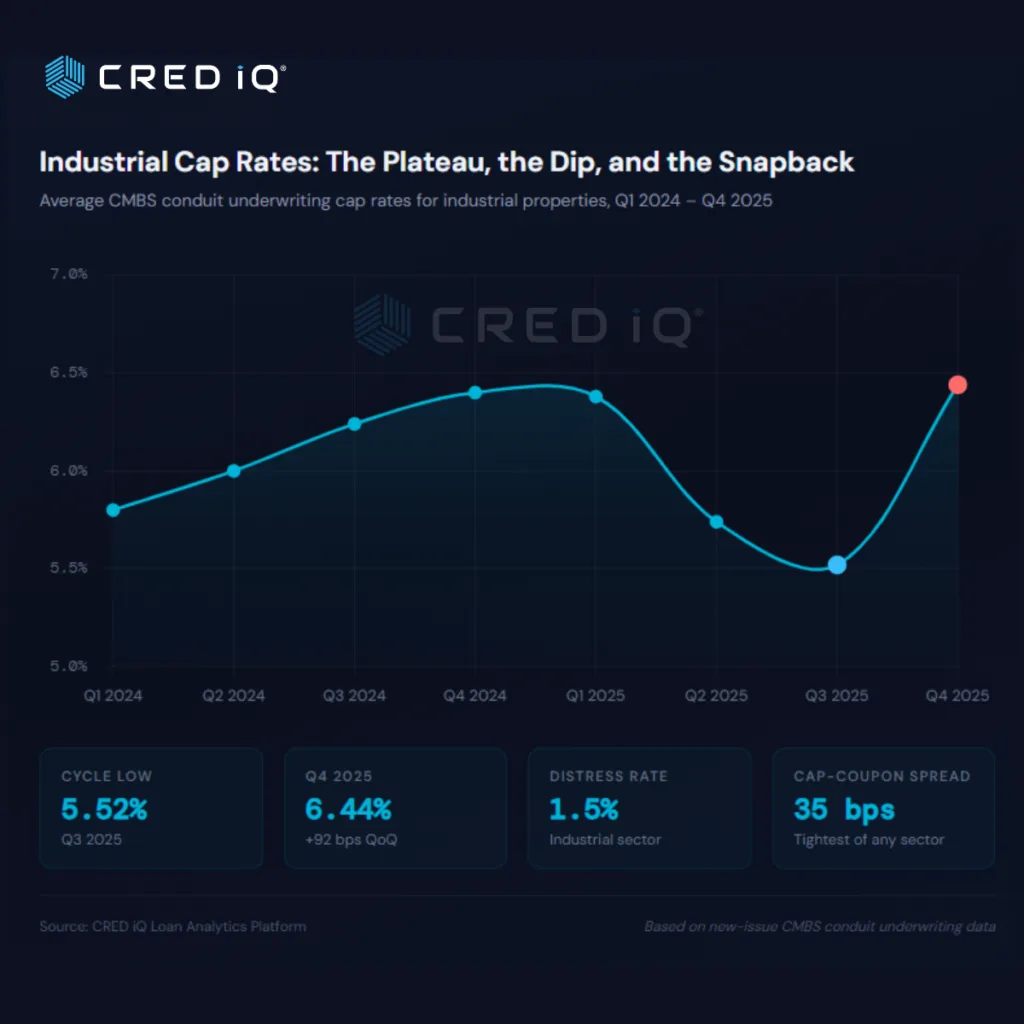
Industrial real estate continues to dominate commercial property market discussions, as industrial cap rates have moved through a pronounced cycle. Following record-low cap rates during the post-pandemic surge, the sector faced a valuation reset beginning in 2022. CMBS conduit underwriting data from CRED iQ shows industrial cap rates rising from the low-5% range in early 2022 to about 6.00% by mid-2024. This marked a significant valuation shift for industrial assets.
Mid-2025 Compression Followed by Sharp Reversal
During the first three quarters of 2025, industrial cap rates compressed—reaching a low of 5.52% in Q3—driven by improved investor sentiment and aggressive interest in Class A logistics properties. However, Q4 2025 brought a swift 92-basis-point expansion to 6.44%, signaling that the earlier compression may have reflected deal composition rather than a lasting pricing trend. This reversal also comes as rent growth softens and tenant demand faces new pressures, adding another layer of uncertainty to pricing trends. As the Q4 loan pipeline broadened to include more varied assets, industrial cap rates quickly reverted to higher levels.
Repricing Complete, Focus Shifts to Operations
With industrial cap rates now stabilized about 120 basis points above 2022 levels, the repricing phase appears to be over. Fundamentals remain strong: CMBS industrial distress is just 1.5%, significantly better than other sectors like office. The spread between industrial cap rates and interest rates remains narrow, suggesting institutional confidence—yet also tighter underwriting margins. In 2026, further yield compression is unlikely; returns will come from operational management, including rent growth and occupancy strategies, not further cap rate declines.
Get Smarter about what matters in CRE
Stay ahead of trends in commercial real estate with CRE Daily – the free newsletter delivering everything you need to start your day in just 5-minutes
What This Means for Investors
Industrial cap rates have reached a plateau after a period of volatility, reinforced by stable sector fundamentals and tight spreads to interest rates. Investors should expect income and value creation to depend on operations instead of capital markets tailwinds. Monitoring industrial cap rates and sector trends remains critical for navigating upcoming market conditions in 2026.