





- Atlanta remains a highly localized rental market, with over 77% of searches staying within the metro area, signaling strong regional retention.
- New York, Athens, and Miami rank as the top inbound sources, highlighting continued migration from large coastal and nearby regional markets.
- Broader national trends show renters continuing to favor Sun Belt and lower-cost metros despite a slowdown in long-distance moves.
Apartment List’s 2026 Renter Migration Report offers a detailed look at how renters are moving across the US, with Atlanta emerging as both a destination and a retention hub. Based on millions of user searches from 2025, the data highlights shifting preferences shaped by affordability, remote work, and regional growth.
Atlanta Sees Strong Local Demand
Atlanta renters are largely staying put. The report finds that 77.4% of searches tied to the metro are internal, while just 22.6% involve moves outside the region. This suggests continued confidence in Atlanta’s relative affordability and job market.
At the same time, inbound interest remains steady. Renters from New York (7.8%), Athens (3.8%), and Miami (3.1%) lead all sources searching for apartments in Atlanta, reflecting both long-distance relocation trends and regional migration within the Southeast.
Long-Distance Moves Stabilize
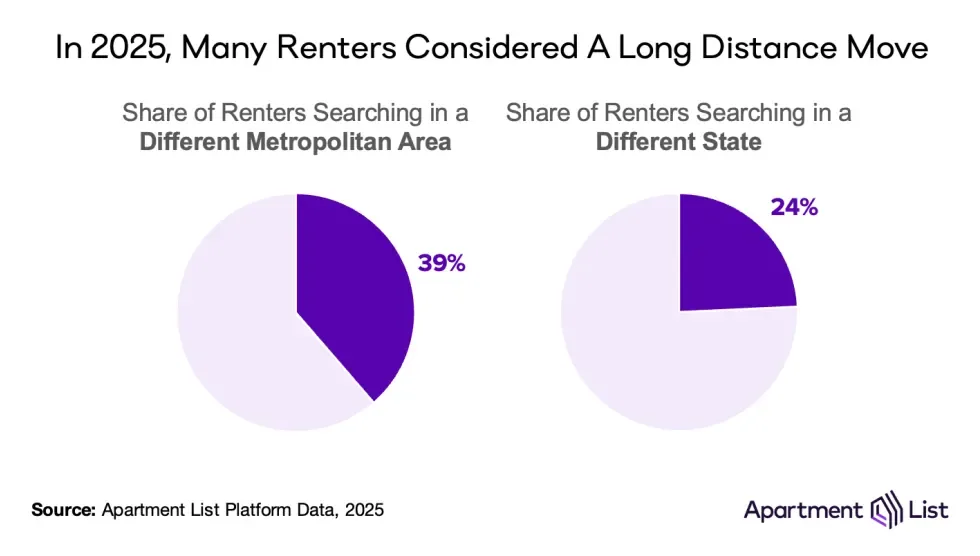
Nationally, migration patterns are beginning to level out after several volatile years. In 2025, 39% of renters searched for homes in a new metro—unchanged from the prior year—while interstate moves dipped slightly to 24%.
Rising moving costs and affordability pressures have tempered the pandemic-era surge in relocation, particularly for cross-country moves.
Sun Belt Migration Trend Holds
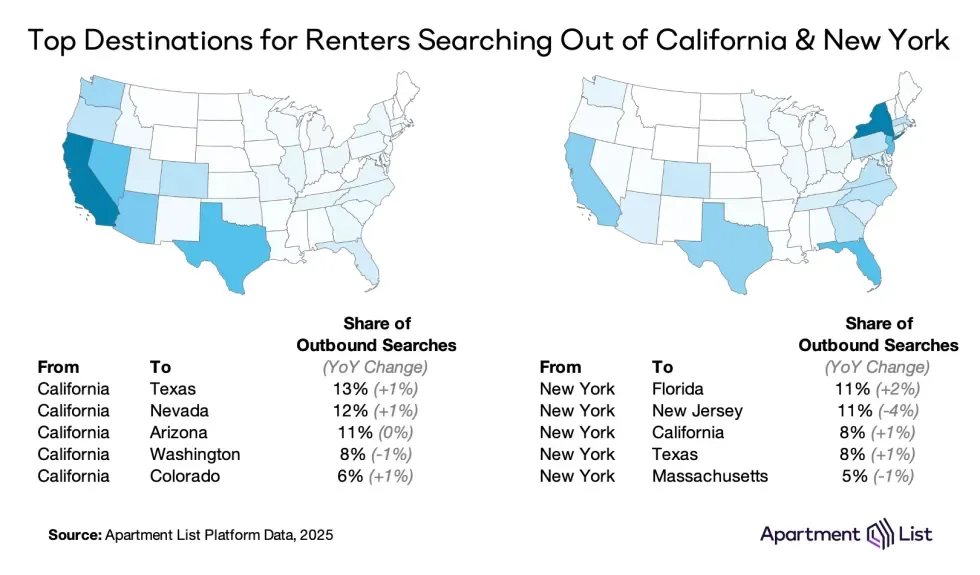
Despite the broader slowdown, the Sun Belt continues to dominate migration flows. States like Texas, North Carolina, South Carolina, and Arizona are attracting the most new residents, while California, New York, and Massachusetts continue to see net outflows.
California alone lost roughly 229,000 residents to domestic migration between 2024 and 2025, though international migration helped offset total population changes.
Meanwhile, South Carolina posted the fastest growth rate in the country for the fourth consecutive year, with a 1.2% population increase driven by inbound migration, reinforcing broader rent growth trends seen across Sun Belt multifamily markets in recent years.
Southeastern Cities Gain Momentum
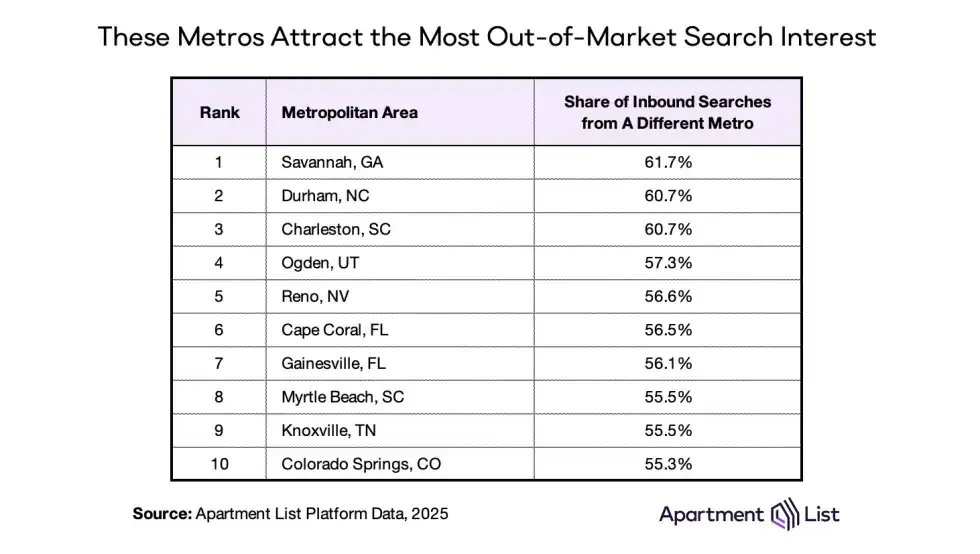
Metro-level data underscores the growing appeal of smaller Southeastern cities. Markets like Savannah, Durham, and Charleston are seeing more than 60% of rental searches come from outside their metros.
These cities are increasingly attracting renters from larger, more expensive hubs like Atlanta, Raleigh, and Charlotte—suggesting a ripple effect as affordability pressures push renters toward smaller, lower-cost markets.
Affordability Still Drives Decisions
Across the board, affordability remains the primary driver of migration. Renters continue shifting away from high-cost coastal markets toward regions where housing dollars stretch further.
However, the report notes this trend could soften if remote work continues to decline, particularly in markets that lack strong wage growth.
What’s Next
While migration has cooled from its pandemic peak, the underlying forces shaping renter behavior remain intact. Atlanta is well-positioned to benefit from both inbound interest and strong local retention, but competition from smaller Southeastern metros is increasing.
As 2026 unfolds, affordability, job access, and housing supply will determine whether these migration patterns hold—or begin to shift again.
Get Smarter about what matters in CRE
Stay ahead of trends in commercial real estate with CRE Daily – the free newsletter delivering everything you need to start your day in just 5-minutes