





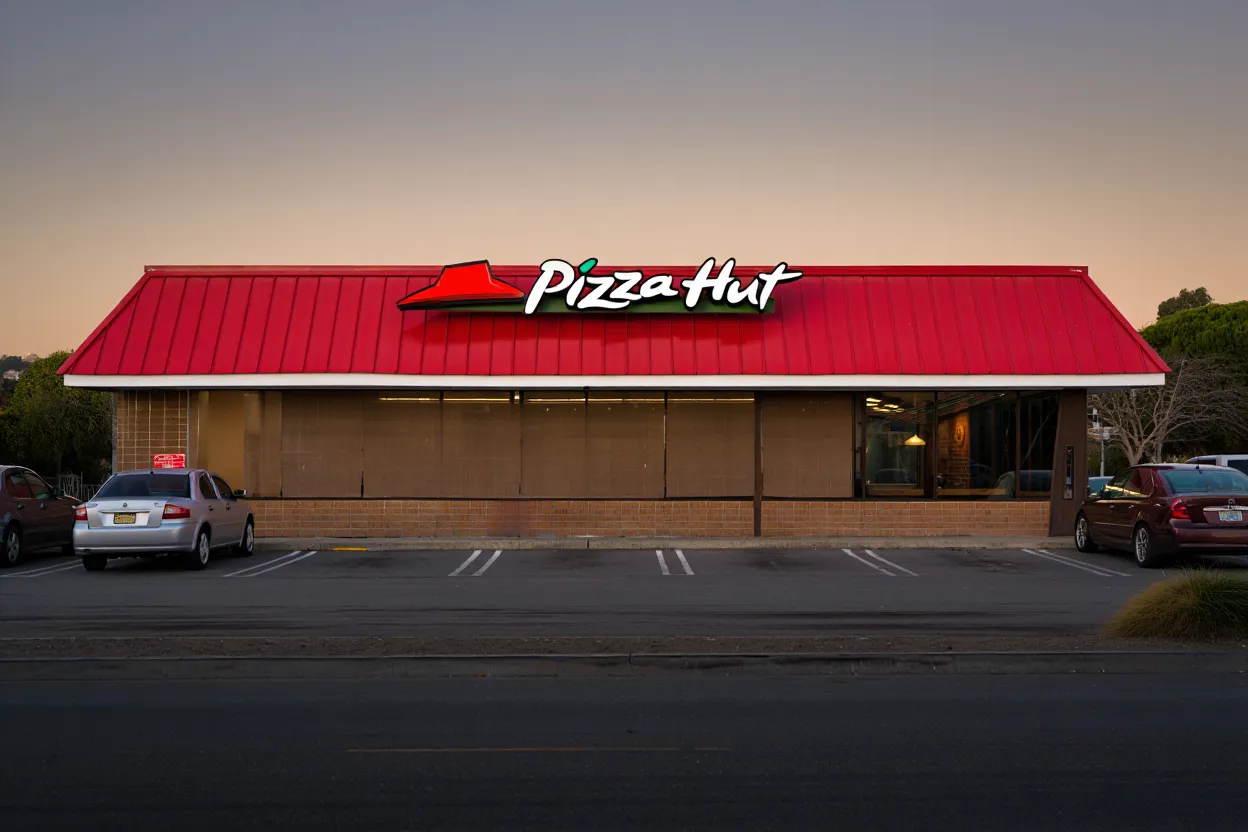
- Yum! Brands will divest Pizza Hut for $2.7B, splitting the sale between LongRange Capital and Yum China Holdings.
- Pizza Hut’s declining share—12% of Yum’s 2025 revenue—prompted the strategic move as KFC and Taco Bell outperform.
- The sale signals a shift in strategy as Yum aims to prioritize higher-growth brands and sharpen its operational focus.
From Market Leader to Weight on Growth
Yum! Brands’ decision to offload Pizza Hut marks the end of an era for one of the most recognized US restaurant chains, Bloomberg reports. In a $2.7B deal announced this week, private equity firm LongRange Capital will acquire global operations (outside China) for $1.5B, while Yum China Holdings will take full control of the Chinese business for $1.2B. The deal is expected to close in Q3 2026.
This move follows years of lackluster results from Pizza Hut, which Yum has owned since its 1997 spinoff from PepsiCo. By shifting resources toward KFC—now generating $3.5B in annual sales—and Taco Bell, Yum is betting on brands with stronger growth momentum and more efficient store formats.
Get Smarter about what matters in CRE
Stay ahead of trends in commercial real estate with CRE Daily – the free newsletter delivering everything you need to start your day in just 5-minutes
The Details
LongRange Capital will buy Pizza Hut’s global operations outside China for $1.5B. The Stamford private equity firm takes over a troubled restaurant platform. Meanwhile, Yum China will buy Pizza Hut’s China business for $1.2B. The move adds another major brand to its local portfolio.
Yum said the split will simplify its business and sharpen its growth focus. The $2.7B deal should close by Q3 2026. Both buyers now need to stabilize Pizza Hut’s weaker asset base. They may also reposition stores for today’s delivery-driven market.
Pizzeria Competition Intensifies
Pizza Hut’s decline comes as Domino’s keeps gaining ground. Domino’s has moved faster on delivery tech and menu innovation. After a pandemic-era boost, Pizza Hut’s US sales flattened. At the same time, rivals pushed new deals and store formats.
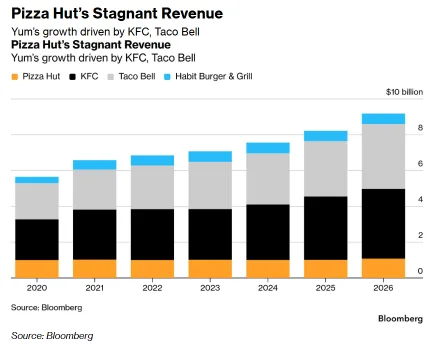
Technomic data shows Pizza Hut’s Yum revenue share fell sharply. It dropped from above 18% in 2019 to 12% in 2025. Annual revenue stayed near $1B during that period. That weakness stood out beside Taco Bell and KFC.
Why It Matters
Yum is making a clear strategic pivot. Its total revenue rose 47% to $8.2B in 2025, per Bloomberg data. Still, Pizza Hut dragged on broader results. Large dine-in stores hurt margins as traffic kept falling. “You have these big stores and nobody is coming,” one analyst said. That real estate problem made the turnaround harder.
Pizza Hut’s weak US performance also weighed on Yum’s stock. Shares rose only 2.2%, while the S&P 500 jumped 10%. The $2.7B price also mirrors recent storage consolidation, where scale buyers keep targeting durable cash flow. That backdrop shows how capital still favors assets with clearer demand.
For Yum China, the deal gives full control of a key casual dining chain. The China segment generated $2.3B in revenue last year. Yum China now plans to grow from 4,400 stores to over 6,000 by 2028. However, LongRange faces a harder reset. The firm inherits a global restaurant portfolio that lost momentum. Faster competitors beat Pizza Hut on operations, technology, and convenience.
What’s Next
After closing, Yum will focus on KFC, Taco Bell, and Habit Burger & Grill. KFC and Taco Bell generate $6.5B in annual sales. Habit remains much smaller, with about $570M in annual sales. Still, Yum can now back brands with stronger momentum.
LongRange and Yum China must remake Pizza Hut for new consumer habits. They may test menu updates, smaller stores, and better delivery systems. CRE investors will watch Pizza Hut’s real estate footprint closely. In the US, LongRange may downsize or reposition weaker dine-in locations.