



- Fitness, recovery, spa, and health concepts are increasingly functioning as primary traffic anchors for retail properties.
- Health and beauty locations have nearly doubled since 2018, expanding at an 8.4% annual rate, according to Newmark.
- Recurring memberships, frequent visits, and hospitality-driven design are strengthening the real estate case for wellness tenants.
Health and wellness concepts are moving from niche tenants to primary retail traffic drivers, Newmark wrote. Its wellness retail analysis argues that membership models, community, and hospitality-style design are changing how landlords define anchor space.
Get Smarter about what matters in CRE
Stay ahead of trends in commercial real estate with CRE Daily – the free newsletter delivering everything you need to start your day in just 5-minutes
Wellness Moves From Amenity to Anchor
Traditional retail anchors depended on department stores and multiplexes to create visits. Newmark says gyms, recovery studios, spas, and healthy food operators increasingly fill that role in durable centers.
The category stands out for stability. Among the largest retail chains tracked in 2026, Newmark found no major closings among fitness centers and gyms.
Newmark Research estimates that stability produced 8.1M to 11.8M SF of positive absorption impact. The firm also says wellness tenants can support frequent visits that benefit surrounding stores.
Newmark links the change to post-pandemic routines that kept fitness, nutrition, and community-based health in consumers’ weekly schedules. The firm views those habits as structural rather than temporary.
The Details
Health and beauty locations have nearly doubled since 2018, according to Newmark. The category expanded at an 8.4% annual rate over that period.
Since 2024, the pace increased to 11.8%. Newmark said that growth outpaced every other retail segment in its tracking.
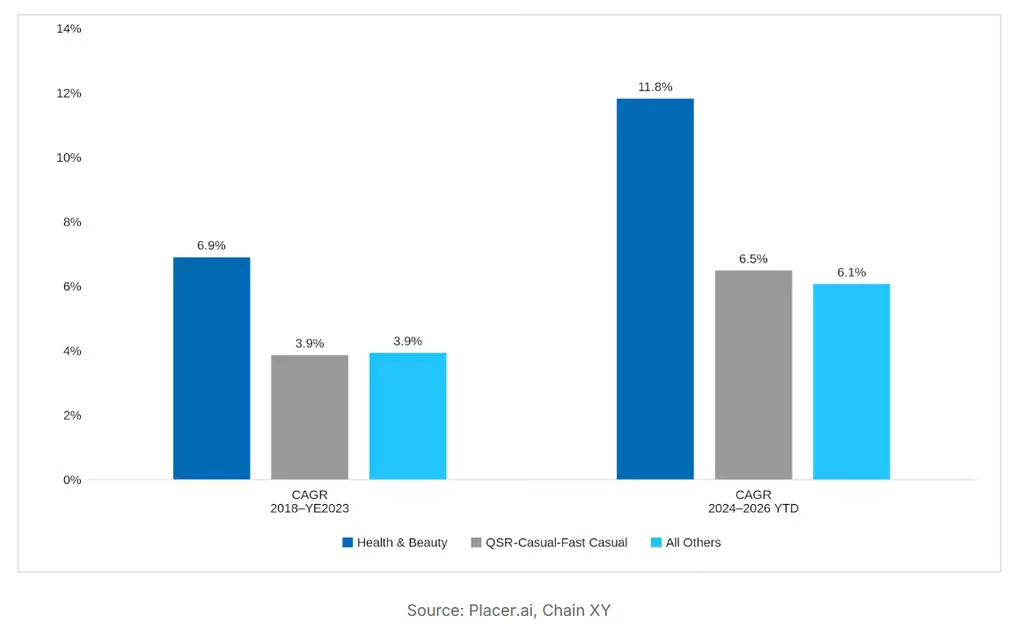
The firm also found that health and beauty concepts are growing foot traffic faster than fast food and grocery. Longer dwell times can create more cross-visitation to other tenants.
Newmark points to larger super-boutique formats as another sign of the shift. These clubs combine strength training, cardio, group fitness, and recovery under one roof.
Design and Membership Change the Lease Case
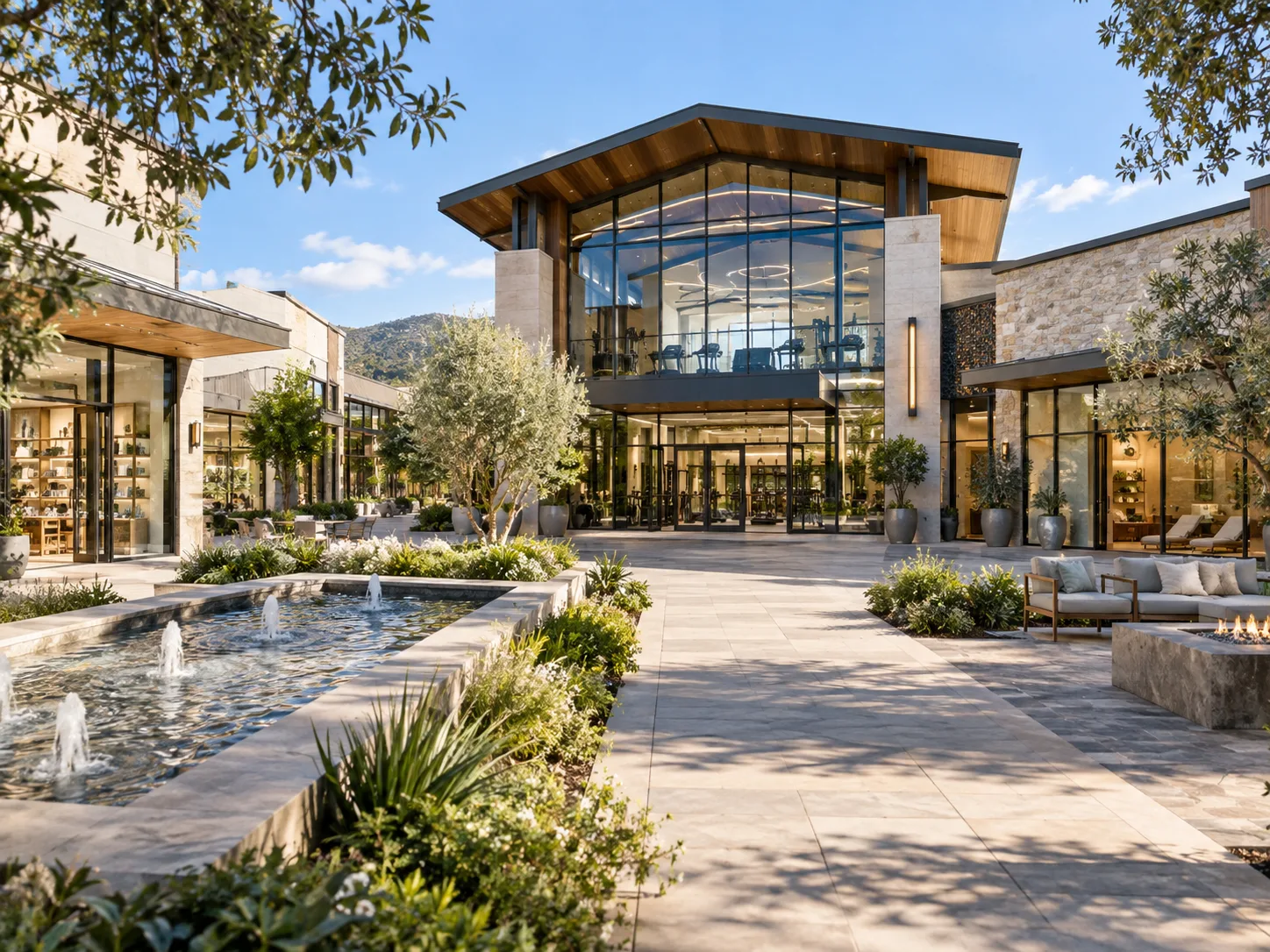
Wellness spaces are also adopting hospitality-style design. Newmark describes warmer lighting, higher-quality materials, and communal areas intended to make fitness properties feel more like destinations.
The firm cites Equinox, Sweat and Tonic, AARMY, and Life Time Fitness as examples. Their formats treat the member experience as part of the core product.
Membership models add another real estate advantage. Recurring revenue and frequent visits can strengthen tenant retention and make cash flow more predictable for operators.
Newmark argues that community itself can support tenant credit quality. A concept built around belonging may be harder for a lower-priced competitor to displace.
That hospitality language is spreading into adjacent retail uses as well. Newmark says the design standard is raising expectations for lounge areas, amenity floors, and boutique studio environments.
The concept also changes how operators think about growth. Larger wellness brands can position themselves as destinations that generate traffic independently of traditional retail anchors.
Why It Matters
Fitness centers are increasingly functioning as traffic anchors for retail properties. That changes how landlords can evaluate large-format space once reserved for legacy anchors.
The effect can extend beyond one tenant. Newmark recommends clustering fitness, recovery, spa, and healthy food concepts so visits overlap and reinforce the center’s broader wellness identity.
For investors, the thesis depends on durability rather than novelty. The strongest operators combine long-term leases, recurring memberships, high visit frequency, and community-driven demand.
For landlords, the underwriting case is strongest when wellness tenants bring both repeat visits and durable membership revenue. Those characteristics can make large-format space more productive.
What’s Next
Newmark expects the transition from amenity to anchor to continue as wellness brands expand. The firm advises operators to invest in hospitality and community rather than competing only on equipment or services.
For owners, the next phase is more deliberate merchandising. Wellness clusters can become a larger part of highest-and-best-use decisions where repeated visits support the surrounding tenant mix.
Newmark also recommends data and programming partnerships across complementary tenants. The goal is to deepen cross-visitation and create a more connected wellness cluster within the property.
Brands that can sustain community and hospitality at scale may gain more leverage in site selection and lease negotiations. That is the expansion model Newmark sees emerging.