






- US REITs returned 16.7% through August, outperforming both the S&P 500 and MSCI World Index.
- US REIT occupancy reached 93.8% in Q2 2026 as supply pipelines declined and same-store NOI improved.
- Hazelview says weaker rate sensitivity, attractive relative valuations, buybacks, and M&A activity support its constructive REIT view.
US REITs have delivered stronger relative returns in 2026 after several years of lagging equities, Hazelview Investments wrote. Its latest REIT analysis points to improved fundamentals, capital activity, and less sensitivity to bond yields.
Get Smarter about what matters in CRE
Stay ahead of trends in commercial real estate with CRE Daily – the free newsletter delivering everything you need to start your day in just 5-minutes
The Details
Bloomberg data cited by Hazelview shows US REITs returning 16.7% through August 31. That exceeded the S&P 500’s 13.1% return and the MSCI World Index’s 13.4%.
Global REITs returned 9.8% over the same period. Hazelview views the US performance as an early move away from the sector’s extended post-2020 underperformance.
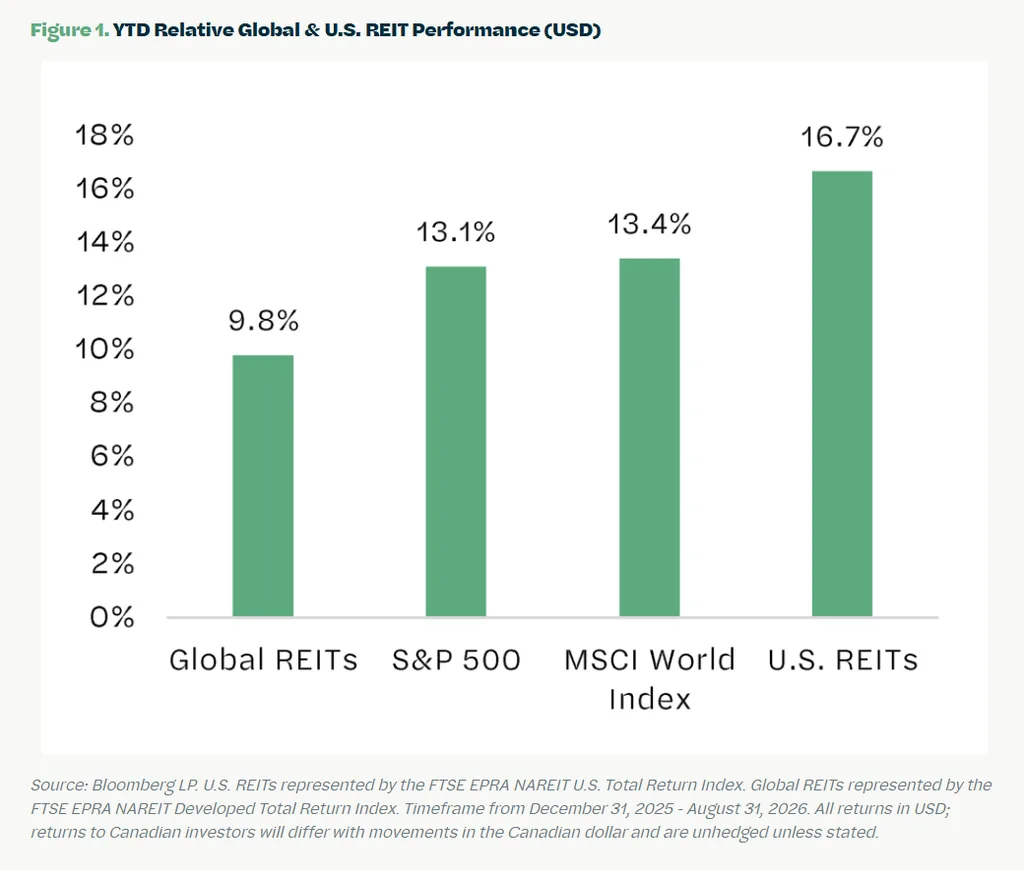
The gains arrived while the 10-year Treasury yield climbed from about 4.2% at the start of 2026 to 4.8% by August’s end. That backdrop makes the relative REIT performance notable because higher yields typically pressure valuations.
Rate Sensitivity Has Eased
The historical relationship between yields and US REIT returns has weakened. Hazelview calculated a weekly correlation of negative 0.45 from 2022 through 2024.
From the start of 2025 through August 2026, that correlation fell to negative 0.21. The R-squared measure dropped from 0.20 to 0.05 over the same comparison.
REIT performance has therefore been less tightly explained by weekly Treasury moves. Hazelview argues that property fundamentals have become a more important driver than rates alone.
Fundamentals and Capital Activity Improve
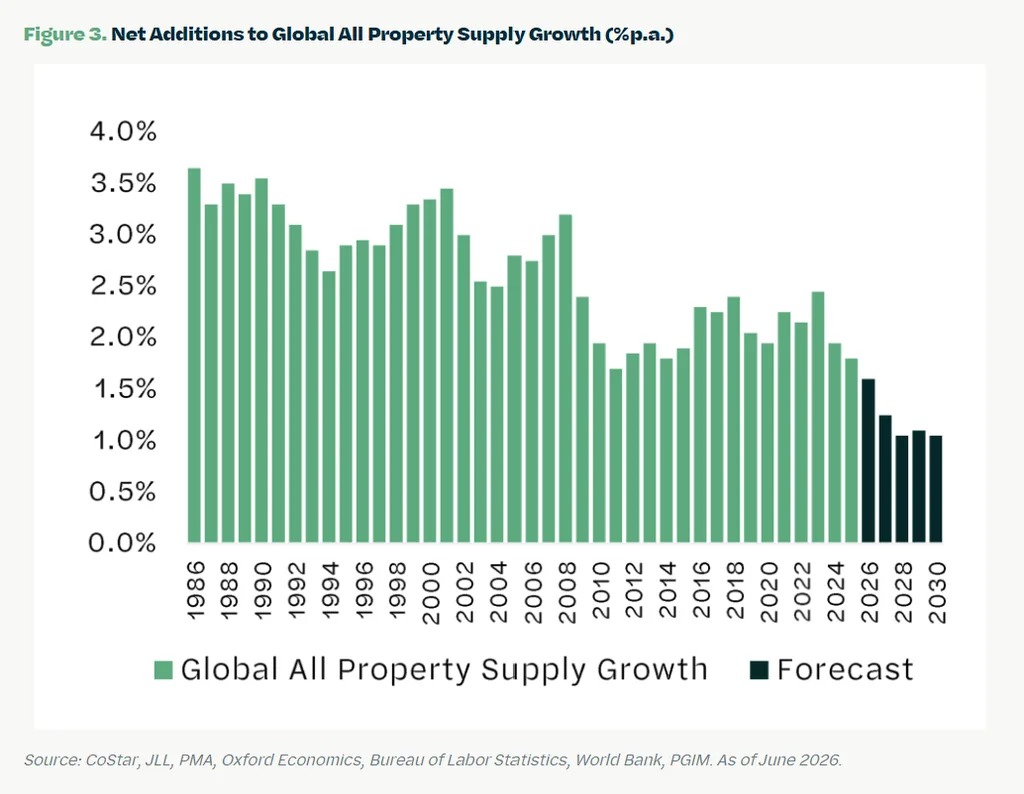
Hazelview said new property supply is declining across most major sectors and expects the global pipeline to fall further over 24 months. Demand has remained resilient as supply slows.
US REIT occupancy reached 93.8% in Q2 2026, according to the analysis. That was the highest level in four years and above the historical average.
Same-store net operating income grew 3.8% year over year in Q1. Hazelview also described improving fundamentals across hotels, retail, industrial, and some gateway-city office markets.
Management teams have also been active. US REITs repurchased $3.2B of common stock in Q1, more than triple the year-earlier level.
Through June, eight US REIT M&A transactions totaled $58B. More than 80% represented public-to-public consolidation, and US REITs raised $35.4B of capital over the same period.
Hazelview said the improvement is not limited to data centers. It cited hotels, retail, industrial, and gateway-city office markets such as New York as part of the broader recovery.
A significant share of the $35.4B raised through June came from unsecured debt issuance. Hazelview cites that access as a public-market advantage.
Why It Matters
Valuations remain central to Hazelview’s investment case. The firm said global REIT price-to-cash-flow and EV-to-EBITDA ratios versus global equities remain near decade lows.
Hazelview also noted that the REIT dividend yield spread over equities remains wider than its long-run average. Those discounts have persisted even after stronger 2026 returns.
The analysis also highlights access to unsecured debt as an advantage for public real estate. That financing capacity can differentiate listed REITs from some private-market owners.
The capital activity supports that valuation argument. More than 80% of the $58B in announced REIT M&A through June involved public-to-public consolidation at premiums to prevailing share prices.
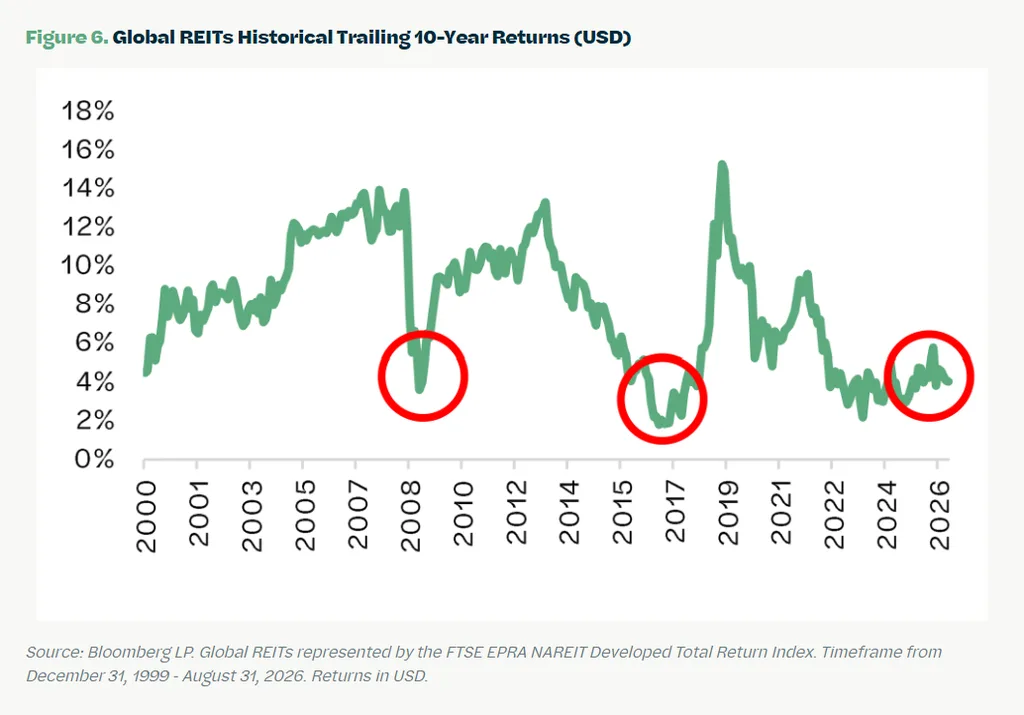
Hazelview also noted that global REIT trailing 10-year returns entered 2026 near cyclical lows. The firm sees that depressed base as another reason relative performance could improve.
The firm contrasts physical real estate with equity sectors facing greater AI disruption risk. That comparison is part of Hazelview’s thesis, not a guaranteed outcome for REIT investors.
What’s Next
Hazelview expects lower new supply, resilient occupancy, and capital activity to support the sector, but frames that as its investment view rather than a certainty.
The firm also warns that macro policy and geopolitical developments can still influence short-term performance and valuation dispersion. Bond yields therefore remain relevant even as their recent correlation with REIT returns has weakened.
Supply is another variable to watch. Hazelview expects global new property additions to keep declining over the next 24 months, potentially reaching historic lows.