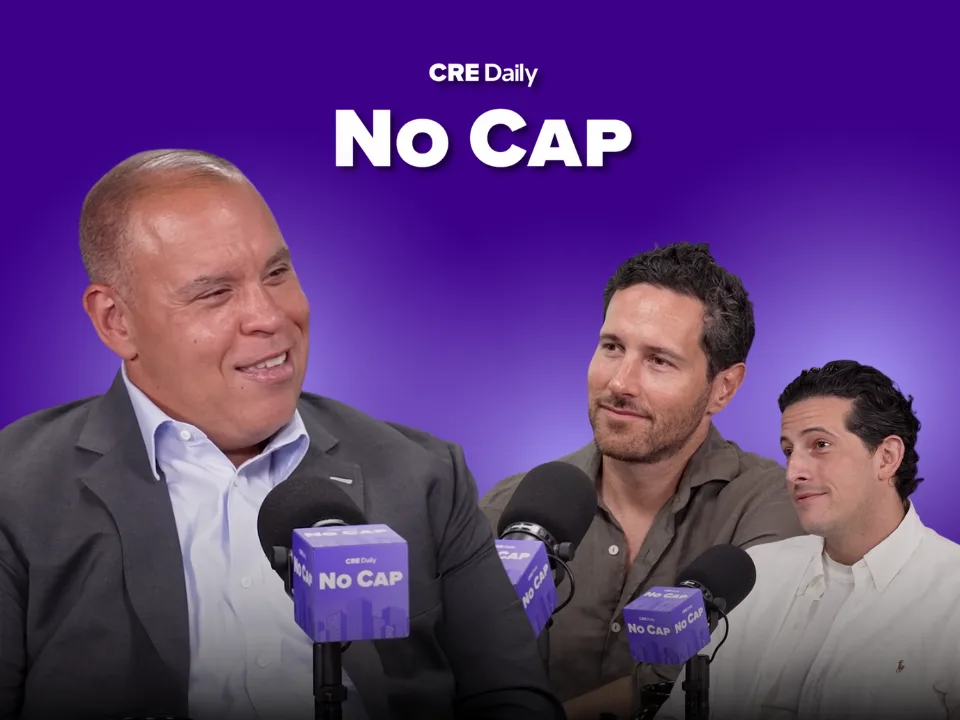







Guest: Alex Nyhan, CEO, First Washington Realty
Alex Nyhan is CEO of First Washington Realty, one of the largest owners and operators of grocery-anchored and neighborhood retail in the country, with nearly 150 shopping centers across 22 states. He joined the company in 2014 after stints as a special assistant in the mayor’s office in Washington, DC, and at Forest City Enterprises, where he worked on a 42-acre waterfront redevelopment on the Anacostia River.
Nyhan walks through how First Washington roughly tripled in about a decade, including the Donahue Schriber acquisition, where his team built every unit from scratch across 50 Argus models and made 190 property visits in 30 days. He explains why the portfolio abated less than 1% of rent through COVID, why he passes on credit-heavy tenancy for merchandising that fits the neighborhood, and how wealthier shoppers trading down helps his centers. He also gives his view on enclosed malls and why a higher-rate environment suits an operator.
Key Takeaways
First Washington won the roughly $3 billion Donahue Schriber deal by modeling the portfolio bottom-up rather than leaning on a macro thesis. Nyhan’s team built every unit across 50 Argus models, and he says that detail let them answer buyer interviews property by property.
“We built up from nothing every single unit on 50 Argus models and then all rolled it up.”
Alex Nyhan, [25:27]
Buying a company is a different risk than buying real estate. On Donahue Schriber, Nyhan says the underwriting was the easy part and the harder work was structuring around entity-level liabilities, including custom insurance products and seller cash-flow structures.
“You’re really paid to take the risk on the real estate, not on the entity.”
Alex Nyhan, [27:51]
Essential tenants drove the portfolio’s pandemic performance. Nyhan says First Washington collected about 99% of cumulative rent during COVID, with more than three-quarters of rent coming from essential retailers such as grocery stores and pharmacies.
“In our portfolio during COVID, we abated less than 1% of cumulative rent.”
Alex Nyhan, [46:20]
Chasing the highest-credit tenant for every box can cost a center its customer. Nyhan describes a Kansas City property built around local grocery, food, spa and fitness tenants, and says the balance between credit and neighborhood fit is the heart of merchandising.
“If we just offered that customer a bunch of Verizon stores because it has the highest level of credit, we’ll lose the customer.”
Alex Nyhan, [49:09]
Trade-down spending is a tailwind for his centers. Nyhan cites data that 40% of people earning over $200,000 looked for ways to trade down or save on recent purchases, and points to off-price retailers whose market caps have pulled far ahead of department stores since the financial crisis.
“We are the beneficiary of all that spending.”
Alex Nyhan, [55:11]