



- SpaceX and Tesla are planning a massive Terafab semiconductor facility in Grimes County, Texas, designed to produce AI chips for future technologies.
- The proposed campus could span 100 million square feet across four phases, attract $119 billion in investment, and create roughly 3,000 jobs.
- The project highlights Texas’ growing appeal for advanced manufacturing campuses that combine major capital investment with long-term employment growth.
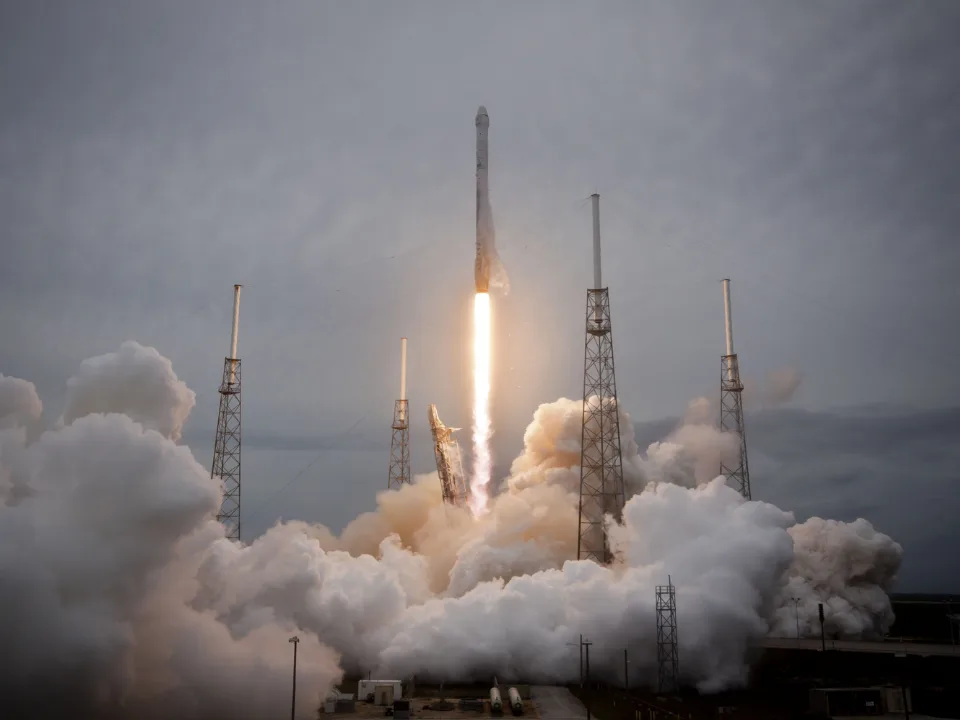
SpaceX and Tesla are planning what could become the world’s largest building: a 100 million-square-foot semiconductor manufacturing campus in rural Grimes County, Texas, as described by CoStar. The proposed Terafab facility would support SpaceX’s space-based data center ambitions while supplying chips for Tesla’s Optimus robots and autonomous Cybercabs.
Get Smarter About What Matters in Texas
Subscribe to our free newsletter covering the biggest commercial real estate stories across Texas — delivered in just 5 minutes.
Located about 75 miles northwest of Houston and roughly 30 miles east of Texas A&M University, the project would transform a county of about 30,000 residents into the center of one of the largest industrial developments ever proposed.
Texas semiconductor manufacturing bet
SpaceX’s Terafab represents a major expansion of Elon Musk’s Texas manufacturing footprint. The company relocated its headquarters to Starbase, Texas, in 2024 and already operates major facilities in Bastrop and McGregor.
Tesla has also expanded aggressively in the state, moving its headquarters to Austin in 2021 and continuing to grow its Gigafactory campus, which is expected to exceed 15 million square feet by the end of 2026.
The Terafab project would take that industrial strategy to a different scale by combining chip production, advanced packaging, and related manufacturing operations under one roof.
The details
SpaceX’s planned semiconductor facility would be built in four phases, with a total projected investment of $119 billion, according to the company’s state incentive application. The campus could span 100 million square feet, making it roughly the size of 15 U.S. Pentagons.
The facility would produce advanced chips capable of supporting 1 terawatt of computing capacity annually. SpaceX plans to use the chips for future space-based data centers, while Tesla would deploy them across AI-driven applications, including Optimus humanoid robots and autonomous Cybercabs.
Texas Gov. Greg Abbott said the project qualifies for up to $30 million from the Texas Enterprise Fund, a state program aimed at attracting major employers. SpaceX expects the development to create approximately 3,000 jobs.
Local incentives have also been a key part of the deal. Grimes County approved a 100% property tax abatement from 2027 through 2036, along with a $10 million payment-in-lieu-of-taxes agreement. Two nearby school districts approved incentive packages totaling $1.66 billion.
A new model for mega-industrial campuses
The Terafab project adds to Texas’ growing reputation as a hub for large-scale manufacturing. The state has attracted major investments across semiconductors, electric vehicles, energy, and technology as companies look for large sites, reliable infrastructure, and business-friendly conditions.
Unlike many data center projects, which have faced criticism over power usage and limited job creation, advanced manufacturing campuses often receive stronger local support because they bring long-term employment and economic activity.
Michael Rareshide, a partner at Site Selection Group who specializes in data center site selection, said manufacturing projects are viewed differently because they create high-paying jobs and represent decades-long economic commitments.
Why it matters
The scale of SpaceX’s Texas Terafab highlights a broader shift in commercial real estate toward industrial projects tied to artificial intelligence, automation, and advanced manufacturing. Developers and investors are increasingly competing for large tracts of land capable of supporting power-intensive users.
The project also reinforces Texas’ position as one of the country’s leading destinations for industrial expansion. According to the U.S. Bureau of Economic Analysis, Texas has consistently ranked among the largest state economies, while its combination of available land and business incentives continues to attract major corporate investment.
For CRE professionals, the project underscores the growing importance of infrastructure-ready industrial sites capable of supporting next-generation manufacturing.
What’s next
SpaceX will continue advancing the Terafab through permitting, incentive agreements, and site development planning. The company previously evaluated locations across Texas, Arizona, New Mexico, and Nevada before selecting Grimes County.
If completed, the campus would become one of the largest single industrial developments in the world and could create a blueprint for future mega-scale manufacturing facilities tied to AI and emerging technologies.