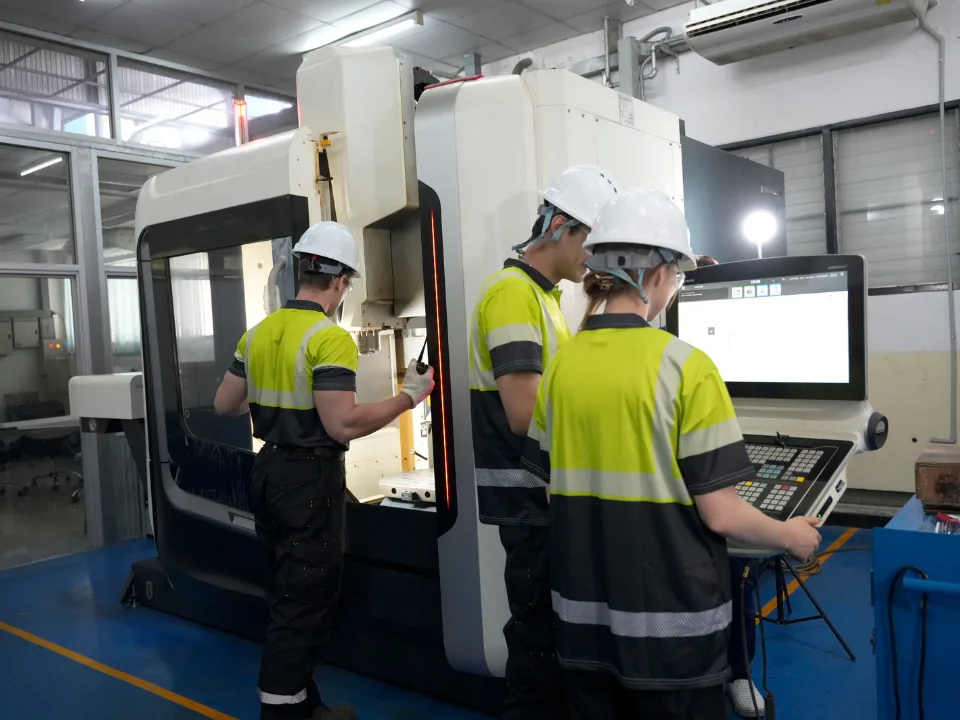









- Texas A&M broke ground on the $226M Semiconductor Institute, backed by Texas CHIPS Act funding.
- The 80,000 SF facility will focus on semiconductor R&D, training, and industry collaboration.
- The Institute includes state-of-the-art clean rooms, flexible labs, and workforce development spaces.
- Completion is expected by Q1 2028, supporting Texas’s push for semiconductor industry leadership.
Facility Launch Reflects Industry Priorities
Texas A&M University has started construction on its Semiconductor Institute in Bryan. Officials held a ceremony on April 9 with state and university leaders, according to Manufacturing Dive. The $226M project plays a key role in the Texas CHIPS Act. It aims to expand semiconductor research and manufacturing capacity across the state.
The new 80,000 SF building will rise on the Rellis campus. It will include advanced manufacturing labs, training spaces, and specialized clean room environments. These areas will support both process development and production. The university targets completion in Q1 2028.
Connecting Research, Industry, and Workforce
The Semiconductor Institute will offer flexible lab spaces designed to simulate real-world semiconductor production. Facilities will support R&D for processing, metrology, packaging, radio frequency, and photonics. Two clean rooms, rated at 100 and 1000 class purity, with 300mm equipment, are included for advanced training and research.
A skilled trades lab will focus on workforce development, addressing industry demand for qualified talent in Texas’s growing chip sector. This aligns with a broader wave of large-scale semiconductor investment across the US, where multi-billion-dollar commitments are accelerating domestic production capacity and reshaping supply chains. The site will also feature industry-standard support spaces and hazardous material management capabilities.
Get Smarter about what matters in CRE
Stay ahead of trends in commercial real estate with CRE Daily – the free newsletter delivering everything you need to start your day in just 5-minutes
Texas CHIPS Act Drives Investment
Texas A&M received $226.4M from the Texas CHIPS Act, with $200M directed to the Semiconductor Institute. The remaining funds support equipment and upgrades at the Center for Microdevices and Systems. The Semiconductor Institute project represents the university’s largest-ever investment per PSF, underscoring the state’s commitment to maintaining competitiveness in the global semiconductor arena.
Additional CHIPS Act appropriations have supported similar efforts across the state, including workforce training centers at other universities. As the Rellis campus expands, Texas A&M continues developing partnerships with major semiconductor companies and potential developers, aiming to boost research and attract new manufacturing projects like Substrate’s proposed Project Factory One.
What’s Next
Upgrades to nanofabrication and metrology infrastructure at TAMU are ongoing, with associated procurement extending through summer 2027. The Semiconductor Institute is positioned to become a crucial hub for semiconductor R&D and talent pipelines as Texas seeks a leadership role in the US semiconductor industry.