



- San Francisco (8.6%) and Oakland (6.0%) led all major U.S. metros in multifamily market rent growth for the year to Q2 2026, per Altus benchmark data.
- Just three of Moody’s 17 submarkets drive 72.3% of rent acceleration, and the rebound tracks AI-driven hiring near Anthropic and OpenAI.
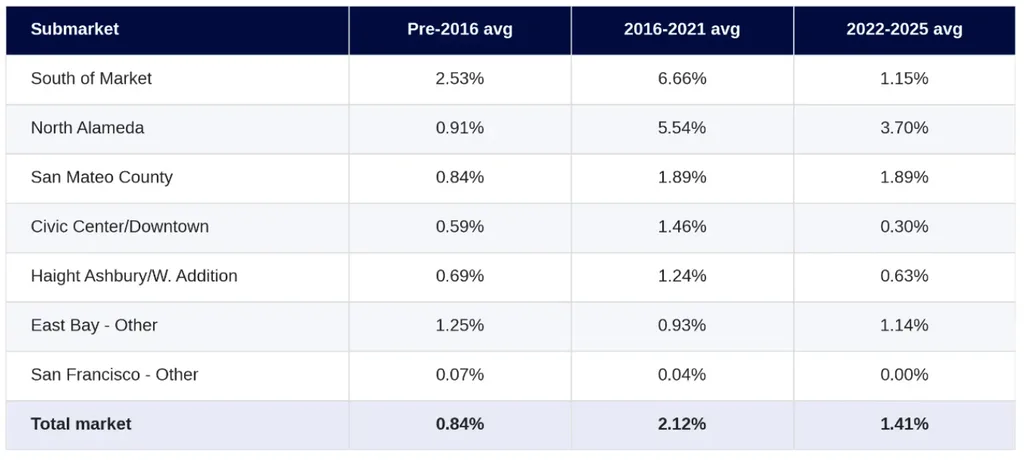
- South of Market’s construction rate fell to 1.15% a year from 6.66%, so modest added demand is producing outsized rent and value gains.
San Francisco multifamily rents rose 8.6% in the year through Q2 2026, the strongest among major U.S. metros alongside Oakland’s 6.0%, but Altus Group research finds a few submarkets account for most of the gain.
The rebound tracks AI-driven tech hiring instead of a general rehiring wave, and limited new supply is magnifying the effect.
Get Smarter about what matters in CRE
Stay ahead of trends in commercial real estate with CRE Daily – the free newsletter delivering everything you need to start your day in just 5-minutes
A Volatile Cycle
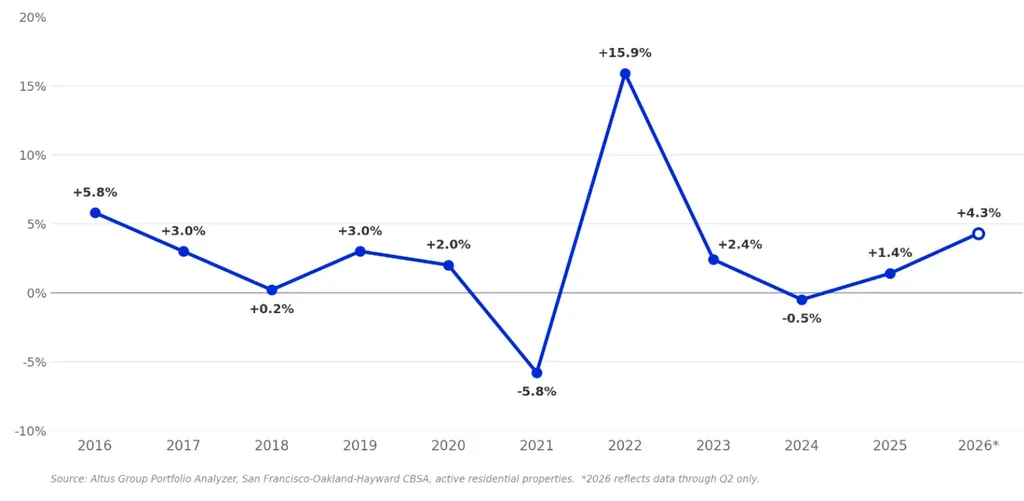
After a turbulent post-pandemic stretch, the Bay Area has rebounded unevenly. Remote work and outmigration sapped demand, and Altus data show rents plunging in 2020 and 2021, recovering in 2022 and climbing into 2023, then cooling again in 2024.
A Narrow Tech Rebound
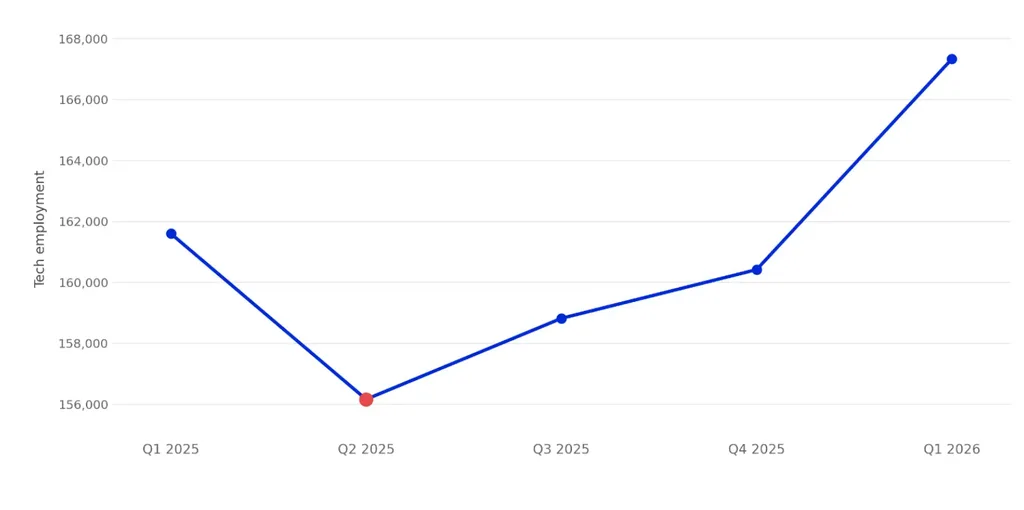
Tech employment peaked in 2023, then fell 8.8% in 2024 and 1.2% in 2025 amid layoffs, per Bureau of Labor Statistics data. It bottomed in Q2 2025 and rose for three straight quarters, ending Q1 2026 up 4.3% year over year.
The gain is lopsided. Within tech, software publishing (+12.7%) and computing infrastructure (+7.3%) expanded, but computer systems design contracted 13.6%. Altus says that mix looks more like the AI cycle’s demand for software and computing capacity than the wide tech boom of the 2010s.
Three Submarkets Lead
Among Moody’s 17 submarkets, three produce nearly three-quarters (72.3%) of rent acceleration, so only a few locations are behind the recovery.
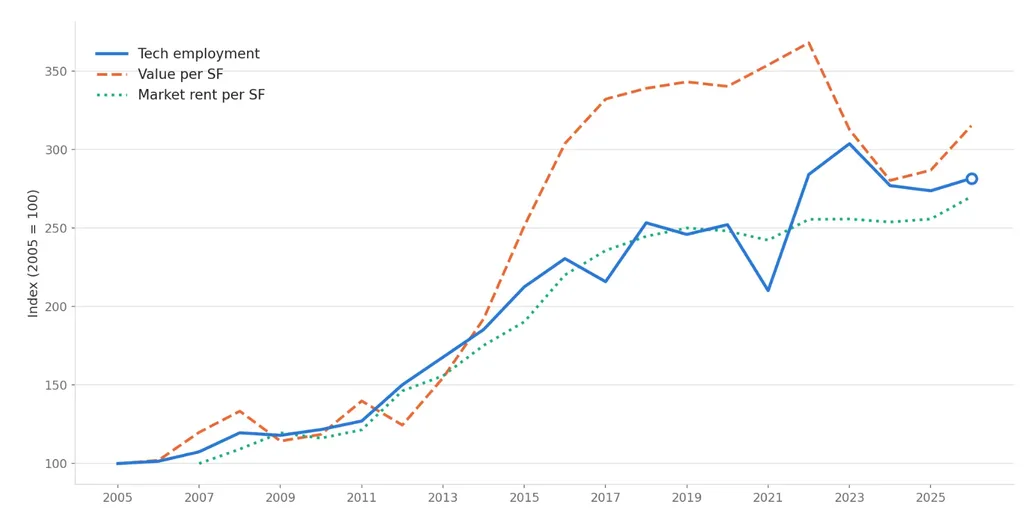
Submarkets with faster effective rent growth generally also posted bigger value gains, though not one for one, since expenses, cap rates and asset quality matter. Altus argues investors should use operating assumptions specific to each submarket before adjusting valuation rates.
AI Employers Anchor SoMa
The strongest rent and value results sit beside two AI employment hubs. Altus’s South of Market holdings sit around the offices of Anthropic, at 500 Howard St., and OpenAI, at 1455 Third St.
Anthropic’s president said in February 2026 that the firm employed over 1,300 people in the Bay Area while taking all of 300 Howard St. Altus calls the overlap suggestive of AI-related demand, while noting other factors contribute.
Supply Explains the Gap
New housing deliveries in the hot submarkets have slowed sharply. Completions in South of Market averaged 6.66% of inventory a year in 2016-2021 versus 1.15% in 2022-2025, and Civic Center and Downtown also saw few deliveries.
With so little new product, even modest added demand from AI employers translates quickly into rent and value gains.
Why It Matters
A single metro-wide rent or cap rate assumption can mislead investors and appraisers when a few pockets drive results. Capital is already responding, as CRE Daily reported when AI demand draws multifamily capital to Silicon Valley.
The contrast with the national picture is stark, since multifamily rents rose only 0.7% nationally.
What’s Next
Watch whether AI hiring stays concentrated near these employers and whether new construction returns to the strongest submarkets. Underwriting at the submarket level will matter more than metro averages.