




- Youth unemployment among recent US college grads has surged since the pandemic, largely due to the rise of remote work.
- Remote work explains 64% of the increase in unemployment for young graduates, especially in office and tech roles.
- Firms’ reluctance to hire junior talent for distributed teams signals ongoing challenges for early-career professionals in hybrid work environments.
The US unemployment rate for college graduates under 29 has climbed sharply since the pandemic, directly tracking the fourfold increase in remote work. New analysis from the National Bureau of Economic Research links this shift to changes in how firms train—and hire—early-career professionals. Remote work has left managers less able to mentor and onboard inexperienced talent, cutting deep into the opportunities available to new grads across office and tech sectors.
Get Smarter about what matters in CRE
Stay ahead of trends in commercial real estate with CRE Daily – the free newsletter delivering everything you need to start your day in just 5-minutes
Remote Work Hampers Training and Entry-Level Hiring
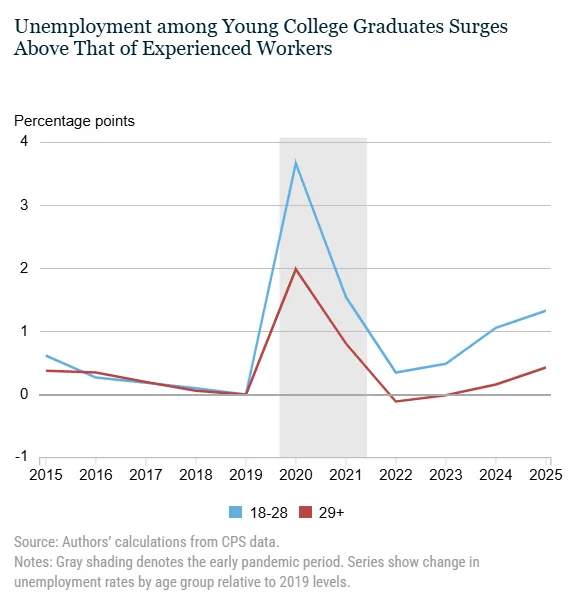
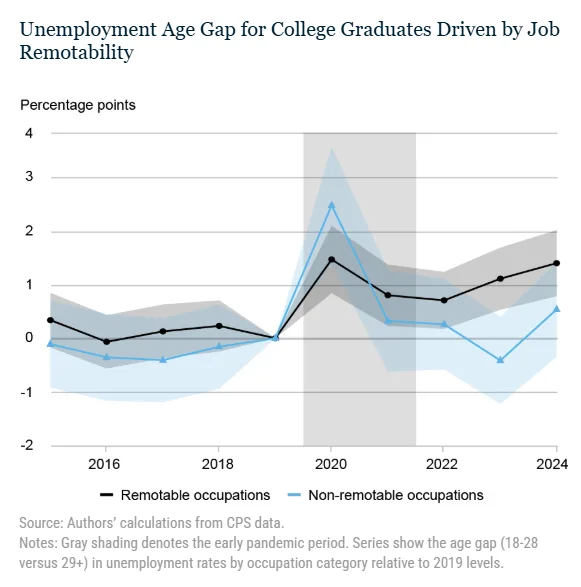
Before the pandemic, youth unemployment for college grads averaged 3.1% from 2017 to 2019, but jumped 20% to 3.7% by 2022-25, per CPS data. In contrast, unemployment for experienced college grads (29+) dipped slightly over the same period. This disparity is even more pronounced in ‘remotable’ sectors, such as software engineering, while more hands-on or in-person roles saw less persistent gaps. Researchers estimate remote work accounts for 64% of the surge in joblessness among young degree holders.
Distributed Teams Widen Age Gap
Young workers in jobs amenable to remote work have seen relative unemployment jump nearly a full percentage point post-pandemic, while their older counterparts in the same sectors experienced a marginal decline. Notably, unemployment gaps in non-remotable sectors—where in-person training remains common—spiked briefly in 2020 but rapidly normalized. This divergence shows how remote work’s spread has reshaped not only where people work, but also who gets hired into entry-level roles.
The Generative AI Factor Is Overstated
Some analysts have blamed generative AI for rising youth unemployment, but timing and occupation-level analysis suggest remote work is a bigger factor so far. The youth-adult unemployment gap appears across sectors regardless of AI exposure, according to the authors. While AI’s impact on early-career hiring may grow over time, remote work remains the primary culprit for now.
Mentorship and Career Development Suffer
Firm-level data, including information from a major Fortune 500 employer, supports this conclusion. Feedback and mentorship opportunities decline sharply as teams become more distributed. Young workers in particular miss out on informal coaching that drives skill-building and promotion. The studied firm reduced hiring inexperienced candidates during office closures, then reversed the policy only when in-person work resumed.
Why It Matters
The remote work surge has made it harder for young professionals to break into office jobs. Training bottlenecks could weigh on long-term earnings and career advancement. Past research warns that early-career unemployment can stunt income and advancement for decades. Employers now face a tradeoff between location flexibility and developing future talent pipelines.
What’s Next
As RTO mandates proliferate—with more firms citing mentorship and culture—expect a slow but steady rebalancing of entry-level hiring. However, hybrid work arrangements may remain the dominant model for many employers. If that trend continues, employers may face ongoing onboarding challenges and greater demand for collaborative office environments.