







- Prologis aims to double its renewable energy capacity to 2GW by 2030 across its logistics portfolio.
- The company achieved or pursued sustainability certifications for 100% of eligible 2025 projects, with Scope 3 emissions already 30% below 2019 levels.
- Innovation and data-driven strategies drive decarbonization, with investments in climate tech and IoT-enabled asset management.
Integrating Sustainability Into Core Strategy
Prologis is placing sustainability at the center of its growth in the logistics real estate sector, per the firm’s 2025–26 Global Impact & Sustainability Report. The logistics giant is responding to rising energy demand, shifting customer needs, and growing market expectations by embedding climate-resilient features and operational efficiencies into its platform. The company sees investor interest in long-term value and community demand for responsible development as central motivators. According to Prologis, this holistic approach not only future-proofs assets but also aligns with broader decarbonization and regulatory trends impacting global logistics and industrial real estate.
One indicator of momentum: in 2025, Prologis either achieved or was in process of achieving sustainability certifications for 100% of eligible new developments and redevelopments. This marks a shift from green building as a value-add to a baseline expectation, positioning sustainability as a core business strategy rather than a sideline.
Get Smarter about what matters in CRE
Stay ahead of trends in commercial real estate with CRE Daily – the free newsletter delivering everything you need to start your day in just 5-minutes
The Details
Prologis says over 25% of its logistics portfolio now carries sustainability certification. Its 25 largest tenants lease space where 37% meets third-party standards. The firm uses life cycle assessments and an internal carbon price during design. That helps teams choose lower-carbon options while protecting performance and cost control.
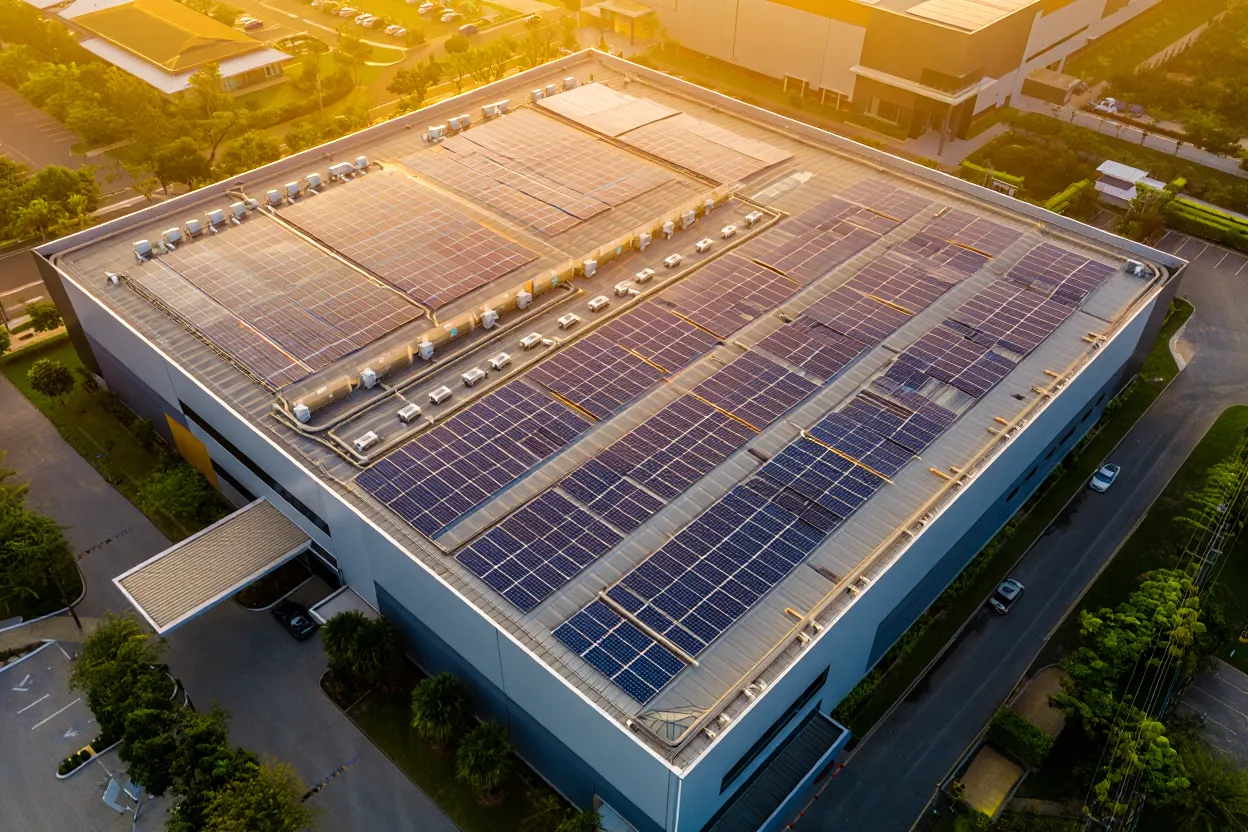
Prologis also passed 1 GW of installed solar and storage capacity in 2025. That capacity sits across owned and managed properties, including community solar projects near local neighborhoods. The company now targets 2 GW of cumulative capacity by 2030. If achieved, that goal would deepen its lead in industrial renewables. Scope 3 emissions sit 30% below the 2019 baseline. Customer energy use drives most of those emissions. Better utility data collection helped Prologis track progress across its global footprint.
Logistics Real Estate Embraces Clean Energy and Digital Tools
As decarbonization pressure grows, logistics assets now work as energy hubs and innovation labs. Prologis Ventures has deployed $300M into more than 50 early- and growth-stage companies. These companies target efficiency, cleaner construction, and digital automation across logistics operations. Its investments include data center cooling, low-carbon materials, and autonomous facility controls.
Internally, Prologis gives AI workflow tools to 90% of employees. It also connects more than 4,500 buildings to IoT networks. These systems track energy use, emissions, and asset utilization in real time. As a result, Prologis can react faster to tenant needs, regulation, and technology shifts.
Why It Matters
Sustainability has moved beyond a checkbox for major industrial landlords. It now helps attract capital, tenants, and community support. Prologis says more than one-quarter of its logistics footprint holds sustainability credentials. That shows institutional demand for environmentally responsible assets. CBRE found that 40% of industrial tenants prioritize sustainable features in site selection. Lower-emission markets can also support stronger property performance and broader investor confidence.
Prologis’s energy commitments give competitors and partners a useful benchmark. Investors and local governments now scrutinize emissions more closely. The company’s solar program shows renewable generation can scale inside logistics portfolios. Its 2 GW goal will test whether green infrastructure can keep pace with growth.
The Scope 3 focus also matters. Tenant activity creates most emissions for logistics operators. So, owners need stronger partnerships and clearer energy data. Prologis now reports Scope 3 emissions 30% below its 2019 baseline. That suggests early investment can drive measurable decarbonization progress. It also shows climate strategy can become market-relevant in industrial real estate.
What’s Next
Prologis plans to expand renewable energy and automation before 2030. It will also deepen analytics across its portfolio.
Meanwhile, Prologis Ventures should keep funding smarter logistics infrastructure and sustainable supply chains. Industrial peers will watch its solar and storage buildout closely. Investors want proof that clean energy can improve operations and financial performance. Prologis’s next annual report will show whether these strategies keep delivering results. It will also test progress against tighter global rules and investor expectations.