





- Apartment market fundamentals improved for owners in July 2026, with NMHC’s Market Tightness Index rising above breakeven for the first time in over a year.
- Sales activity, equity, and debt financing for multifamily deals all deteriorated, signaling capital is harder to secure despite stronger rent growth and vacancy metrics.
- Persistent capital market headwinds may challenge future transactions and refinancing for multifamily owners even as operational metrics improve.
Fundamentals Finally Tilt Toward Landlords
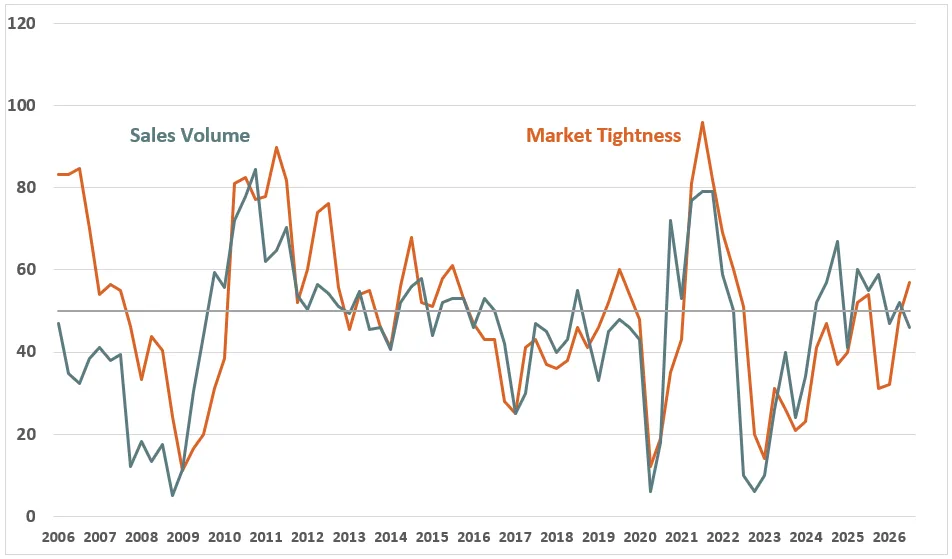
The National Multifamily Housing Council’s July 2026 survey showed the strongest apartment operating outlook in more than a year. NMHC’s Market Tightness Index reached 57, rising above the neutral 50 threshold and April’s 49 reading. The index last posted a positive reading in July 2025.
Still, optimism remains measured. About 29% of respondents reported tighter conditions, while 15% saw markets loosen. Another 55% reported little change from the previous quarter. NMHC Chief Economist Chris Bruen linked the improvement to stronger job growth and fewer apartment deliveries.
Those trends are helping landlords regain leverage after the supply-heavy conditions that defined much of 2025. However, recovery remains uneven across markets.
Get Smarter about what matters in CRE
Stay ahead of trends in commercial real estate with CRE Daily – the free newsletter delivering everything you need to start your day in just 5-minutes
The Details
NMHC conducted the survey from July 1 through July 17 among 158 C-suite multifamily executives nationwide. Despite stronger operating conditions, dealmaking weakened. The Sales Volume Index fell to 46 from 52 in April, moving below breakeven.
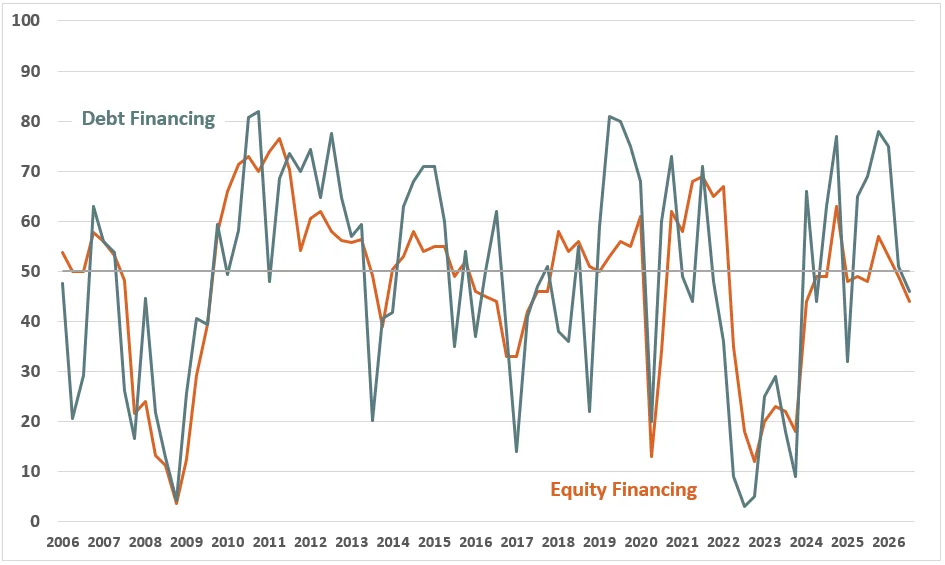
Only 19% of respondents reported more transactions than three months earlier. Meanwhile, 27% reported fewer deals, and 46% saw no change. The Equity Financing Index also declined to 44 from 49 in April.
Debt conditions weakened alongside equity markets. The Debt Financing Index dropped to 46 from 51 in April and 75 in January. Only 17% said borrowing became easier, while 26% reported tougher conditions. Capital for multifamily deals continues growing scarcer.
Source: NMHC
Operational Recovery Outpaces Capital Markets
July’s results reveal a widening divide between property fundamentals and capital availability. The Market Tightness Index last exceeded 50 in July 2025. Before that, readings remained weak through much of 2023 and early 2024.
The index fell as low as 14 in January 2023. Today, operating conditions are improving while financing sentiment deteriorates. Recent apartment data also shows occupancy and rent growth stabilizing as supply pressures begin easing. Equity and debt indices stood above 50 in January 2026 but have steadily weakened since.
Source: NMHC
Compared with late 2025, debt availability has fallen sharply. Improving rents have not restored investor or lender risk appetite. That disconnect continues limiting transaction activity across multifamily markets.
The pattern also appeared during parts of 2023. Some properties posted improving operations despite highly restrictive capital conditions. However, today’s gap between cash flow growth and transaction activity appears particularly pronounced.
In July, 46% of respondents reported unchanged deal volume. Another 27% reported declines. Those results suggest better operations have not yet translated into stronger liquidity.
Why It Matters
The shifting multifamily cycle creates new opportunities but also significant risks for investors and operators. Stronger market tightness supports NOI growth and could eventually improve asset values. However, weakening capital markets create new pressure across ownership structures.
The Sales Volume Index’s decline to 46 points toward continued transaction stagnation. Weaker equity flows and debt availability also reduce refinancing and recapitalization options. Sponsors may face fewer exits and greater execution risk.
Pricing remains another challenge. Buyers and sellers continue using different assumptions for future cash flows, rates, and financing costs. That gap can delay transactions even when operating performance improves.
Owners with floating-rate debt or near-term maturities face greater refinancing risk. The Debt Financing Index has fallen from 75 in January to 46. Elevated rates or tighter standards could make refinancing increasingly difficult.
Better occupancy and rent growth may soften some pressure. However, weak financing could slow the recovery or push vulnerable properties toward forced sales.
Tenants may still face rent increases as supply pressures ease. Previously overbuilt Sun Belt markets could see stronger pricing as lease-up competition moderates. Yet owners must still manage refinancing costs and capital expenditures.
Institutional investors may rely more heavily on internal capital or strategic joint ventures. Traditional credit and equity markets remain less dependable. As operations improve, balance sheet management and capital sourcing will increasingly determine performance.
What’s Next
The multifamily outlook remains mixed heading into late 2026. Strong employment and fewer apartment deliveries could support continued market tightening. Those conditions would give landlords more room to raise rents and improve occupancy.
However, transaction activity may remain subdued unless debt and equity markets stabilize. Investors and lenders will closely watch economic conditions entering the fall. Improved risk appetite could quickly support stronger deal volume.
Until then, multifamily owners must balance operational progress against continuing capital pressure. Portfolio strategy, refinancing discipline, and leverage management will remain critical through the next several quarters.