







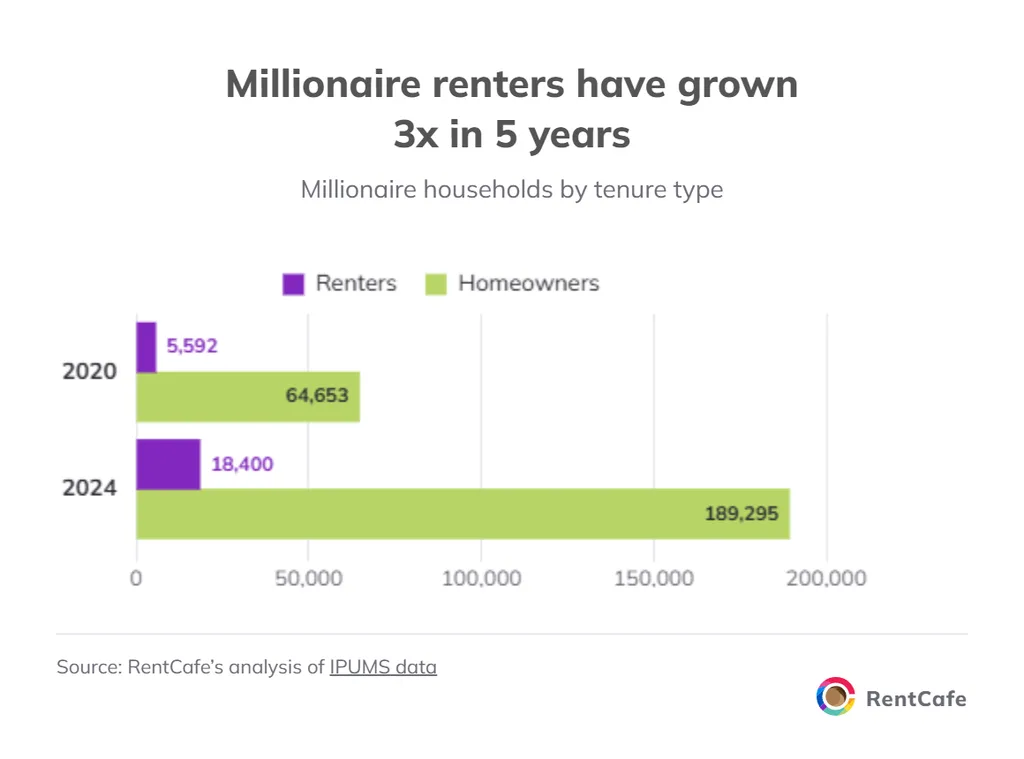
- Millionaire renter households grew 229% from 2020 to 2024, to 18,400, versus 193% growth for millionaire homeowners, a sign that renting is now a deliberate choice for some wealthy households.
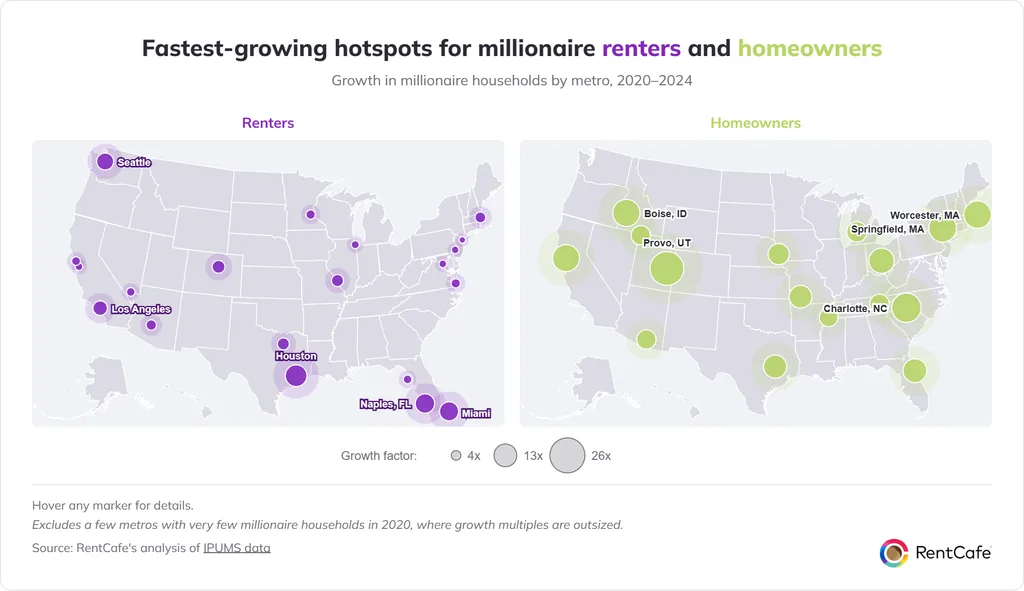
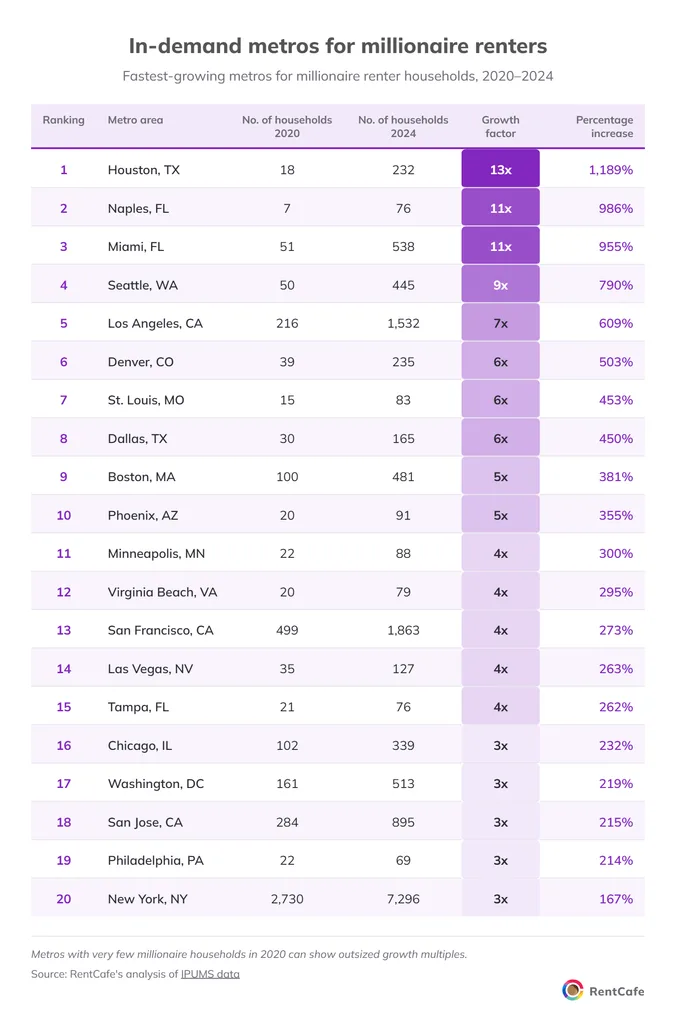
- Houston’s millionaire renters grew thirteenfold to 232 and Lake Havasu City, Ariz., went from zero to 226, while New York, San Francisco and Los Angeles remain the biggest hubs.
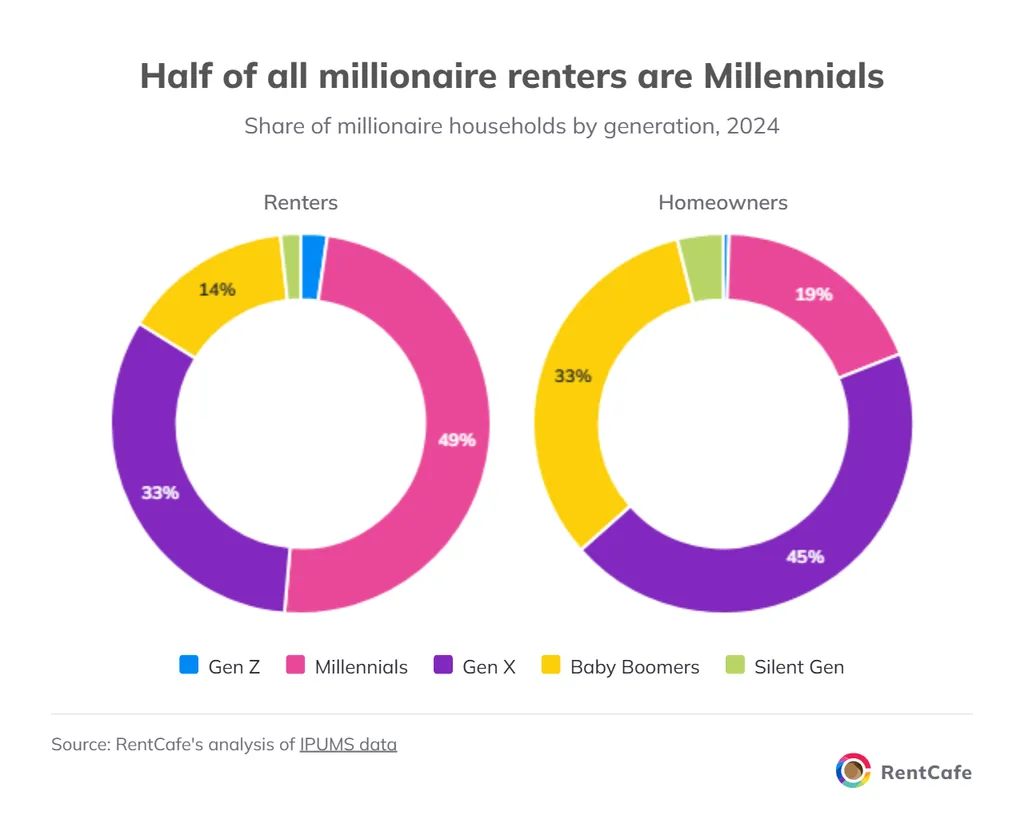
- Millennials make up nearly half of millionaire renters and Gen Z is growing fastest, pointing to higher-end, flexible rental demand in lower-tax Sun Belt metros.
RentCafe’s analysis of IPUMS data finds the number of millionaire renter households nationwide climbed 229% from 2020 to 2024, a more than threefold rise. Millionaire homeowners grew a slower 193%.
Since wealthy Americans have historically leaned toward owning, the faster rise in renting points to a change in how the affluent want to live.
Get Smarter about what matters in CRE
Stay ahead of trends in commercial real estate with CRE Daily – the free newsletter delivering everything you need to start your day in just 5-minutes
Who Counts as a Millionaire Renter
RentCafe tallied 18,400 such households in 2024. Only 4,462 renters clear $1M in individual income, so solo seven-figure earners make up at most about a quarter.
The rest hit the threshold through combined income, usually from two high earners sharing a lease.
Why the Wealthy Are Renting
RentCafe says many affluent households now see renting as a choice, not a compromise. They value mobility and want to skip the slog of selling a multimillion-dollar house when they relocate.
Remote work during the pandemic steered high earners to lower-tax metros, and AI-sector fortunes have created a fresh crop of wealthy renters. RentCafe also notes that some would rather keep cash liquid and invested in a rising stock market than tied up in a house.
Houston’s renters multiplied thirteenfold, versus a 3.9-fold rise for local owners, in part because newcomers rent first.
Houston and the Sun Belt Surge
Houston posted the fastest growth among large metros. Its millionaire renters multiplied from 18 households to 232 over the four years, a 1,189% jump, though RentCafe points out that is a sliver of the metro’s roughly 2.7 million households.
Executives, pro athletes and entertainers relocating to the area often lease before they buy. In New York, millionaire renters rose from 2,730 to 7,296, adding 4,566 households for a 167% gain.
Lake Havasu City, Ariz., went from no millionaire renters in 2020 to 226 in 2024. The big coastal markets still lead in raw numbers, while wealthy owners are increasingly choosing smaller inland metros such as Harrisburg, Pa., Provo, Utah, and Des Moines, Iowa.
A Generational Shift
Millennials account for nearly half of the segment. Their millionaire renter households grew 392%, according to RentCafe, while renters make up a third of millionaire Gen X households after 147% growth.
Gen Z is just 2% of the group but expanding fastest, from under a dozen households to more than 400. RentCafe ties that to early fortunes from the creator economy, crypto and startup equity, held by people with few reasons to settle in one place.
Among owners, Gen X has displaced Baby Boomers as the biggest millionaire-owner cohort at 45% in 2024, versus the Boomers’ 47% in 2020. Gen Z owners grew 27%, yet their slice of the total fell by half as older, wealthier groups expanded faster.
Why It Matters
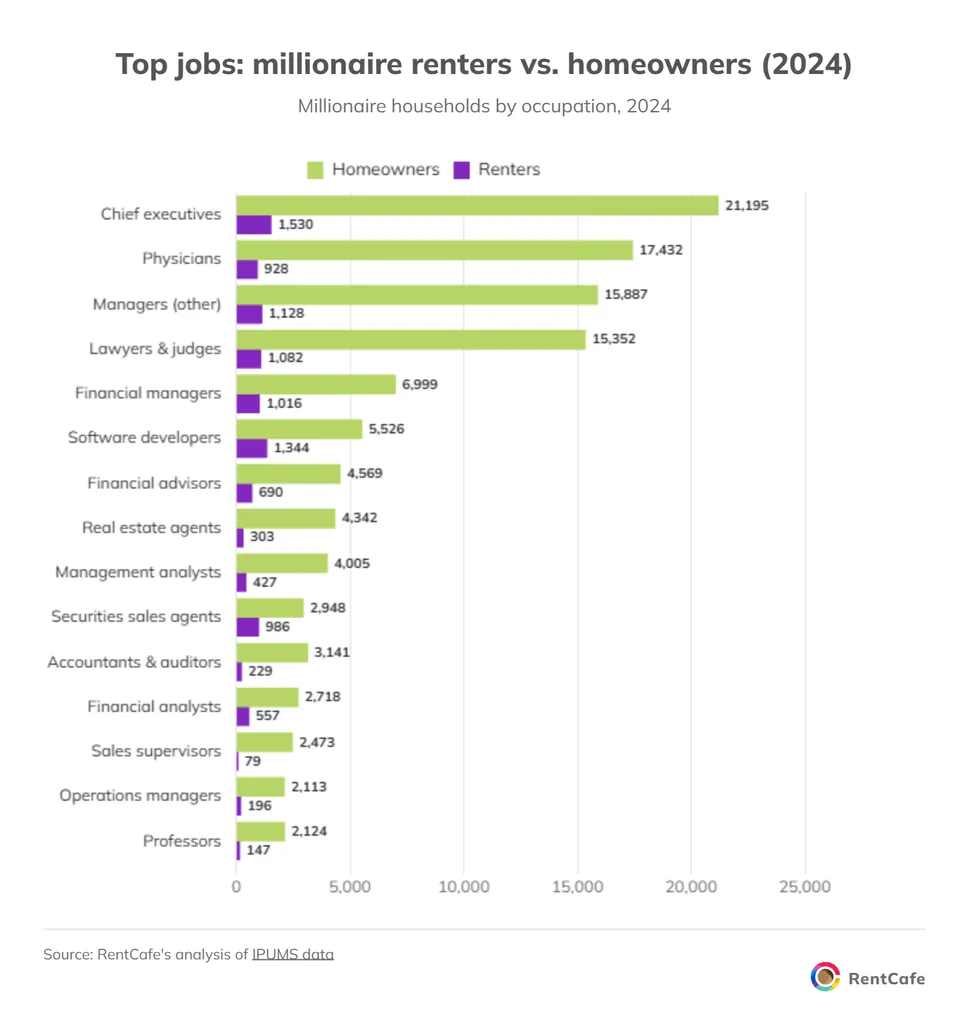
For apartment owners, wealthy renters support luxury and flexible-term product, especially in Sun Belt metros growing fastest. RentCafe found most work in white-collar jobs, including chief executives, technology professionals and senior finance managers, with a few surprises such as well-paid professors and operations managers. These roles produce steady income without tying workers to one place, so renting is a practical fit instead of a financial necessity. Charleston, S.C., also moved from zero to hundreds of such households.
RentCafe’s findings echo earlier CRE Daily coverage of millionaire renters in Southern metros.
What’s Next
Watch whether the affluent renter pool keeps swelling in lower-tax markets and whether developers add high-end rentals to match. The wealth and age mix of renters will shape unit design and pricing in the next development cycle.