




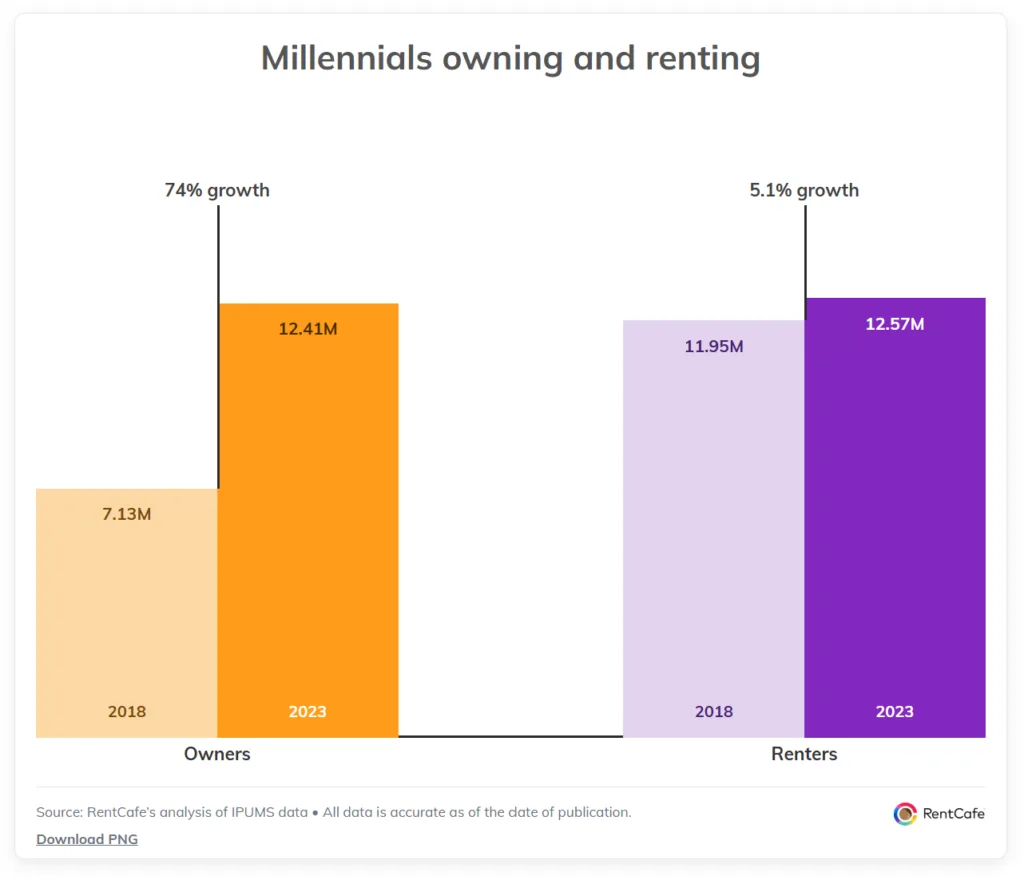
- Millennial homeownership in the US increased by 74% over five years, reaching 12.4M households in 2023, per RentCafe analysis.
- Florida and California metros like North Port, Lakeland, and Stockton posted the nation’s sharpest ownership gains, but rental growth remained modest at 5%.
- Affordable prices, local income growth, and pandemic-driven migration continue to shape where Millennials choose to buy or rent across the country.
Migration Patterns Drive Millennial Housing Shifts
According to RentCafe’s July 2026 analysis of IPUMS data, Millennials are moving well beyond stereotypes—and toward homeownership in record numbers. Over the last five years, Millennials in the US added approximately 5.3M homeowner households, a substantial 74% increase.
Fast-growing metros in Florida and California took the top spots for net new Millennial homeowners, with smaller and mid-sized cities also drawing this demographic away from previously hot urban rental markets. At the same time, Millennial renting inched up only 5%, adding just 600,000 households and highlighting a shift in preference toward ownership among the group now entering their prime earning and family-forming years.
The number of Millennial homeowner households is now nearly equal to Millennial renter households, at 12.4M vs. 12.6M nationwide. With affordability pressures, migration, and income growth shaping market entry points, a clear divergence is developing between former big-city tenant strongholds and new, fast-growing millennial-owned markets.
Get Smarter about what matters in CRE
Stay ahead of trends in commercial real estate with CRE Daily – the free newsletter delivering everything you need to start your day in just 5-minutes
Affordability, Migration, and Quality of Life Draw Millennials
Median-sized metros in Florida and California have seen an influx of Millennial homebuyers, thanks to more attainable home prices, manageable inflation, and robust local job growth. According to RentCafe’s report, North Port, FL saw Millennial homeownership nearly triple (+166%) from 13,212 to 35,144 households. Lakeland, FL posted a 141% jump, and Jacksonville clocked 126% homeowner growth, with more than 100,000 Millennial-owned homes by 2023.
This trend is not limited to the Southeast or smaller markets. Urban centers like Miami, San Antonio, Dallas, Philadelphia, and New York all landed in the top 20 for Millennial homeownership gains since 2018. In New York, the number of Millennial homeowners surged by 89%, underscoring a wider pattern of delayed but now accelerating purchases among older Millennials and reflecting local programs aimed at assisting first-time buyers.
Where Homeownership Outpaces Renting
Three-quarters of the largest metros (83 of 107) now have more Millennial homeowners than renters. The Midwest and Utah lead in share of Millennial homeowners, with Grand Rapids, MI (68.5%), Ogden, UT (68.3%), and Provo, UT (67.2%) topping the national list. These metros paired healthy Millennial income gains—up to 52% over five years—with local home price growth under 20%, enabling more Millennials to buy homes earlier than their peers elsewhere.
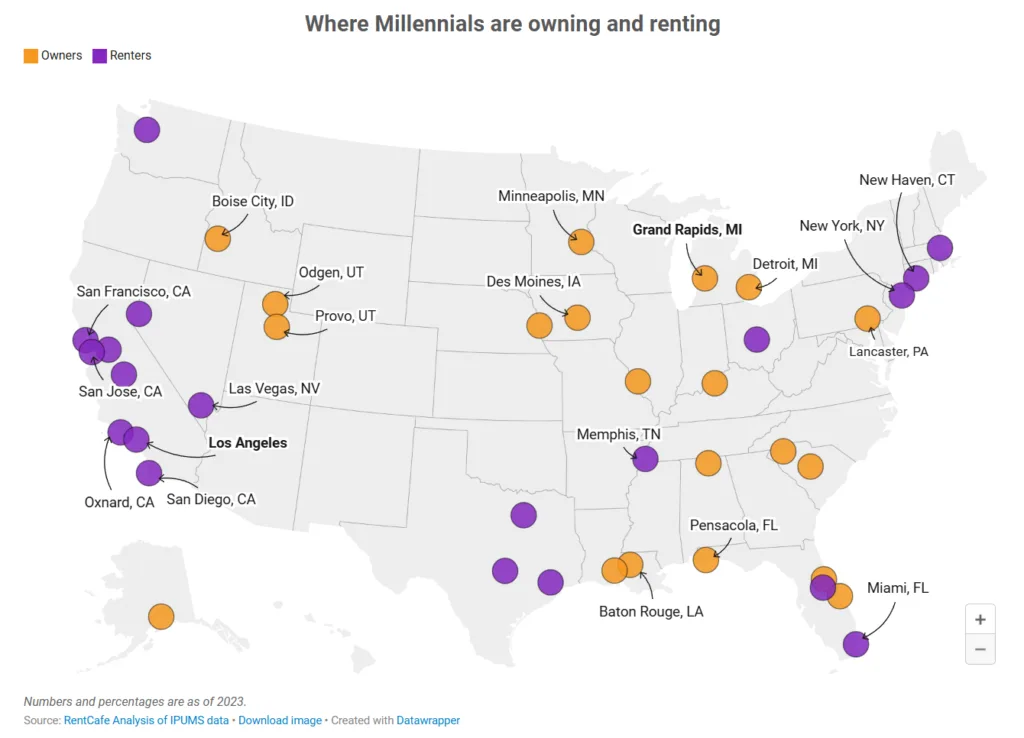
Meanwhile, the rental market tells a different story. Fast-growing cities in Florida, especially Orlando (+34%), Lakeland (+33%), and Cape Coral (+27%), saw the largest jumps in Millennial renters since 2018. Yet, renting growth is far more muted overall. Even in traditional renter bastions like Los Angeles, where 70% of Millennials lease, high prices and competition are leading more young adults to pursue ownership elsewhere when possible.
Why It Matters
The generational pivot toward homeownership is reshaping residential investment, planning, and development strategies nationwide. Rapid increases in Millennial owners—especially in affordable secondary markets—signal opportunities for homebuilders and buyers alike. Sizable increases in cities like North Port, FL (+166%), Lakeland, FL (+140.7%), and Stockton, CA (+117.6%) point to where developers and lenders might target new projects or mortgage products.
Metros posting high Millennial ownership rates tend to combine strong job growth, low-to-moderate home price increases, and a track record of municipal support for new buyers. For example, Philadelphia’s down payment grants and tax abatements have catalyzed a 92% jump in Millennial owners since 2018. Miami and San Antonio provide similar incentives, making home purchases feasible for this cohort amid rising national prices.
Yet the story is not uniform.In core coastal metros—Los Angeles (70% Millennial renters), San Jose (66%), and New York (64%)—housing affordability and the supply-demand imbalance keep renting dominant, even as some Millennials age into traditional buying years. Rising housing costs are also forcing more households to dedicate larger shares of income to rent, limiting their ability to save for down payments. According to the report, these cities saw rental populations rise 17-19% over five years, far outpacing owner gains. This polarization will further entrench housing market disparities, complicating affordability and policy debates as demand persists in both sectors.
What’s Next
The momentum of Millennial homebuying is likely to continue shaping markets in the near term. As more Millennials access higher wages and as municipalities expand down payment and tax incentives, mid-tier cities and emerging metros could see further spikes in homeownership. Meanwhile, affordability barriers and limited supply in star urban metros will sustain high rental demand among younger Millennials and new arrivals—especially in tech and coastal hubs. Developers, investors, and policymakers will need to keep tabs on these diverging trends to meet shifting generational preferences and housing needs through the next cycle.