




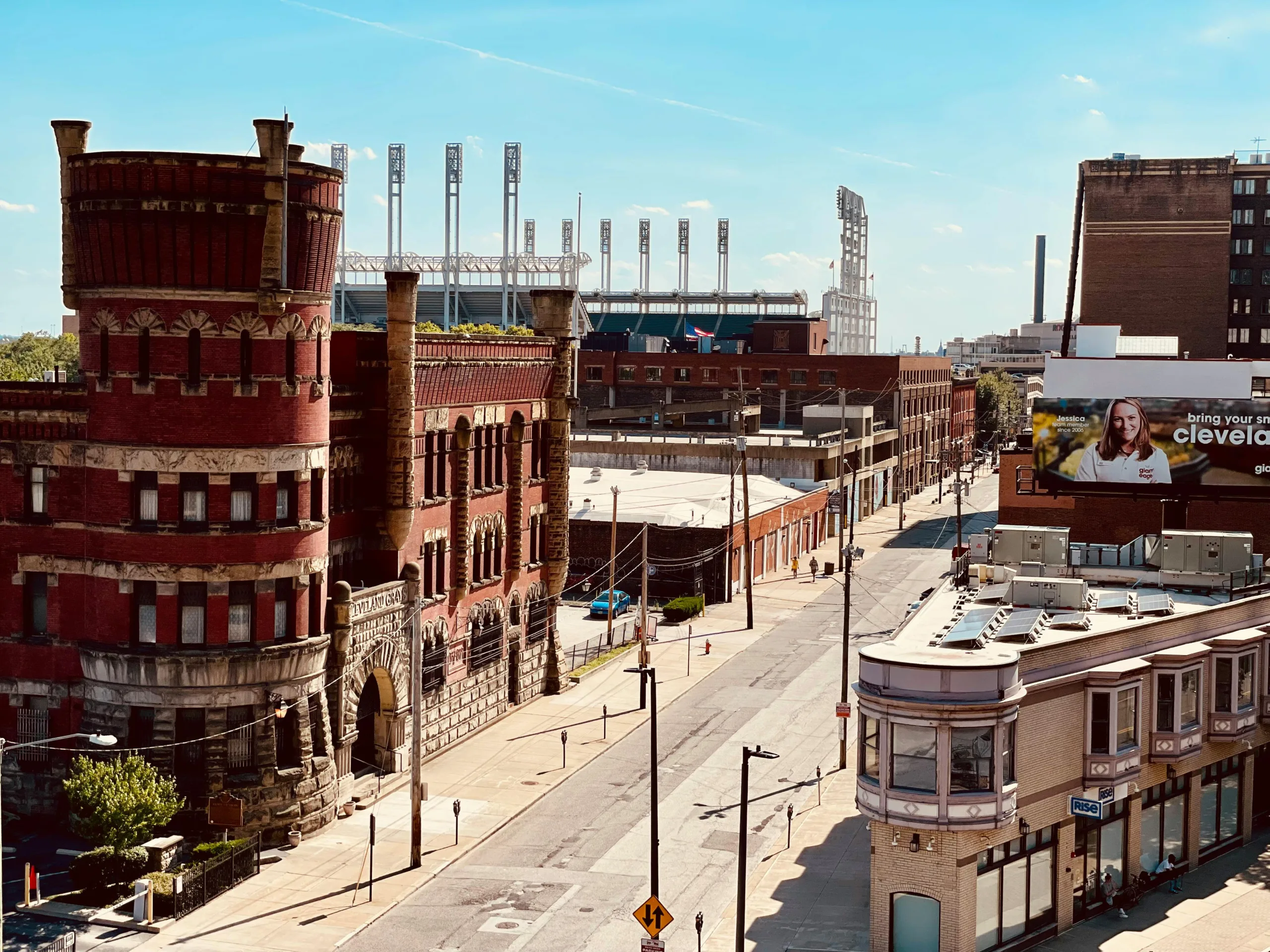



- Cleveland, Akron, and other Midwest cities posted modest population gains and net domestic migration growth after years of steady decline, according to recent Census estimates.
- Redevelopment projects, startup hubs, and lower housing costs are helping Northeast Ohio attract both returning residents and out-of-state transplants.
- The Midwest’s improving migration trends could reshape regional housing demand and economic development as Sunbelt affordability weakens.
The WSJ reports that Akron’s long-vacant B.F. Goodrich tire factory once symbolized the decline of Midwest manufacturing. Today, the redeveloped complex houses startups, apartments, and tech firms that are helping attract residents back to Northeast Ohio.
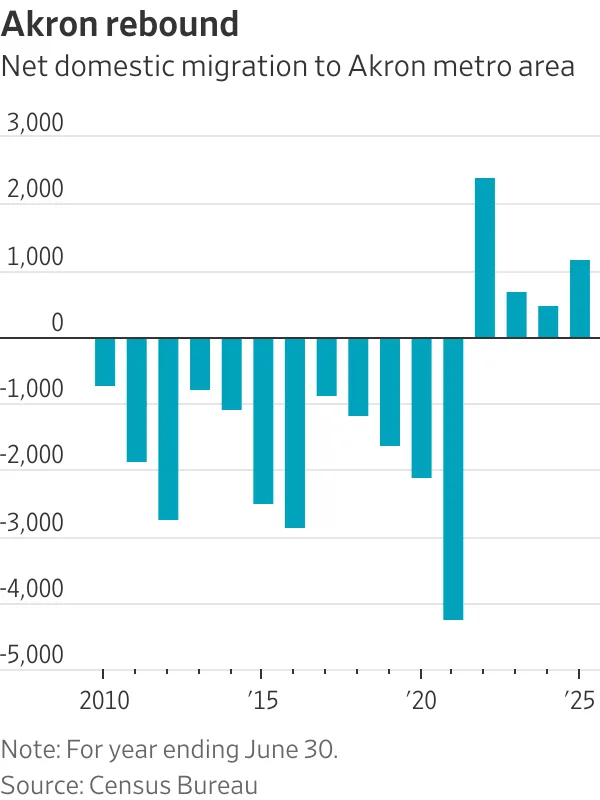
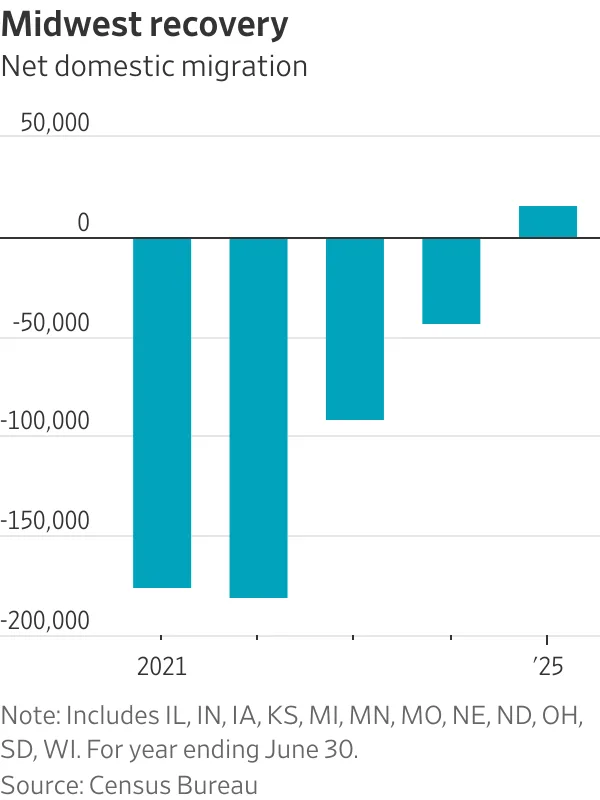
That shift reflects a broader trend unfolding across parts of the Midwest. New Census estimates show the region gained roughly 16,000 residents through domestic migration in the year ending June 2025, reversing losses that exceeded 175,000 in 2022. Cities like Akron, Cleveland, Indianapolis, and Columbus are beginning to stabilize after decades of population erosion tied to manufacturing losses and Sunbelt migration.
Get Smarter about what matters in CRE
Stay ahead of trends in commercial real estate with CRE Daily – the free newsletter delivering everything you need to start your day in just 5-minutes
Akron’s Industrial Reset
Akron lost roughly one-third of its population between 1960 and 2020 as tire manufacturing jobs disappeared and major employers downsized or relocated. Once known as the “Rubber Capital of the World,” the city watched plants operated by B.F. Goodrich, Firestone, and General Tire shutter through the late 20th century.
Now, many of those same industrial properties are being repurposed. The former Goodrich complex anchors Akron’s Bounce Innovation Hub, a state-backed tech accelerator launched in 2018 that houses more than 60 startups focused on AI, manufacturing software, virtual reality, and indoor agriculture.
One of those firms, industrial software company Harmoni, recently expanded its workforce to 21 employees after growing demand for factory-monitoring technology. The company recruited engineer Nate Albright back to Akron after he spent several years in Las Vegas working remotely during the pandemic.
The redevelopment effort extends beyond industrial reuse. Downtown Akron has converted multiple office towers and former bank buildings into residential projects while investing in public spaces and entertainment assets, including upgrades to the Civic Theater and the Akron RubberDucks’ downtown stadium district.
The Affordability Advantage
Housing affordability has emerged as one of the Midwest’s strongest competitive advantages. According to 2025 National Association of Realtors data cited by The Wall Street Journal, the median existing single-family home price reached $226,000 in the Akron metro area and $237,400 in Cleveland, far below the national median of $419,300.
That pricing gap is increasingly attracting both “boomerang” residents returning home and remote workers leaving higher-cost metros. Caitlyn Phipps relocated to Akron from Portland, Oregon, for a role at the University of Akron and said homes in walkable neighborhoods were comfortably below her $300,000 budget. Cleveland’s affordability edge has also helped sustain housing demand as buyers retreat from higher-cost Sunbelt metros.
Others are arriving from traditionally fast-growth Sunbelt markets. Hudson, an affluent suburb between Akron and Cleveland, has recently attracted buyers from Texas and Florida seeking milder summers, lower housing costs, and proximity to family. Local agent Katie Madio told The Wall Street Journal she helped 16 families relocate to the area over the past year alone.
The migration shift also reflects cooling momentum in the South. Many Sunbelt metros that absorbed Midwest outmigration over the last two decades now face affordability pressures, rising insurance costs, and slowing job growth.
A Midwest Migration Reversal
The Midwest’s rebound remains modest compared with growth in the South and Mountain West, but the directional change matters. Both the Cleveland and Akron metro areas shifted from net domestic migration losses to net gains in recent Census estimates, while similar reversals appeared in Dayton, Canton, and Racine, Wisconsin.
The gains are especially notable because much of the region continues to face natural population decline, with deaths still exceeding births in many aging Midwest metros. That dynamic has increased pressure on local leaders to retain college graduates and attract immigrants and young families.
The Greater Cleveland Partnership has spent several years building internship and retention programs aimed at keeping graduates from local universities in the region. According to the organization, roughly 52% of graduates from 22 Northeast Ohio universities stayed locally after graduation in 2024, up from 47% in 2021.
Healthcare and technology sectors are also helping offset manufacturing losses. Cleveland Clinic continues expanding its medical research and innovation footprint, while startup ecosystems tied to manufacturing technology, polymers, and bioscience are creating new employment pipelines across Northeast Ohio.
Why It Matters
Population stabilization can materially change the trajectory of Midwest real estate markets that have spent decades battling oversupply, shrinking tax bases, and declining demand. Even modest migration gains can tighten housing inventories, support multifamily development, and justify adaptive reuse projects in formerly distressed urban corridors.
For commercial real estate investors, the Midwest’s affordability story is becoming more compelling as gateway and Sunbelt markets contend with elevated home prices, higher operating costs, and slower leasing activity. Office-to-residential conversions, industrial redevelopment, and workforce housing could see renewed investor interest in secondary Midwest metros.
The trend also reinforces the growing role of “eds and meds” economies in post-industrial cities. Universities, healthcare systems, and startup incubators are increasingly replacing legacy manufacturing as anchors of regional growth.
What’s Next
The Midwest’s recovery remains fragile, and many downtowns still face high office vacancy, aging infrastructure, and uneven investment. Akron’s Main Street corridor, for example, still contains vacant storefronts despite recent redevelopment momentum.
Still, migration patterns are beginning to shift in ways that would have seemed unlikely just a few years ago. If affordability pressures continue pushing households away from coastal and Sunbelt markets, Midwest metros with improving job bases and lower housing costs could capture a larger share of remote workers, young families, and returning residents over the next decade.