





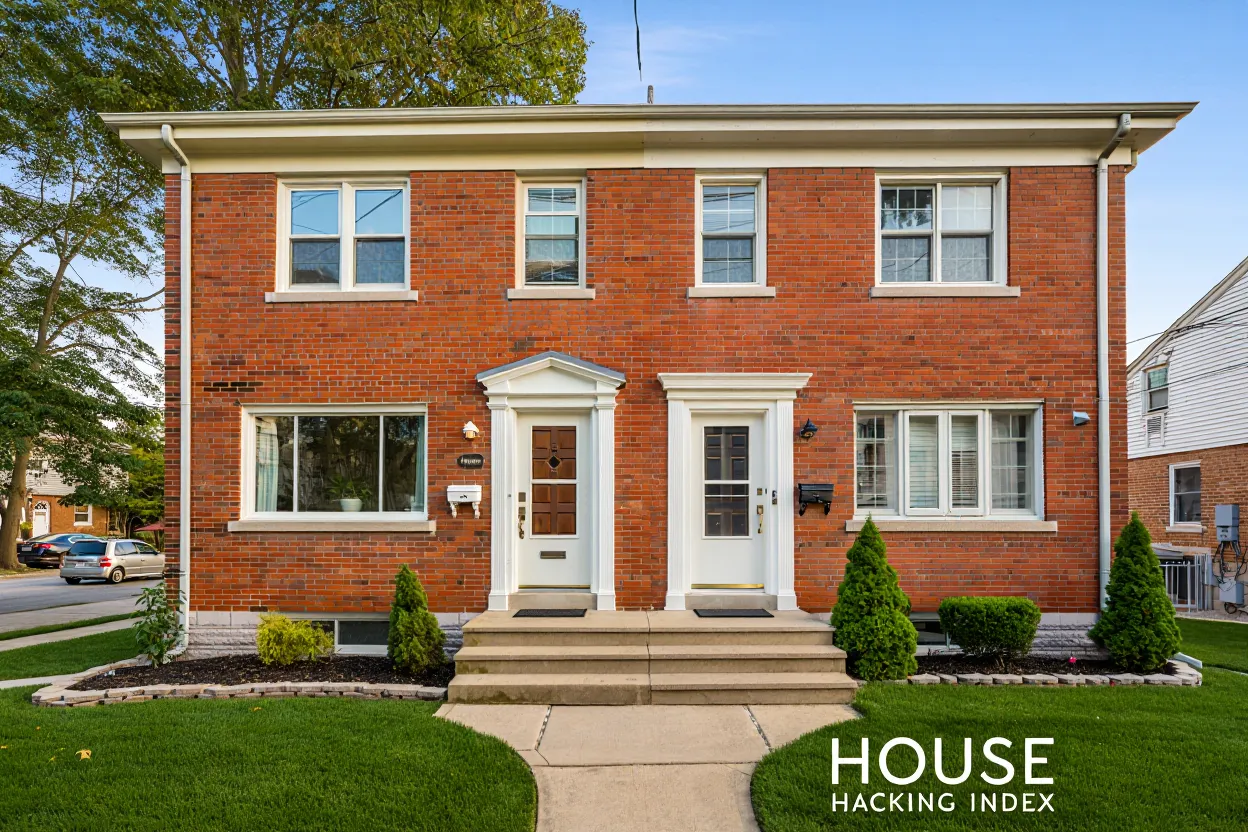
- Indianapolis, Cincinnati, and Detroit deliver the strongest house hacking fundamentals by balancing affordability, high yields, and accessible financing.
- The Midwest dominates LoopNet’s 2026 House Hacking Index, taking five of the top seven spots for multifamily investing.
- Accessible FHA financing, population growth, and stable rental demand position select US cities as prime choices for new owner-occupant investors.
Pushing Past Traditional Investment Barriers
LoopNet’s latest House Hacking Index, provides a data-driven ranking for new investors eyeing duplexes, triplexes, or fourplexes in 2026. House hacking allows owner-occupants to offset mortgages by living in one unit and renting out others—often with less cash down and better financing terms than traditional investment properties. Not every metro delivers the same mix of entry price, rental demand, and regulatory environment. LoopNet analyzed active listings and public data from 50 populous US metros to score and rank markets on eight factors, including affordability, yield, vacancy, and financing limits.
The standout trend: Midwest cities have pulled ahead as the most attractive entry points. Their median prices, favorable property tax metrics, and FHA loan coverage let new investors purchase multifamilies at lower cost and risk, making them an accessible onramp to real estate wealth building. That combination sets them apart in a segment where financing hurdles or high vacancy elsewhere can trip up less experienced buyers.
Get Smarter about what matters in CRE
Stay ahead of trends in commercial real estate with CRE Daily – the free newsletter delivering everything you need to start your day in just 5-minutes
The End of ‘Easy Money’ Markets
While house hacking isn’t new, tight credit, higher rates, and regulatory scrutiny have raised the bar since the 2020 investment surge. In expensive coastal metros, the gap between purchase price and achievable rent quickly erodes the model’s appeal.
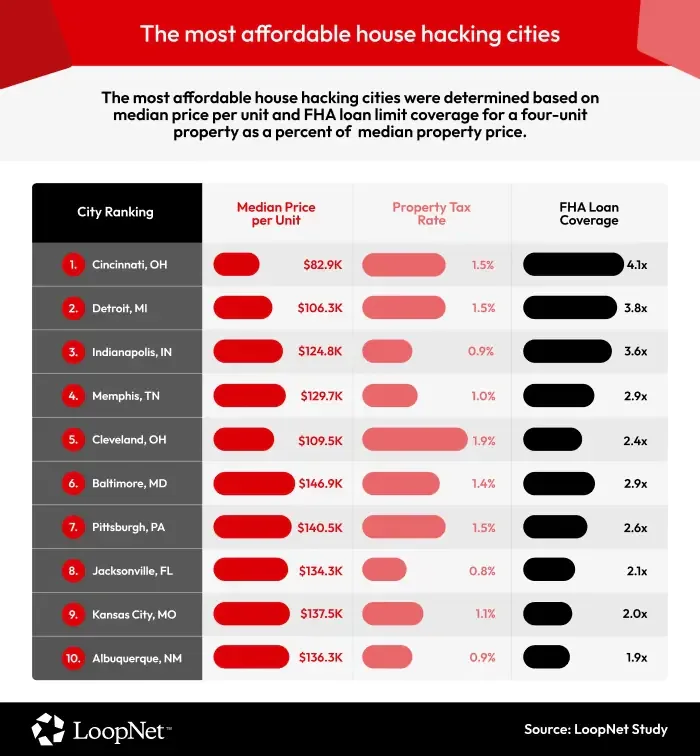
As a result, more new investors are chasing returns in secondary and tertiary markets—especially the Midwest—where acquisition costs remain attainable and FHA financing meaningfully stretches. LoopNet’s composite scoring methodology captures this shift, giving weight to variables beyond raw yield, such as FHA loan accessibility, property tax rates, and recent population growth as indicators for long-term performance and resilience. That financing advantage could strengthen further if proposed higher FHA multifamily loan limits take effect, expanding buying power for eligible owner-occupants in affordable markets.
The Details
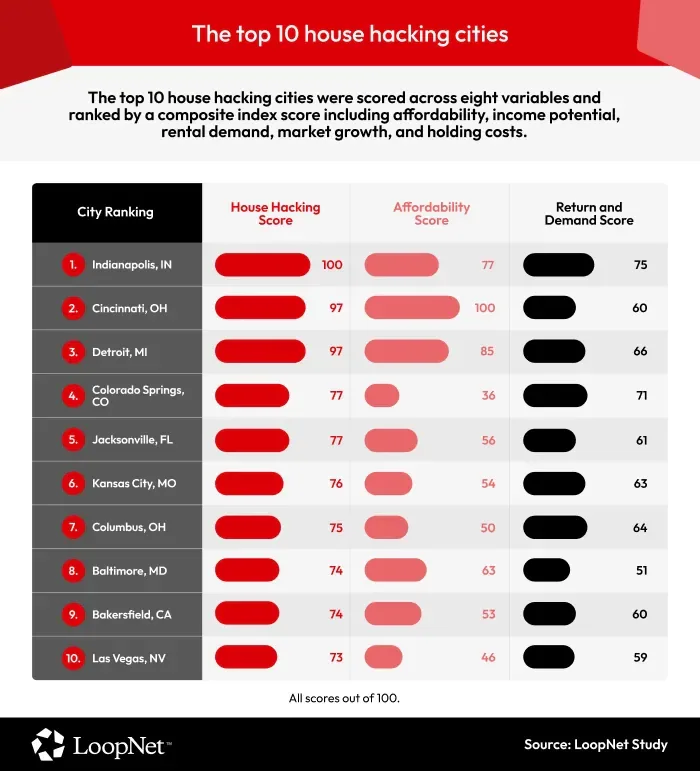
Indianapolis leads with a median price of $124,750 per unit, a 4.1% vacancy rate, and top-quartile yield at 15.2%. The city’s FHA loan limits outpace listing prices, making low-down-payment financing widely accessible. Cincinnati, in the number two spot, combines the lowest entry price ($82,917 per unit) with an FHA loan limit 4.1 times the typical multifamily price.
Detroit ranks third, with an average unit price nearly four times covered by FHA financing and a yield of 14.3%, according to LoopNet’s May 2026 data. Colorado Springs and Jacksonville round out the top five, offering robust demographic growth and, in Jacksonville’s case, an 11% gross yield despite a higher 11% vacancy rate. For all, the FHA option is a critical lever—minimizing upfront outlay and risk for first-timers.
Market Balances Shift as Midwest Rises
The 2026 House Hacking Index shows the Midwest dominating both for overall scores and affordability subrankings. Five of the top seven metros hail from the region, including Kansas City, Columbus, and Cleveland. While the West and South also offer opportunity—Colorado Springs, Bakersfield, and Jacksonville all made the top 10—the balance of low purchase price and income potential is harder to find in high-cost markets like New York or San Francisco.
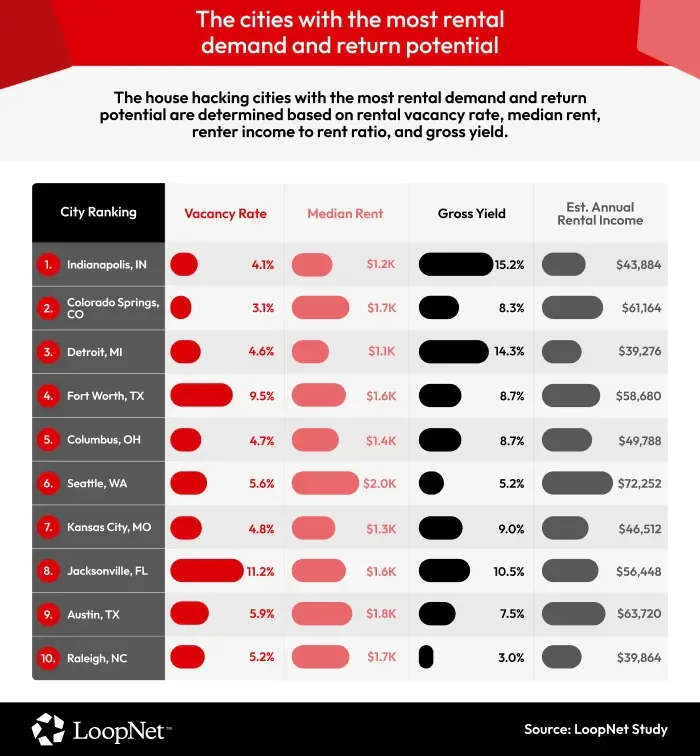
In many affordable markets, FHA loan caps and accessible prices combine to remove capital barriers that stop investors elsewhere. The top rental demand cities, led by Indianapolis and Colorado Springs, also see vacancy rates at or below 5%, reflecting stable tenant interest despite broader market uncertainties.
Why It Matters
CRE investors looking to house hack have historically gravitated toward prime or gateway markets, but rising rates and high entry costs have decoupled returns from risk in many such metros. According to LoopNet’s data as of May 2026, the median gross yield in Indianapolis topped 15%, with Cincinnati and Detroit at 11% or higher—well above the low- to mid-single-digit returns now typical in Tier 1 markets. In Cincinnati, FHA loan limits allow first-time buyers to acquire properties with far less cash than required elsewhere, eliminating one of the biggest hurdles to multifamily ownership for new entrants.
This shift is bolstered by underlying demographic momentum. Jacksonville, for example, saw a 7% population uptick over five years, inflating rental demand even as yields remain strong. The report’s methodology—factoring gross yield, affordability, regulatory risk, and population trends—produces a more holistic view than simple cap rate shopping. That’s crucial, since factors like property taxes, legal environment, and cash flow predictability can swing outcomes for inexperienced landlords. Investors focused only on sticker price or pro forma returns may find the reality of local barriers and soft demand undermines returns, especially as the climate for remote and out-of-state investing grows more competitive.
What’s Next
The 2026 House Hacking Index offers a practical heat map for CRE professionals and would-be investors: look Midwest for the most accessible entry, while strong-demand outliers in the South and Southwest can still deliver above-market yields. As capital seeks more predictable cash flow and regulatory clarity, expect sustained investor attention on metros with affordable stock and stable rental demand. LoopNet, which logged over $380B in recent transaction volume and currently tracks 300,000+ active multifamily listings, will remain a key data resource for tracking these trends.
For first-timers, the takeaway is clear: balancing financing access, holding costs, and real rental demand is more important than chasing headline yields. As CRE professionals scan the next wave of multifamily opportunities, combining granular market data and on-the-ground diligence will be critical for sustainable success in 2026 and beyond.