





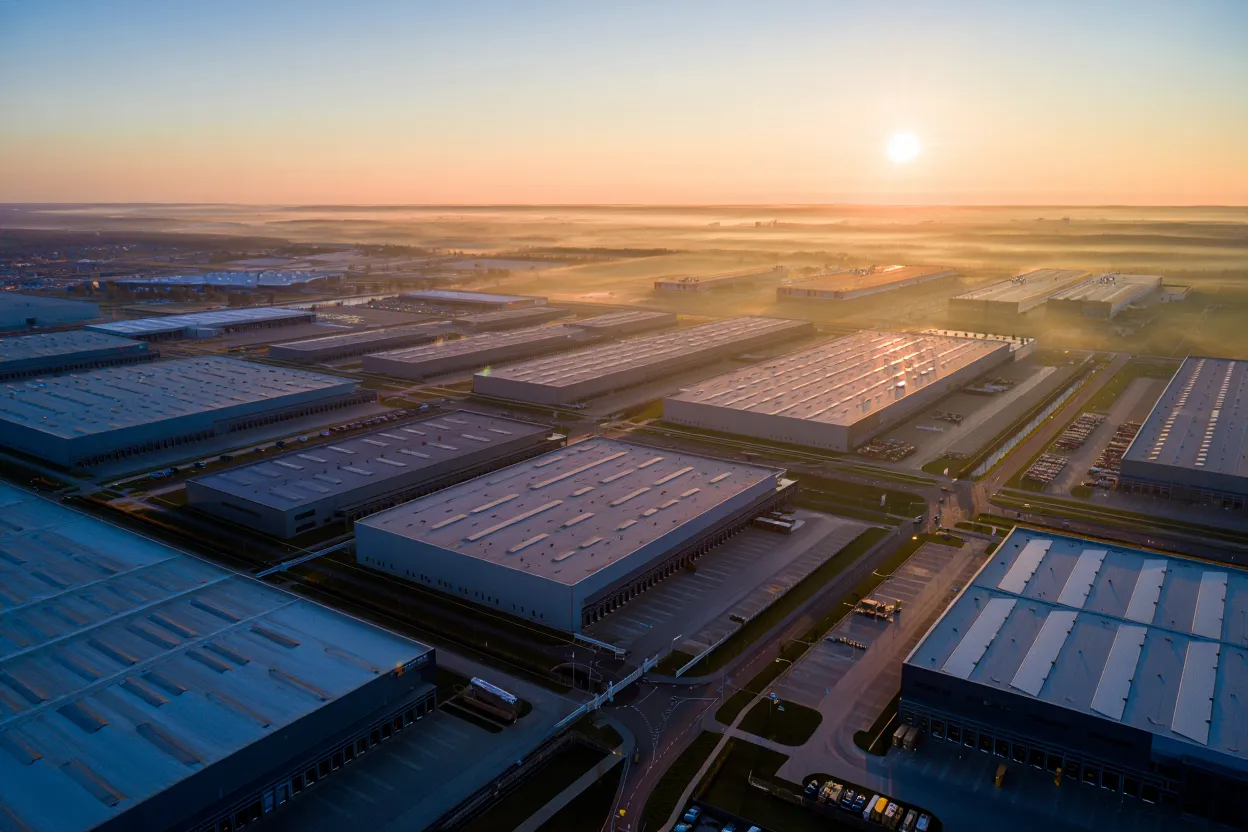
- Manufacturers eclipsed retailers and 3PLs in US industrial leasing, securing 327M SF from 2025 to Q1 2026, per Cushman & Wakefield.
- Texas, the Southeast, and Midwest are top destinations, supported by available land and logistics infrastructure.
- The shift signals a broader trend toward resilient, regionalized supply chains and new industrial demand drivers.
Manufacturers Overtake 3PLs in Logistics Demand
Globe St reports that manufacturing tenants are taking the lead in US industrial leasing—a sharp reversal from historic trends. According to a recent Cushman & Wakefield report, manufacturers accounted for more than 327M SF of industrial lease deals from January 2025 through Q1 2026. This demand outpaced activity by retailers and wholesalers by 38%. For context, 3PLs have typically been the top renters, representing around 30% of annual activity, with retailers and wholesalers typically drawing 20–24%. This reshuffling reflects manufacturers’ growing appetite for industrial real estate, driven by businesses adapting supply chain networks in response to geopolitical risk and shifting trade policy.
Get Smarter about what matters in CRE
Stay ahead of trends in commercial real estate with CRE Daily – the free newsletter delivering everything you need to start your day in just 5-minutes
The Details
The latest data confirms the scale of the shift. Since early 2024, manufacturers have led quarterly leasing activity. They narrowly surpassed 3PLs for the first time in years.
Today’s leasing reflects logistics needs more than traditional reindustrialization. Companies want better inventory control and stronger regional supplier networks. Consumer goods firms leased 45.8M SF during the survey period. Automotive and mobility users leased 27.7M SF. Energy and utility firms took 18.2M SF.
Computer and high-tech companies leased 16.8M SF. Paper and packaging users leased 14.7M SF. Industrial equipment firms occupied 13.7M SF. Life sciences and medical device users leased 13.4M SF. This marks a sharp reversal from a period when logistics providers dominated industrial demand.
A New Map for Manufacturing-Led Demand
Texas leads US advanced manufacturing activity. Its available land and infrastructure support growth. Cushman & Wakefield cites computers and high-tech users at 5.8M SF. Automotive and EV companies account for 5.2M SF. Data center-related tenants leased 3.4M SF.
The Southeast has also become a key destination. Consumer goods users leased 10.7M SF there. Automotive tenants leased 5M SF. Packaging users occupied 3.8M SF.
Midwest markets continue attracting established manufacturers and life sciences firms. Meanwhile, California concentrates demand among high-tech, aerospace, and defense tenants. Industry and geographic diversification highlights the resilience of regional supply chains.
Why It Matters
Tenant demand is reshaping site selection and building design. Industrial owners once relied heavily on retailers and 3PLs. Now they target manufacturers with complex logistics requirements.
According to Cushman & Wakefield, companies prioritize supply chain transformation and onshoring. These factors drive leasing in traditional and emerging logistics hubs. For industrial players, this shift extends beyond a typical cycle. Companies now value supply chain resilience and inventory flexibility. They also want facilities closer to customers and suppliers.
Manufacturers should remain a major demand source despite high interest rates. Geopolitical uncertainty also supports domestic production strategies. Regional trade policy changes continue creating new demand patterns. Owners, brokers, and occupiers who adapt quickly can capture long-term value.
What’s Next
Looking ahead, expect industrial owners and markets best equipped for advanced manufacturing and flexible logistics to capture outsized leasing volumes. Cushman & Wakefield projects continued momentum for regionalized supply chains, especially in Sun Belt markets and the established Midwest ecosystem. Developers with access to large sites, robust utilities, and proximity to supplier or consumer nodes will be positioned to capture demand as manufacturers continue shifting their strategies. The competition for prime industrial locations is likely to intensify, placing a premium on adaptability and speed to market for all stakeholders.