






- Houston’s industrial inventory is up 238.1 million square feet since 2016 to 817 million, with 204.8 million absorbed, and 2026 demand trails only Dallas among 53 markets.
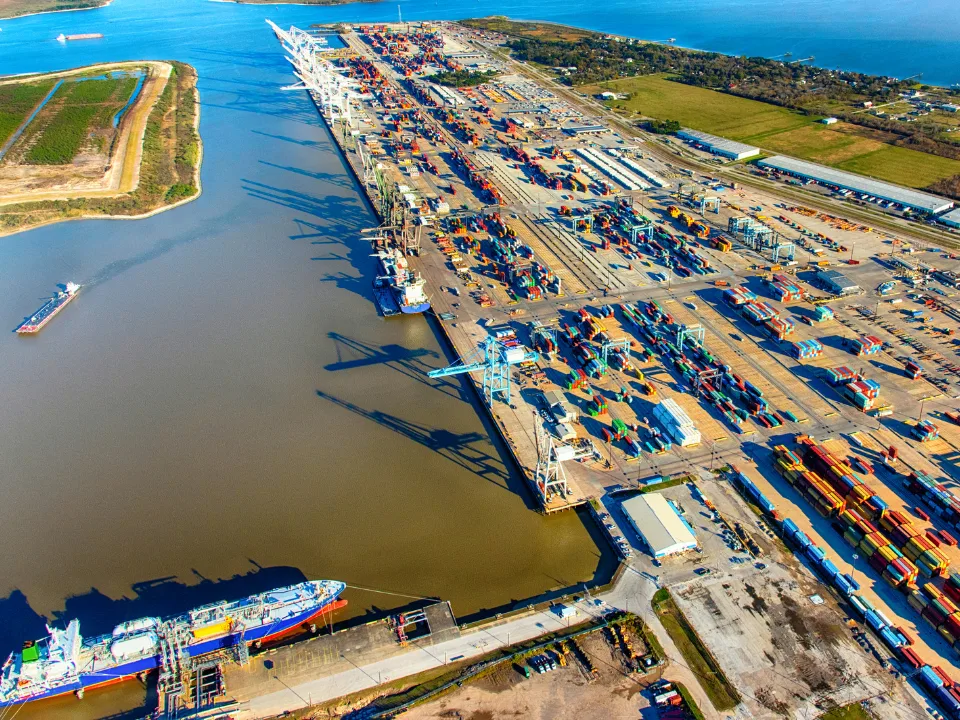
- Port Houston set a 4.3 million TEU record in 2025, the $1 billion Project 11 channel widening is done, and an $8 billion to $10 billion Project 12 is being planned.
- Southeast Houston around Bayport and Barbours Cut leads growth, and added terminals and energy logistics should concentrate demand for warehouses, land and outdoor storage.
Houston industrial space has swelled by 238.1M SF since the Panama Canal expansion opened in 2016, according to a Newmark report marking the milestone.
The market now totals 817M SF, the nation’s fourth largest, and tenants have taken up 204.8M SF over that stretch. Only Dallas beats Houston for 2026 demand among the 53 markets Newmark Research tracks.
Get Smarter About What Matters in Texas
Subscribe to our free newsletter covering the biggest commercial real estate stories across Texas — delivered in just 5 minutes.
The Port Behind the Boom
Port Houston built for the bigger ships. Bayport can now host vessels of up to roughly 17,000 TEUs, the same ceiling the widened canal sets.
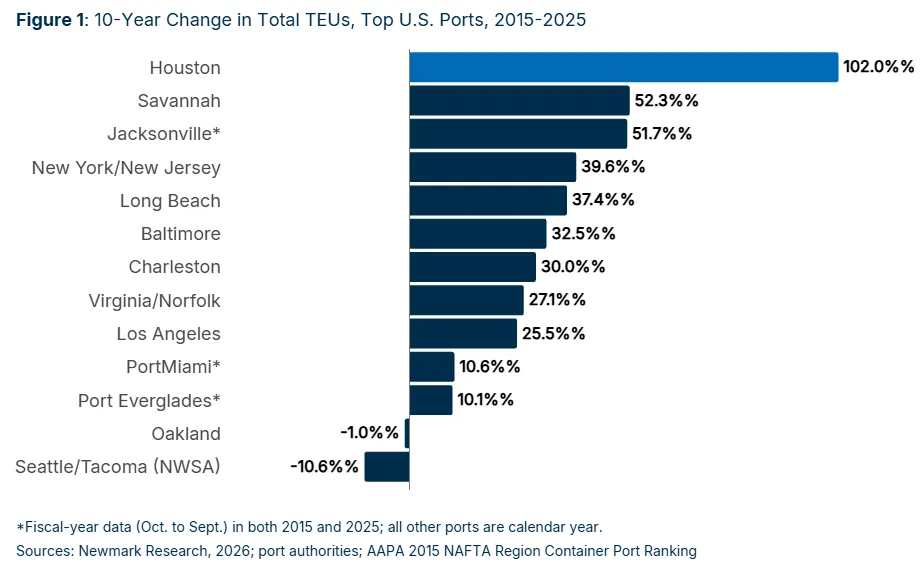
Volume followed. The port set a 4.3M TEU record in 2025, and Wharf 7 at Bayport added over 500,000 TEUs of room. No other major U.S. port has grown TEU volume faster over the past ten years.
The ties run deep. Per the U.S.-Panama Business Council, Texas is Panama’s biggest U.S. trade partner, and Houston tops the list of ports for northbound canal cargo.
Where the Space Went
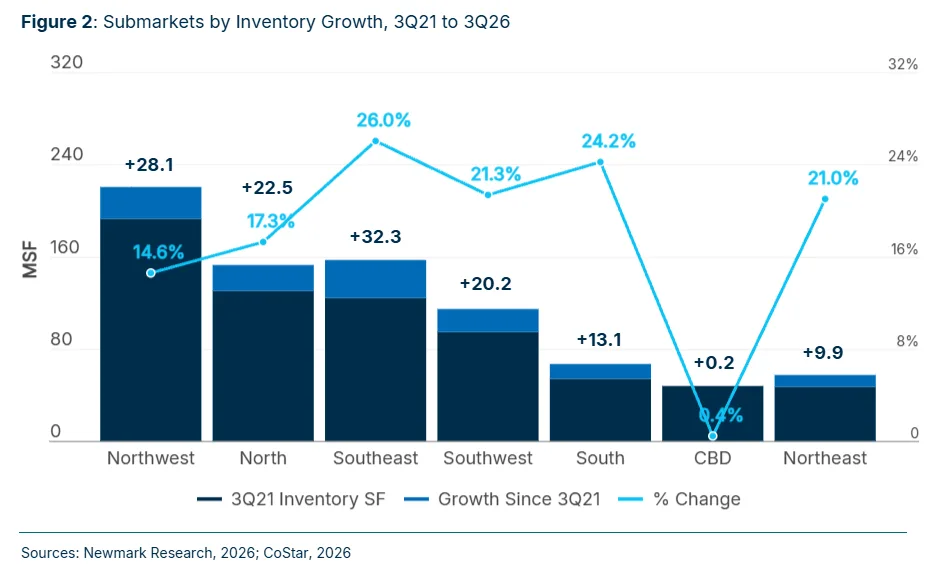
The Southeast submarket, which wraps the Bayport and Barbours Cut terminals, grew by 32.3M SF since 2021. That 26.0% gain outpaced every other Houston submarket.
It also posted the most deliveries of any submarket in the last two years, at 14.9M SF through Q3. Capital is following. In the Northwoods Industrial Park deal, Adkisson and PCCP bought a 2.7M SF campus in northwest Houston that Stream Realty Partners put at 98% occupied.
Project 11 and Project 12
The port and its industry partners chipped in to speed up Project 11, a $1B upgrade of the 52-mile Houston Ship Channel. It broadened the waterway from roughly 530 feet to 700 feet, giving ships more room to pass and easing some daytime-only restrictions.
Project 12 is next. It would deepen the channel by nine feet, to 55, and could cost $8B to $10B. Eric Carrero, who leads the Greater Houston Port Bureau, called that reasonable because a shutdown costs about $3B a day, a figure he tied to the Hurricane Harvey closure.
On the terminal side, Port Houston expects to spend more than $2B on its two container facilities within five years and wants a third site. Private operators are also pushing in, so the region may have up to five terminals within seven to 10 years.
Panama Builds Too
Panama’s canal authority is lining up two more container terminals, which would raise national port capacity from about 14M TEUs to around 20M. It also plans to award its $1.5B Río Indio reservoir in the first part of 2028, a response to the 2023-24 drought that restricted transits.
Energy matters here as well. U.S. LNG exports started rising the same year the locks opened, and much of it travels through the canal to Asia. The authority is floating a 47-mile pipeline along the west bank for up to 2.5M barrels a day of natural gas liquids, which would free up transit slots. Panelists said it only pencils if pipeline fees come in under the canal toll.
Why It Matters
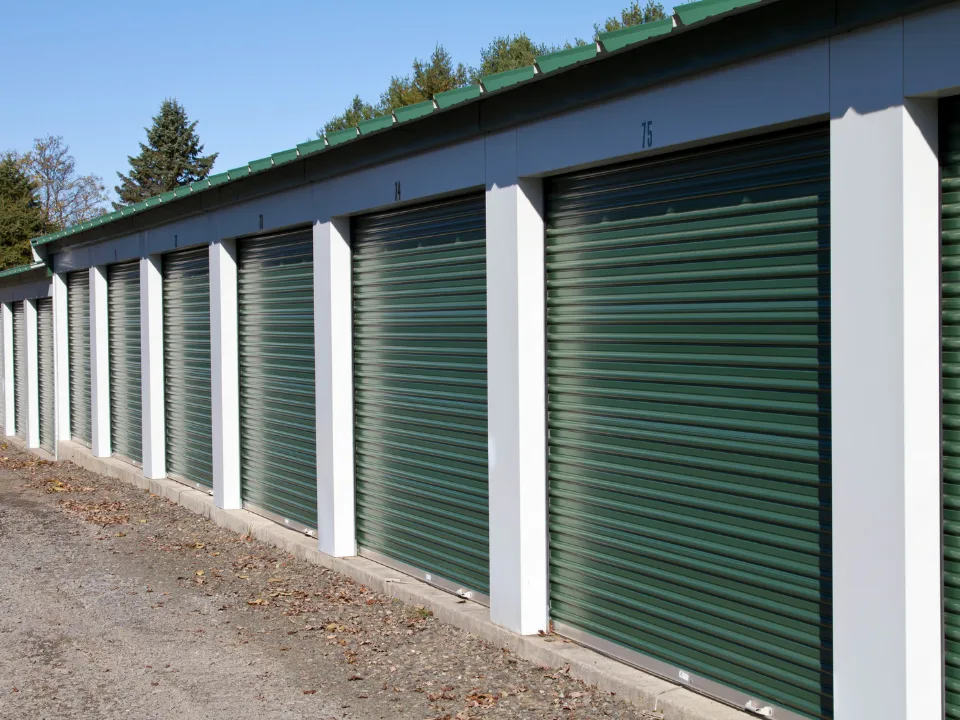
Newmark sees investment on both sides running into the 2030s. A deeper channel, more terminals and new energy infrastructure should pull demand toward warehouses, land and industrial outdoor storage along those routes.
That fits what we covered on yard rents. CBRE data showed a 32% rise since 2021 and more than 110% in top port markets. Population helps too: Texas has over 30M residents and is projected to become the largest state by 2100.
What’s Next
The risks are real. Shipping lines are ordering vessels too big for the current locks, which has revived talk of a fourth set, and water is still the canal’s limiting factor.
Carrero expects Project 12 will not be the last channel project. Houston and Panama are both wagering that new capacity can stay ahead of cargo growth.