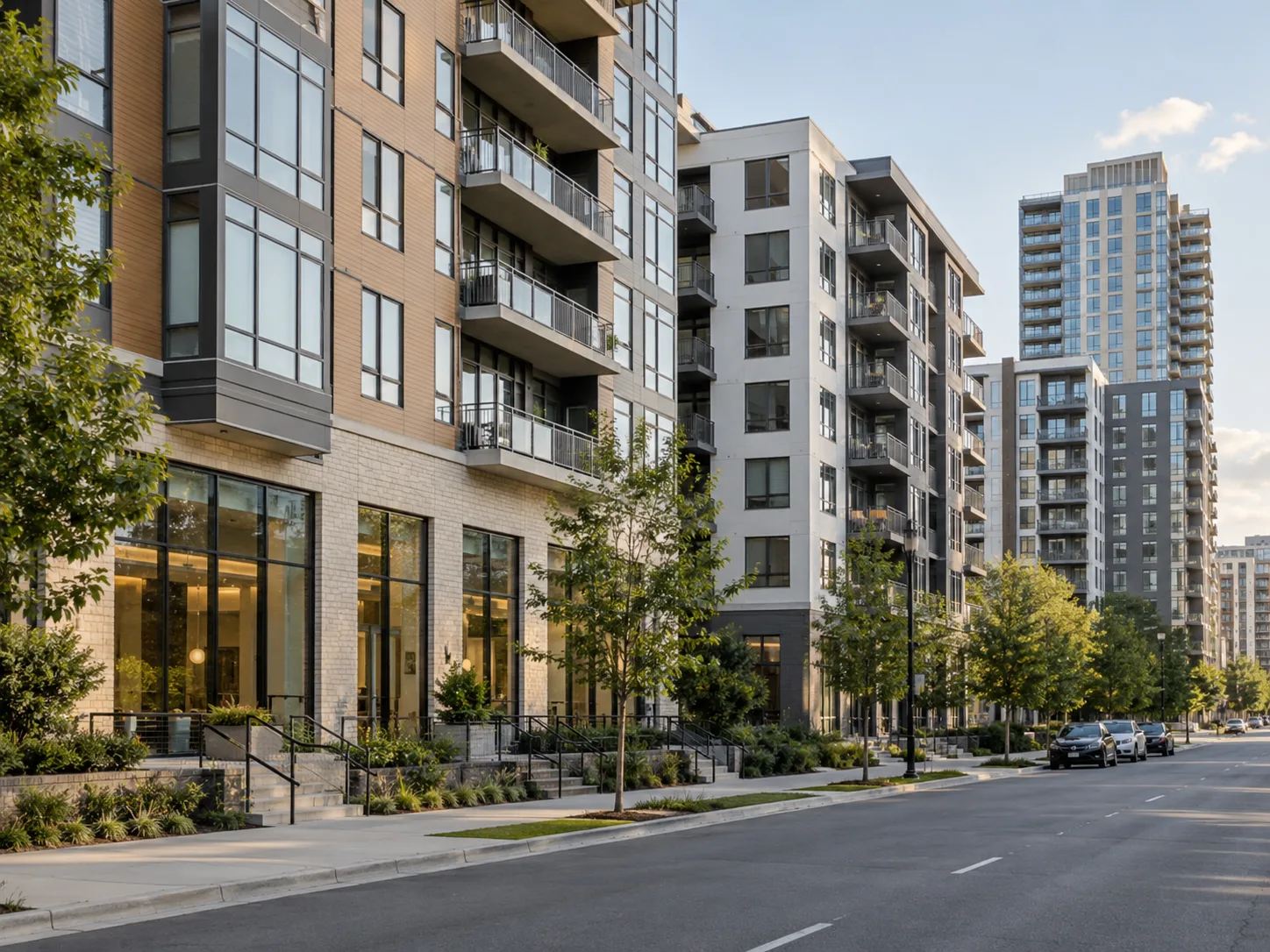




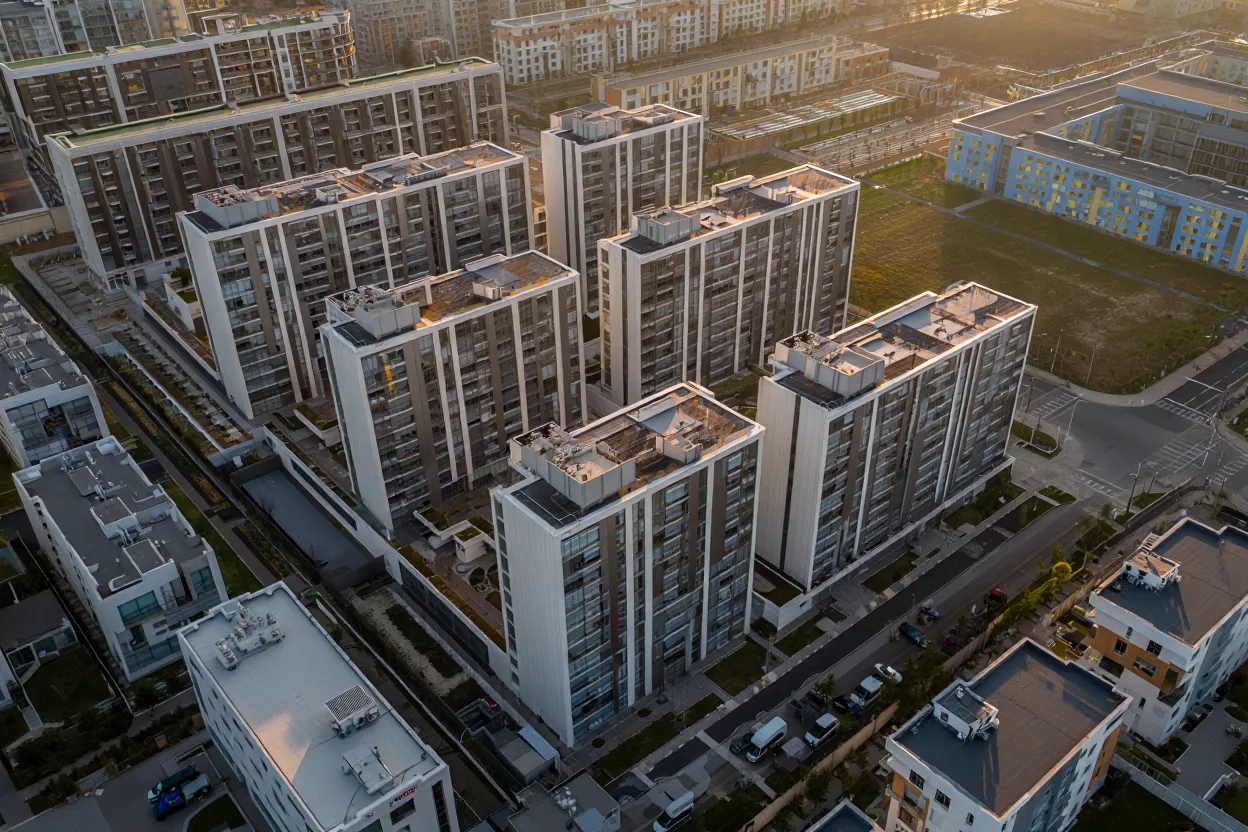
- Developers delivered a record share of large, high-density apartment buildings in 2025, with 14% of new multifamily projects housing at least 50 units.
- According to Census Bureau data, 57% of the 484,000 new multifamily units in 2025 were in buildings with 50 or more apartments, highlighting the growing preference for scale.
- The shift to high-density product is most concentrated in the Northeast and South, where larger rental assets dominate new supply and reshape regional investment opportunities.
The Move Toward Larger Multifamily Assets
Globe St reports that multifamily developers escalated their focus on scale in 2025, delivering more high-density apartment buildings than ever before. According to the US Census Bureau, 14% of multifamily buildings completed last year were in the 50-plus-unit category—roughly 2,000 buildings—compared to just 1% back in 1978.
Per a National Association of Home Builders analysis, 2025 marked the ninth straight year in which more than half of all new multifamily units arrived in larger, denser developments. The trend reflects a shift toward projects that maximize land efficiency and operating scale, as competitive pressures intensify across the country.
Get Smarter about what matters in CRE
Stay ahead of trends in commercial real estate with CRE Daily – the free newsletter delivering everything you need to start your day in just 5-minutes
The Details
In 2025, the US saw 484,000 completed multifamily units, Census Bureau data shows. Of these, 278,000 units—or 57%—were in buildings of 50 apartments or more. This not only establishes a new high for the share of deliveries in this product type but also further distances high-density projects from the smaller multifamily segment.
While the “50-unit” threshold covers a spectrum of properties, it signals a national developer preference for bigger buildings and campuses. There is some ambiguity in how the Census tracks multi-building projects or garden-style developments, but the overall picture is one of mounting density across multifamily pipelines.
Regional Concentrations Shape Supply
High-density trends aren’t evenly distributed. The Northeast claimed the highest concentration in 2025. About 15% of multifamily buildings and 73% of new units were in the 50-plus-unit category.
The Midwest lagged, with 12% of buildings and 40% of units falling into this classification. Its unit percentage also dropped from 67% in 2024.
The South reached 16% of buildings and 56% of units. The West recorded 11% of buildings and 58% of units. Rapid population growth in Austin also highlights the housing pressures pushing Sun Belt markets toward denser residential development.
Investors will find many scaled rental assets coming online across the Northeast and South. For-sale high-density product remains more prevalent in the Northeast.
Why It Matters
The acceleration of high-density deliveries signals a pivotal transformation in the US multifamily market. Larger buildings typically offer lower per-unit land costs and drive efficiencies in operations and amenities, making them more resilient to economic pressure—an increasingly valuable feature as capital and operating expenses rise. According to the National Association of Home Builders, this multiyear swing toward denser projects has both enabled and forced sponsors to sharpen their design and leasing strategies to hold sway in urbanizing markets.
For investors, the spread of high-density supply in the Northeast and Sun Belt underscores where institutional-grade assets—and thus liquidity and competitive dealmaking—are most concentrated. Regionally uneven supply also shapes risk assessment: while the Northeast sets a new high for percentage of dense product, the Midwest’s retrenchment hints at capital and demand imbalances that could impact rent growth and asset values.
Nationwide, rental high-density buildings represented 59% of completed units, with the Northeast and West seeing well above-average shares. As portfolios tilt toward larger properties, deal flow, exit strategies, and operating benchmarks are likely to shift accordingly.
What’s Next
Looking ahead, developers and investors should expect continued high-density focus in national pipelines, particularly in markets where zoning and demand support vertical scale. Analysts will watch to see whether the Northeast’s dominance spreads, and whether retrenchment in the Midwest persists amid changing investor appetites.
The balance between rental and for-sale high-density product will remain key, as will ongoing questions about project classification in aggregated data. For now, institutional and large-scale multifamily continue to write the next chapter in US apartment supply through 2026 and beyond.