







- Trepp data show a 6.2% median decline in Florida multifamily property insurance costs in 2025, the first negative reading in its six-year series.
- Trepp’s series shows Florida insurance cost growth peaked at 42.1% in 2023, compared with 16.0% across the rest of the country.
- The 2025 decline offers relief but does not erase the higher expense base created by several years of sharp increases.
Florida multifamily insurance costs moved lower in 2025 after four years of outsized growth. Trepp data show a 6.2% median year-over-year decline for securitized Florida multifamily properties. The rest of the nation recorded a 3.4% increase during the same period.
Get Smarter about what matters in CRE
Stay ahead of trends in commercial real estate with CRE Daily – the free newsletter delivering everything you need to start your day in just 5-minutes
Florida Multifamily Insurance Costs Reverse
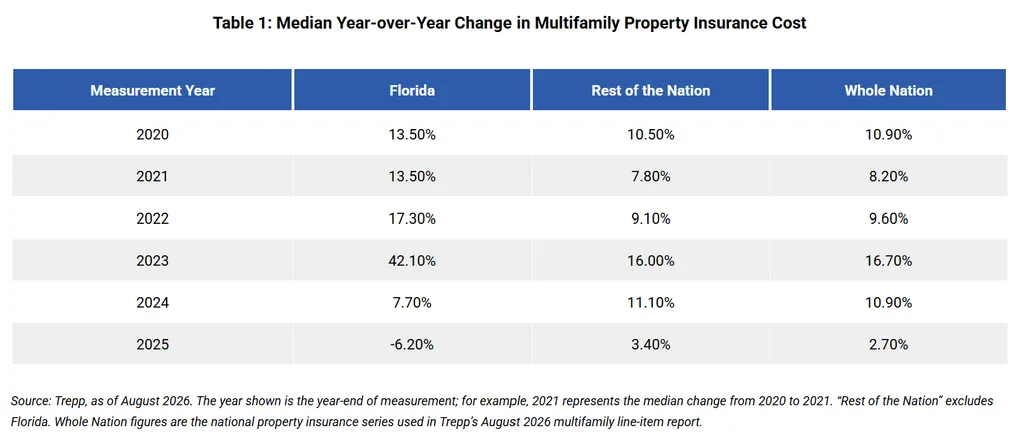
Trepp’s six-year series shows Florida outpacing the rest of the nation from 2020 through 2023. The gap widened as Florida posted increases of 13.5% in 2021 and 17.3% in 2022. Other states recorded 7.8% and 9.1%, respectively. The divergence peaked in 2023, when Florida’s median increase reached 42.1%. The rest of the nation posted 16.0%, creating a 26.1-percentage-point gap.
The Details
The first reversal appeared in 2024. Florida’s median increase slowed to 7.7%, below the 11.1% increase across other states. The split became more pronounced in 2025. Florida moved to a 6.2% decline, while the rest of the nation still increased 3.4%. The national median remained positive at 2.7%, according to Trepp’s August 2026 data. That indicates the negative reading was concentrated in Florida rather than spread nationwide.
The Decline Does Not Reset the Cost Base
Trepp cautions that a negative median does not undo the earlier run-up in insurance expenses. The prior surge left owners and lenders with a much higher expense level. That pressure mirrors broader landlord challenges, as liability insurance costs have also surged nationwide.
A 6.2% decline provides relief from that level. It does not restore insurance costs to where they stood before earlier increases. Because the figure is a median, individual properties can still show very different insurance outcomes.
Why It Matters
Property-level insurance results can differ based on building characteristics, location, policy structure, deductibles, claims experience, and insurer. Trepp therefore treats the series as a directional benchmark rather than a substitute for asset-level underwriting. Lenders and investors still need to evaluate each property’s actual insurance burden and coverage terms. The statewide trend can inform context, but it does not determine the economics of an individual asset.
What’s Next
The next property statements will show whether Florida’s 2025 decline proves durable. Trepp says underwriting should account for both the recent relief and the elevated expense base left by earlier increases. That keeps insurance costs relevant even after the first negative annual reading in the series. Future reporting will determine whether 2025 marks a sustained shift or a temporary pullback.