




- Deloitte surveyed 950 CRE leaders, and 51% still expect revenue growth above 5% despite weaker overall business sentiment.
- Nearly 80% expect to upgrade or reposition assets within 12 to 18 months, with logistics and warehousing ranked as the top opportunity.
- More than 90% plan higher data and technology spending, while AI governance and tax strategy are becoming more central to investment decisions.
Deloitte Insights says CRE is entering 2027 with capital still moving, but with less tolerance for indiscriminate spending. Its 2027 commercial real estate outlook describes a market shaped by high capital costs, uneven demand, and rapid technology change. Deloitte surveyed 950 executives at owners and investment companies with at least $250M in assets under management. The survey was conducted in June and July 2026. Even with softer sentiment, 51% of respondents still expect revenue growth above 5%.
Get Smarter about what matters in CRE
Stay ahead of trends in commercial real estate with CRE Daily – the free newsletter delivering everything you need to start your day in just 5-minutes
Capital Keeps Moving as Sentiment Softens
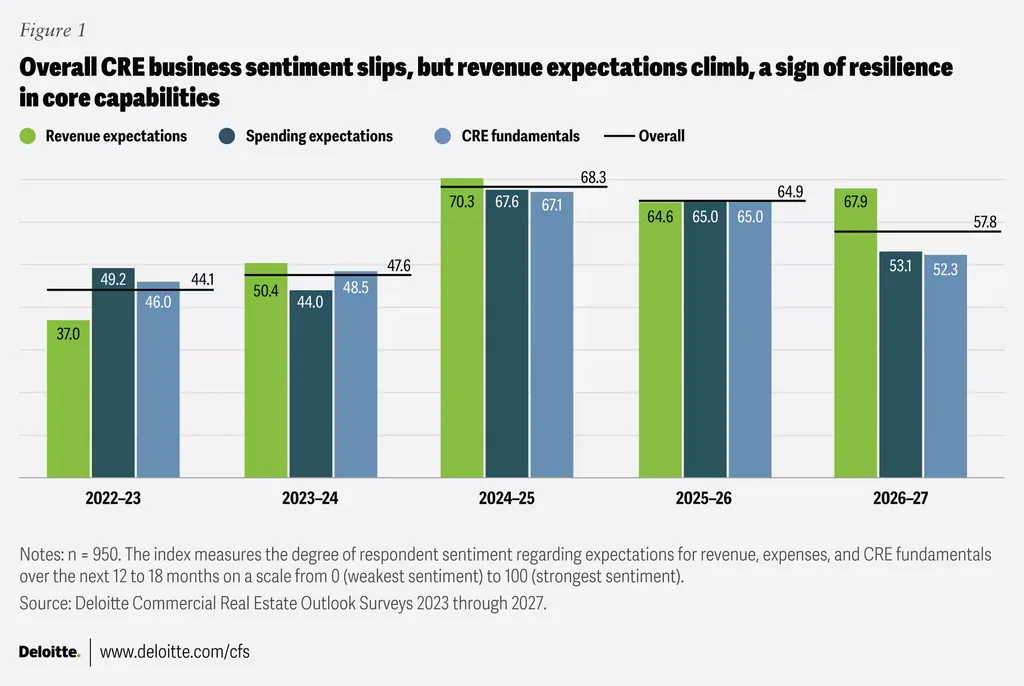
The overall sentiment index fell to 57.8 out of 100. It was 64.9 last year and 68.3 in 2025. Executives expect tighter spending in areas including office space and talent management. They also anticipate slower rent growth and elevated vacancies. Revenue expectations are more resilient. Forty-one percent expect growth between 5% and 10% next year. That pushed Deloitte’s revenue sentiment index to 67.9, just below its 2025 record of 70.3.
Cost of capital, capital availability, and elevated interest rates remain the top three macroeconomic concerns. Those concerns could intensify as large volumes of CRE debt mature in a higher-rate environment.
The Details
Capital is also concentrating by strategy. Digital economy and debt strategies captured more than two-thirds of capital raised in 2025, according to Deloitte. That concentration could leave less capital for other sectors in 2026 and 2027. Still, appetite for real assets remains strong. Nearly 80% of respondents expect to increase real-asset investment by early 2028. Cross-border CRE capital was up 18% in Q1 2026 from a year earlier. The US is the top foreign investment target for 28% of respondents, up from 16% last year. The UK and India followed.
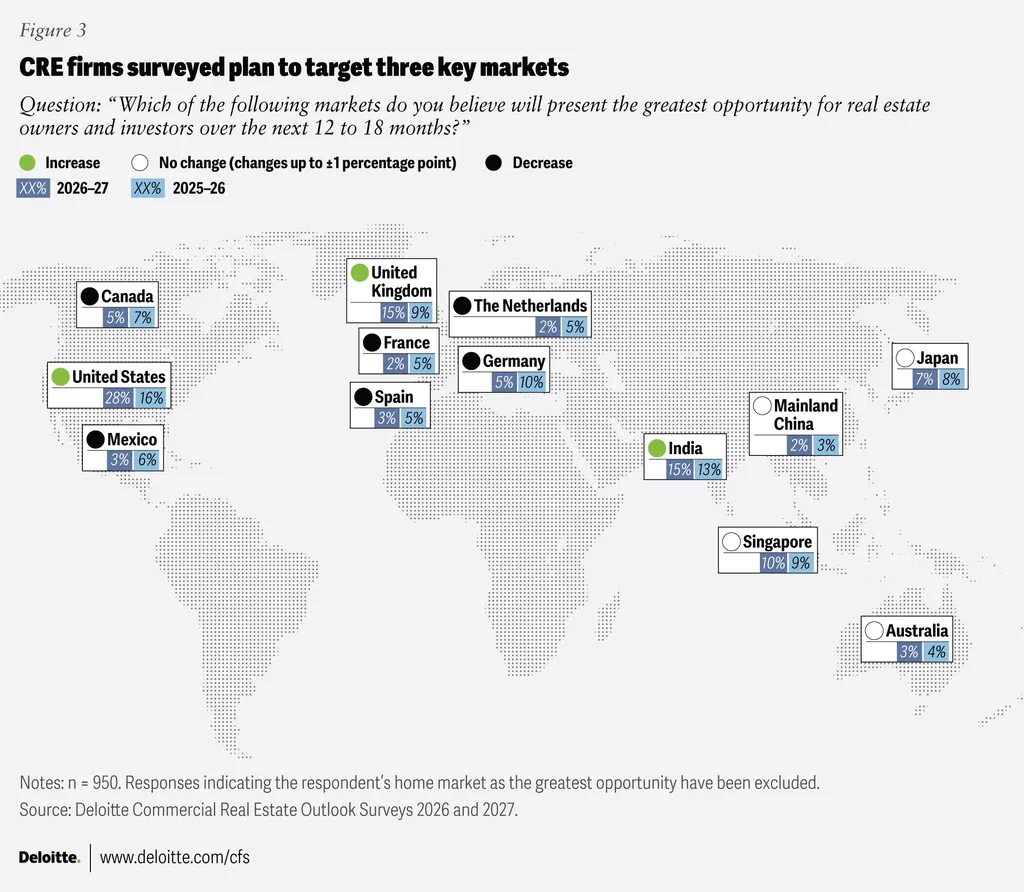
Deloitte linked the stronger US preference to improved liquidity and AI-related opportunities in gateway markets.
Portfolio Triage Moves Up the Agenda
Asset strategy is becoming more selective. Nearly 80% of respondents expect to upgrade or reposition existing properties within 12 to 18 months. About 38% plan to be highly active. By contrast, 39% expect no conversion activity and 46% expect no sales. Industrial and alternative-property specialists placed the most emphasis on upgrades and repositioning. Office specialists were the most likely to consider conversions, at 23%. Housing executives showed the greatest willingness to exit assets, at 22%. Logistics and warehousing ranked first for opportunity over the next 12 to 18 months. Digital economy properties ranked close behind. Neighborhood retail rose to fifth place, while hotel and lodging fell to 13th.
Why It Matters
The survey points to a wider gap between assets that can justify new capital and those that cannot. Modern, well-located properties are drawing stronger occupier demand. Older or less functional buildings can face higher vacancies and costly upgrades. Deloitte recommends upgrades only where verified demand and rent premiums can cover the capital expense. That selective posture mirrors the broader shift toward disciplined CRE capital deployment. Tax strategy is also moving earlier into investment decisions. More than 90% say tax is already central or becoming more central. Another 32% expect it to become even more important over the next 12 to 18 months. Only 26% currently involve tax teams at deal origination.
What’s Next
Technology spending is another priority, though execution remains uneven. More than 90% of executives plan to increase data and technology spending next year. That is up from 76% last year. Deloitte found 72% have completed preliminary data mapping and source verification for AI systems. Fewer than half have implemented stronger process and security controls. The report also found 67% rank AI and data fluency as the top capability for rising leaders.
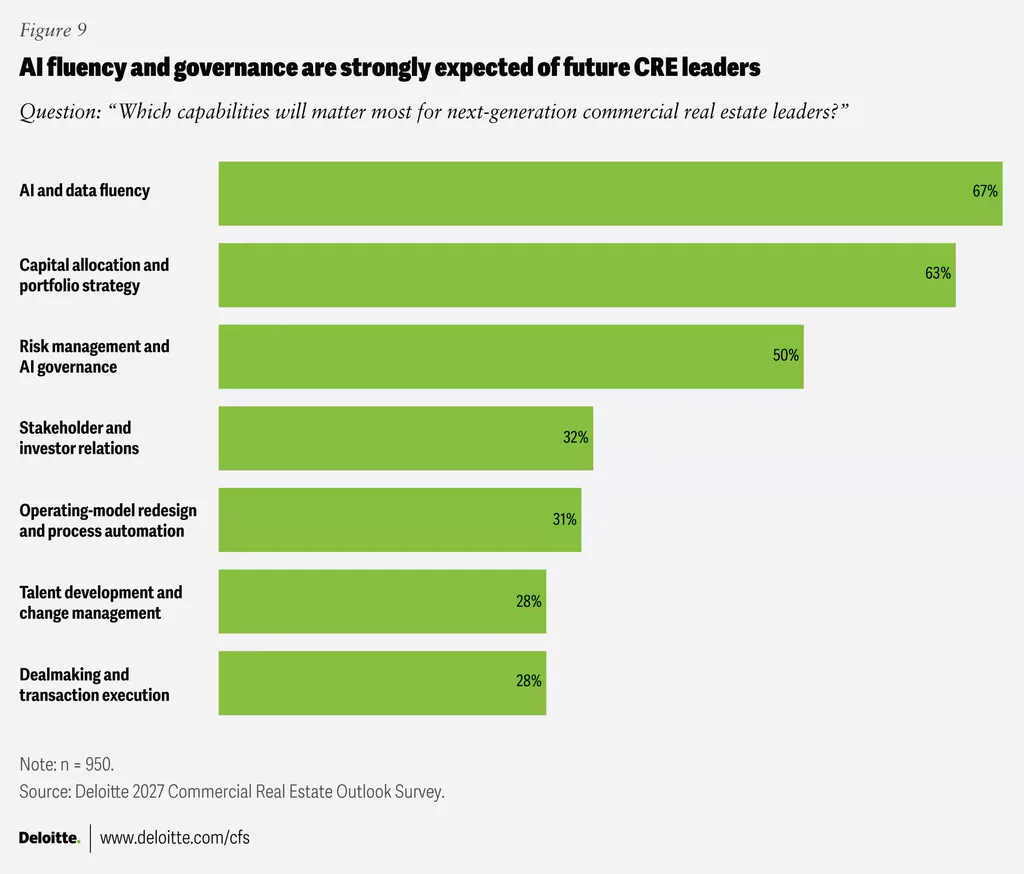
Workforce planning is becoming more urgent too. Deloitte says 40% of the US real estate workforce and 59% of CRE leaders will reach retirement age within a decade. The report’s central message for 2027 is discipline. Firms are being pushed to upgrade selectively, govern AI before scaling it, embed tax earlier, and sell assets that cannot meet return hurdles.