






- The Dallas Fed’s CRE loan-volume index fell to 15.5 from 41.4 in the prior survey.
- CRE credit standards tightened further, while overall loan pricing swung to a positive 25.0 index.
- Bankers expect softer loan demand, weaker business activity and higher nonperforming loans six months from now.
Commercial real estate lending continued to expand in September, but momentum slowed considerably. The Federal Reserve Bank of Dallas said in its latest Banking Conditions Survey that CRE loan volume remained positive while its index dropped to 15.5 from 41.4. The survey covered 61 financial institutions headquartered in the Eleventh Federal Reserve District.
Data were collected from September 15 through September 23. Respondents also reported tighter credit standards and higher loan pricing across the broader lending market. The Dallas Fed conducts the survey twice each quarter to track lending conditions at banks and credit unions. CEOs and senior loan officers report changes in volume, demand, pricing, credit quality and business conditions.
Get Smarter about what matters in CRE
Stay ahead of trends in commercial real estate with CRE Daily – the free newsletter delivering everything you need to start your day in just 5-minutes
Loan Growth Loses Momentum
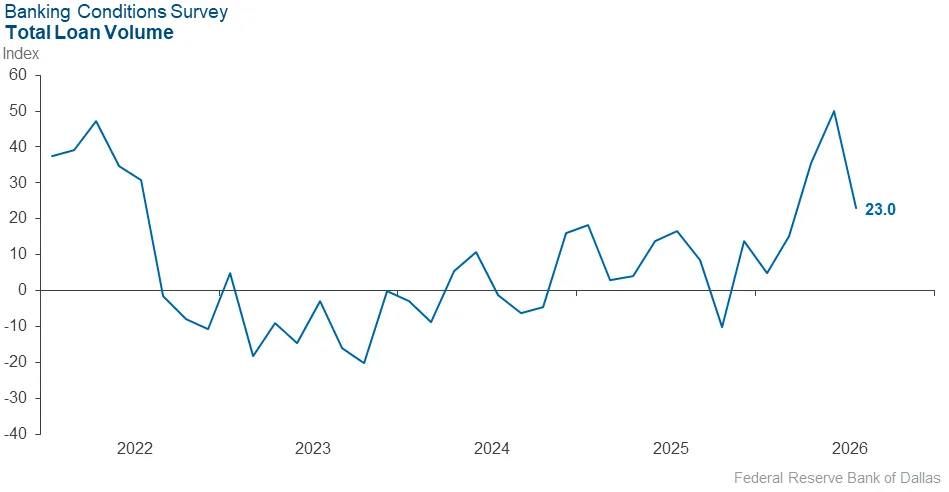
The shift reversed a six-month trend of accelerating overall loan growth. The total loan-volume index fell to 23.0 from 50.0. Loan demand also slowed, dropping to 8.2 from 46.7. For CRE specifically, 34.5% of respondents reported higher loan volume. Another 46.6% reported no change, while 19.0% reported a decrease.
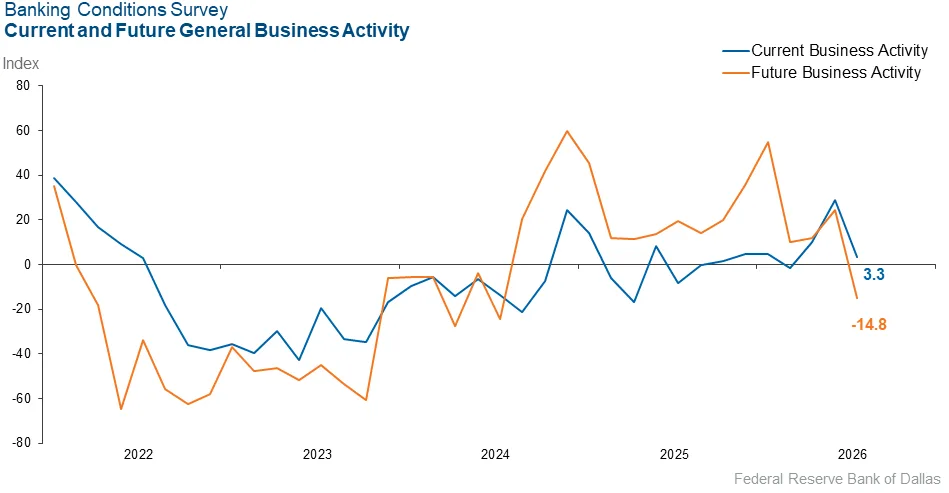
Commercial and industrial lending also decelerated. Its loan-volume index fell to 6.9 from 20.7. Residential real estate loan volume was flat at an index of 0.0. Consumer loan volume moved into contraction at negative 10.0. General business activity also lost momentum. Its current index fell to 3.3 from 29.0. About 29.5% of respondents said activity improved, while 26.2% said it worsened. The largest group, 44.3%, reported no change.
The Details
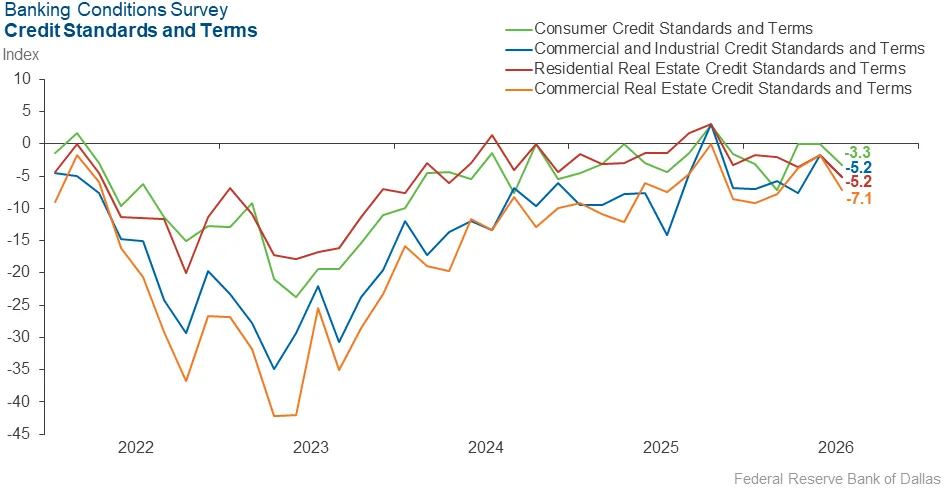
Banks became more selective as growth cooled. The overall credit standards and terms index fell to negative 10.4 from negative 1.7. For CRE loans, the index dropped to negative 7.1. Only 1.8% of institutions reported easier CRE standards, while 8.9% reported tightening. Most respondents, 89.3%, reported no change.
Loan pricing moved sharply higher across the survey. The total loan-pricing index rose to 25.0 from negative 3.2. At the same time, loan performance improved in the current period. The overall nonperforming-loan index was negative 8.2, versus negative 4.9 previously. The CRE nonperforming index moved to negative 6.9 from 0.0. In the Dallas Fed methodology, negative readings for nonperforming loans indicate that more institutions reported declines than increases.
The survey indexes measure the share reporting increases or easing against the share reporting decreases or tightening. Positive readings indicate more respondents saw increases. Negative readings indicate decreases or tighter conditions dominated. That framework makes September’s combination clear: lending still grew, but standards and outlooks moved in a more cautious direction.
Why It Matters
The September results show lenders still adding CRE exposure while becoming more cautious about terms and pricing. Bank CRE lending remains active even as the survey shows a clear loss of momentum. That combination matters for borrowers because credit availability and credit cost are moving in different directions.
Bankers’ comments repeatedly pointed to higher interest rates and inflation as concerns. One respondent said new CRE development remained healthy but could slow if rates stay elevated. Another said rising rates were affecting loan pricing in a significant way. The survey also captured concern about weaker business activity and reduced borrowing demand.
One rural-market respondent cited a $50B data-center investment as a major local growth driver. Other comments were more cautious, pointing to higher Treasury yields, borrowing costs and energy prices. The comments show why aggregate loan growth can remain positive while individual markets and borrowers experience very different conditions.
What’s Next
The six-month outlook turned notably softer. The index for expected total loan demand fell to negative 1.6 from 40.3. Expected nonperforming loans rose to 16.6 from 6.5, signaling anticipated deterioration. The outlook for general business activity dropped to negative 14.8 from 24.2. The Dallas Fed’s next Banking Conditions Survey release is scheduled for November 9, 2026.
That update will show whether September’s slowdown becomes a broader lending pullback or remains a temporary deceleration. The expected nonperforming-loan reading is especially important because current loan performance was still improving. A turn from current improvement to expected deterioration would mark a meaningful change in credit conditions if it appears in later surveys.