




- Commercial real estate lenders are increasingly selling troubled loans or foreclosing on distressed assets after years of extending maturities and delaying losses.
- Deals tied to Manhattan condos, Los Angeles studios, and Sunbelt apartments show lenders accepting discounts ranging from 30% to 85% to clear troubled debt.
- The shift could accelerate price discovery across CRE markets and unlock new investment activity after years of frozen transactions.
According to Bloomberg, commercial real estate lenders are finally forcing a reset. After years of extending loan maturities and waiting for interest rates, office demand, and valuations to rebound, banks and debt funds are increasingly selling distressed CRE debt at steep discounts or taking control of troubled properties outright.
The shift marks a decisive break from the industry’s long-running “extend and pretend” strategy, where lenders delayed recognizing losses in hopes that property fundamentals would recover. According to MSCI, distressed commercial real estate debt totaled nearly $132B across US property sectors in Q1 2026, though workouts of troubled loans outpaced new distress for the first time since 2022.
Get Smarter about what matters in CRE
Stay ahead of trends in commercial real estate with CRE Daily – the free newsletter delivering everything you need to start your day in just 5-minutes
The End of “Extend and Pretend”
For much of the post-pandemic cycle, lenders avoided forced sales because pricing remained unclear and transaction activity was limited. Rising rates, weak office demand, and falling property values made refinancing difficult, but many lenders still preferred extensions over realizing losses on their books.
That strategy is now fading. Bloomberg reports that lenders including Goldman Sachs, Deutsche Bank, and Ready Capital are becoming more aggressive about disposing of non-performing loans, even when doing so requires significant markdowns. Xander Snyder, senior commercial real estate economist at First American Financial Corp., told Bloomberg that resolving distress is painful for individual investors but ultimately healthy for the broader market.
The logic is straightforward: holding troubled loans ties up capital and delays price discovery. Clearing bad debt also allows lenders to redeploy capital into stronger sectors and newly repriced opportunities.
The Distressed Debt Deals Reshaping CRE
Several recent transactions highlight how aggressively lenders are now marking down troubled assets.
Shanghai Commercial Bank reportedly sold debt tied to a stalled Manhattan condo conversion at 335 W. 35th St. at roughly an 85% discount to the loan’s payoff amount. In Los Angeles, Netflix is reportedly negotiating to acquire the Radford Studio Center at a steep discount to its $1.85B 2021 valuation after a lender group led by Goldman Sachs seized control of the property.
Ready Capital also moved to reduce exposure to struggling Sunbelt multifamily properties by selling a pool of apartment loans at roughly a 30% discount, according to Bloomberg. The lender disclosed in February that it planned to offload 60% of its legacy CRE loan portfolio, including roughly $1.5B in non-performing and underperforming debt.
Foreclosures are climbing alongside loan sales. Deutsche Bank filed to foreclose earlier this year on Hackman Capital Partners’ Kaufman Astoria Studios in New York, tied to a $340M mortgage. Meanwhile, Trepp reported that loans tied to properties already in foreclosure reached $17B in March 2026, up from $7B in 2024 and the highest level since the post-Great Financial Crisis cleanup period.
Even CMBS investors are taking losses. Bloomberg noted that investors tied to a $240M bond backed by a San Francisco office tower received only $101M after the underlying loan sale.
Office Distress Drives the Reset
Office properties remain the biggest source of pain across commercial real estate. Per MSCI, distressed office sales jumped 45% year over year in Q1 2026 as older buildings continue losing tenants to newer, amenity-rich towers in stronger urban submarkets.
That divide is becoming more pronounced. Tenants are still leasing office space, but most demand is concentrated in recently renovated or trophy assets located in high-traffic business districts. Commodity office buildings in weaker locations face mounting refinancing challenges and declining valuations.
Lonnie Hendry, chief product officer at Trepp, told Bloomberg that lenders now have a clearer understanding of which loans are unlikely to recover. Properties that have struggled for three or four years increasingly look beyond rescue without substantial new equity or redevelopment plans.
Multifamily is also seeing pressure in some Sunbelt markets, where rapid development during the pandemic migration boom created oversupply concerns and weaker rent growth.
Why It Matters
The industry’s willingness to finally recognize losses could help thaw a commercial property market that has been stuck in limbo for several years. Distressed sales create pricing benchmarks that buyers, lenders, and investors have lacked since rates surged in 2022.
That matters because transaction activity cannot meaningfully recover until sellers and lenders accept current valuations. Forced sales and discounted debt trades are painful in the short term, but they also create opportunities for opportunistic capital, recapitalizations, and redevelopment plays. The shift also comes as lenders face mounting pressure from rising CRE loan defaults and a growing number of borrowers struggling to refinance maturing debt.
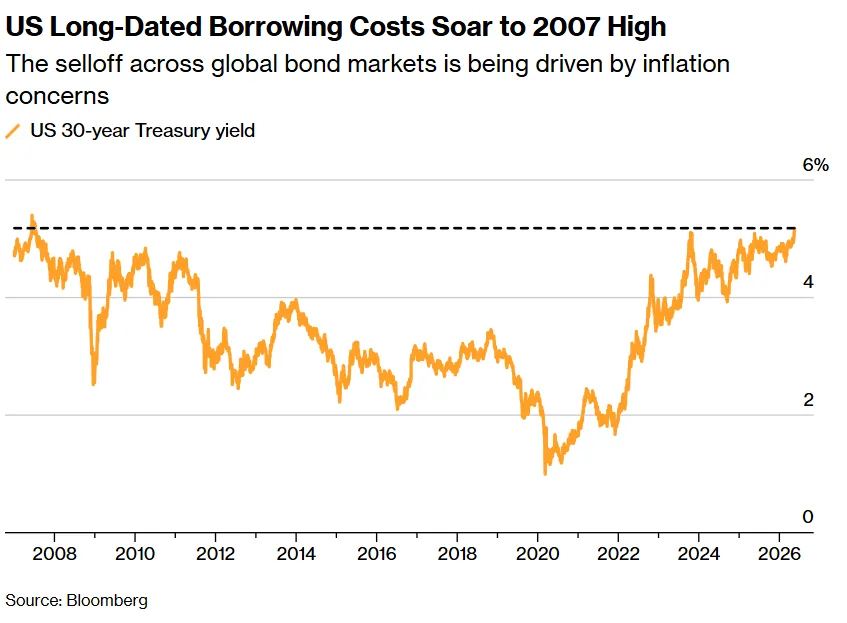
There are already signs capital is returning. The Mortgage Bankers Association expects commercial mortgage originations to reach roughly $805B in 2026, up 27% from 2025. Trepp also reported that bank lending for income-producing CRE properties rose 3.6% year over year in Q4 2025, signaling lenders are becoming more active again despite ongoing distress.
Importantly, the pain is not evenly distributed. Multifamily, industrial, and retail fundamentals remain relatively resilient compared to office, according to JPMorgan’s 2026 CRE outlook.
What’s Next
The next phase of the CRE cycle will likely bring more forced sales, discounted refinancings, and lender-led restructurings, especially for aging office buildings and overleveraged assets acquired during the low-rate era.
At the same time, investors with available capital are preparing to capitalize on repriced assets. Some lenders are already moving beyond defensive workouts and taking operational control of distressed properties to reposition them for recovery.
Parkview Financial, for example, recently foreclosed on two Baltimore apartment towers tied to a defaulted $45M loan. CEO Paul Rahimian told Bloomberg the lender plans to renovate and reposition the properties over the next 12 to 24 months to create value.
That strategy may become increasingly common as lenders transition from delaying losses to actively managing distressed real estate. The cleanup process is still early, but the market is finally moving toward resolution instead of postponement.