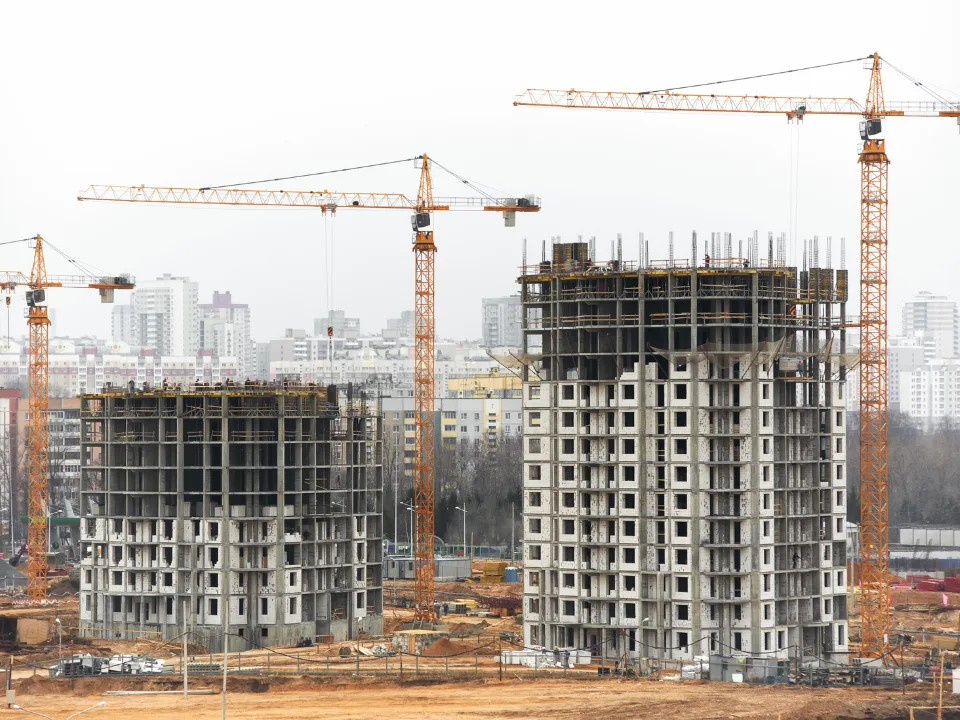




- US office construction dropped to its lowest level since 2012, with just 17.2M SF currently underway, according to Newmark’s Q1 2026 office report.
- Leasing activity improved for a third straight quarter, but landlords continue offering record tenant improvement packages as effective rents remain pressured.
- Developers are concentrating most new office projects in Sunbelt markets like Dallas, Miami, and San Diego, creating the potential for localized oversupply through 2028.
According to Globe St, office construction activity across the US has slowed to a near standstill as developers continue pulling back from a sector still adjusting to hybrid work and elevated vacancy. Newmark’s Q1 2026 US Office Market Conditions & Trends report found only 17.2M SF of office space under construction nationwide, the lowest level in 14 years.
At the same time, leasing fundamentals are showing incremental improvement. Net absorption reached 4.5M SF in Q1 2026, marking the third consecutive quarter of positive demand, while vacancy ticked down to 20.2% from a recent peak of 20.5% in mid-2025.
Get Smarter about what matters in CRE
Stay ahead of trends in commercial real estate with CRE Daily – the free newsletter delivering everything you need to start your day in just 5-minutes
Hybrid Work Reshapes Office Demand
Hybrid work continues to compress office footprints even as tenant demand stabilizes. According to Newmark, average office space per employee has fallen 7.5% since 2020, while lease sizes are running roughly 10.5% below pre-pandemic averages.
Still, occupiers are not abandoning offices altogether. Newmark reported that 76% of tenants plan to either maintain or expand their office footprints at lease expiration, reinforcing signs that the market may be nearing a floor after several years of contraction.
The Details
Newmark expects just 13.6M SF of office completions in 2026, a dramatic decline from historical delivery levels. The shrinking pipeline reflects tighter financing conditions, persistent vacancy concerns, and uncertainty around long-term workplace strategies.
Leasing volume rose 7.5% year over year in Q1 2026, though activity remains well below pre-2020 norms. Demand also continues concentrating in higher-end product, with four- and five-star buildings accounting for more than half of leasing volume during the quarter.
Concessions Replace Rent Growth
While asking rents increased 2.6% year over year, effective rents remain under pressure as landlords continue using aggressive concessions to attract tenants. Newmark said tenant improvement allowances in major gateway markets now sit roughly 75% above pre-pandemic levels.
That dynamic highlights a widening gap between headline rents and the actual economics of office deals. Owners are increasingly preserving nominal pricing while quietly absorbing higher build-out costs and free-rent packages to secure occupancy. A similar pattern is emerging in multifamily, where landlords are scaling back how often they offer concessions but increasing the value of incentives to maintain leasing momentum in competitive markets.
Why It Matters
The office market’s recovery remains uneven, but the collapse in new construction could eventually help rebalance supply and demand. With fewer projects breaking ground, future vacancy growth may slow materially in markets where development pipelines have dried up.
At the same time, the sector continues splitting between top-tier assets and older commodity buildings. Flight-to-quality leasing trends suggest institutional capital and tenant demand are concentrating around newer, amenitized properties, while lower-quality offices face growing obsolescence risk.
What’s Next
Office development remains concentrated in Sunbelt metros like Dallas, Miami, and San Diego, according to Newmark. Together, those markets account for more than half of current office construction. As projects deliver through 2028, some markets could face localized supply pressure.
Nationally, the slower construction pipeline could support a healthier leasing environment over the next few years if demand keeps stabilizing. Still, hybrid work remains the biggest variable. Long-term occupancy growth depends on whether workplace patterns reach a lasting equilibrium.