



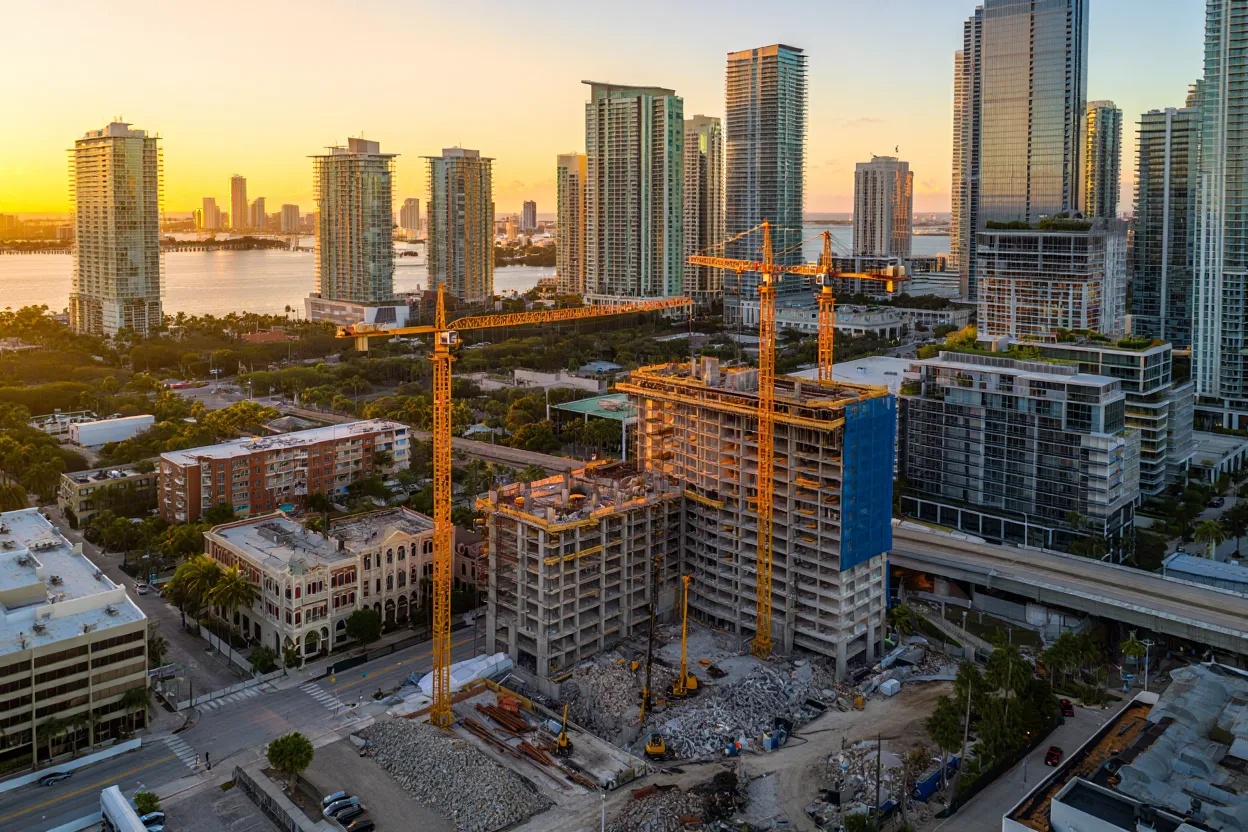



- Ken Griffin is doubling down on Miami, unveiling new plans for Citadel’s multi-billion dollar headquarters with expanded office space and new residential units.
- The updated proposal pivots away from a hotel component in favor of a 300-unit apartment building and an enlarged office footprint, following Griffin’s public clash with NYC Mayor Zohran Mamdani over luxury property taxes.
- Griffin’s strategy signals Miami’s growing role as a financial hub as top-tier firms contend with changing tax and regulatory climates in legacy markets like New York City.
NYC Tax Spat Spurs Miami Ambitions
Ken Griffin is making a bigger Miami play after a public face-off with New York City leadership, Bloomberg reports. Following Mayor Zohran Mamdani’s campaign for a new luxury property tax targeting absentee billionaires—using Griffin as its poster child—the Citadel founder has escalated his Brickell district headquarters development along Biscayne Bay. Updated filings with Miami-Dade County reveal the company is leaving behind prior hotel plans to prioritize more office space and add a 300-unit apartment building, along with a 1,420-space parking garage, adjacent to Griffin’s upcoming office tower.
This Miami expansion coincides with uncertainty over Citadel’s much-hyped $6B Manhattan office project, which the firm now openly says is “at risk” amid New York’s shifting tax landscape. The move cements Miami’s momentum as major financial players respond dynamically to public policy and real estate costs across key markets.
Get Smarter about what matters in CRE
Stay ahead of trends in commercial real estate with CRE Daily – the free newsletter delivering everything you need to start your day in just 5-minutes
Brickell’s Billionaire’s Row Transformation
Griffin’s deepening Miami commitment follows years of piecemeal acquisitions in Brickell. His team recently completed the buyout of all units in a 22-story condo tower across from the future Citadel site, setting up demolition for further development. In just four years, Griffin has assembled roughly five acres spanning two blocks, including three strategic property purchases totaling $700M. The latest development offering drops a planned hotel to carve out additional space for Citadel’s global headquarters and reserves the option for a hotel later on a newly acquired parcel nearby.
The only property Griffin doesn’t control on the block is a 1905 historic structure owned by the city and home to Dade Heritage Trust. It will be surrounded by the extensive Griffin-led complex. This methodical land strategy underpins Citadel’s intent to anchor Brickell as a premier business address, signaling to peers that South Florida is prime for new flagship projects.
Headquarters Expansions Outpacing New York
Griffin’s Miami push closely tracks New York’s fiscal environment. Mayor Mamdani campaigned to tax ultra-wealthy second-home owners and directly targeted Griffin. He also filmed videos outside Griffin’s $238M Manhattan penthouse. Citadel leaders called the move “shameful.” Bloomberg reported that internal memos now place Citadel’s $6B Manhattan project under review. Meanwhile, Griffin keeps telling investors and civic leaders that Citadel will “double down” on Miami. That shift also follows Citadel’s broader move toward a larger pure-office footprint in Brickell.
Citadel has quickly become one of Miami’s most visible corporate boosters. The firm moved from Chicago in 2022 after political clashes and concerns about crime. That relocation mirrored a broader flow of capital and workers into South Florida. Griffin has also become an active local player. Beyond commercial holdings, he has invested hundreds of millions in philanthropy and personal real estate. Together, those moves raise Miami’s profile as an HQ market for finance, tech, and professional services.
Why It Matters
Citadel’s revised Miami plans go beyond one billionaire’s headline-grabbing bet. They show how regulatory pressure now reshapes CRE decisions across entire sectors. Griffin’s policy comments sharpen that point. He said Citadel needs to “double down on our bet in Miami.” That language shows corporate leaders may answer city tax initiatives with visible investment shifts. At the same time, financing, talent, and tenant demand keep converging in Sun Belt markets. Miami’s Class A office vacancy reached roughly 18% last quarter, according to JLL’s Q1 2026 report.
For Miami, Griffin’s expansion points to fresh demand for trophy office assets in Brickell. It also supports new ground-up mixed-use development in the region’s prime finance corridor. Citadel’s phased plan replaces aging housing with apartments, parking, and office space. That strategy could ease Miami-Dade’s multifamily oversupply while attracting more corporate tenants. However, the lone historic structure on the block adds another layer. The project will test how Miami balances heritage preservation with fast skyline growth.
Meanwhile, a stalled or canceled Manhattan tower could reset New York’s development pipeline. The episode shows how tax policy now affects more than household migration. It can also shift the regional balance of headquarters investment. In a competitive and mobile industry, this case sets a clear precedent. Fiscal environments can shape where major firms place both talent and capital.
What’s Next
Griffin’s Miami filings set the stage for a redevelopment process that will include demolition of the recently acquired Solaris condo tower, new multifamily and office construction, and possibly a future hotel. While the main hotel element is off—for now—project plans could adapt as negotiations and market signals evolve. The fate of Citadel’s Manhattan tower remains undecided, with further updates likely as New York’s property tax debate continues. Miami’s ascent as a headquarters destination for financial and professional services seems poised to accelerate, especially as other firms watch how this latest chess move from Citadel plays out in the Sun Belt CRE landscape.