



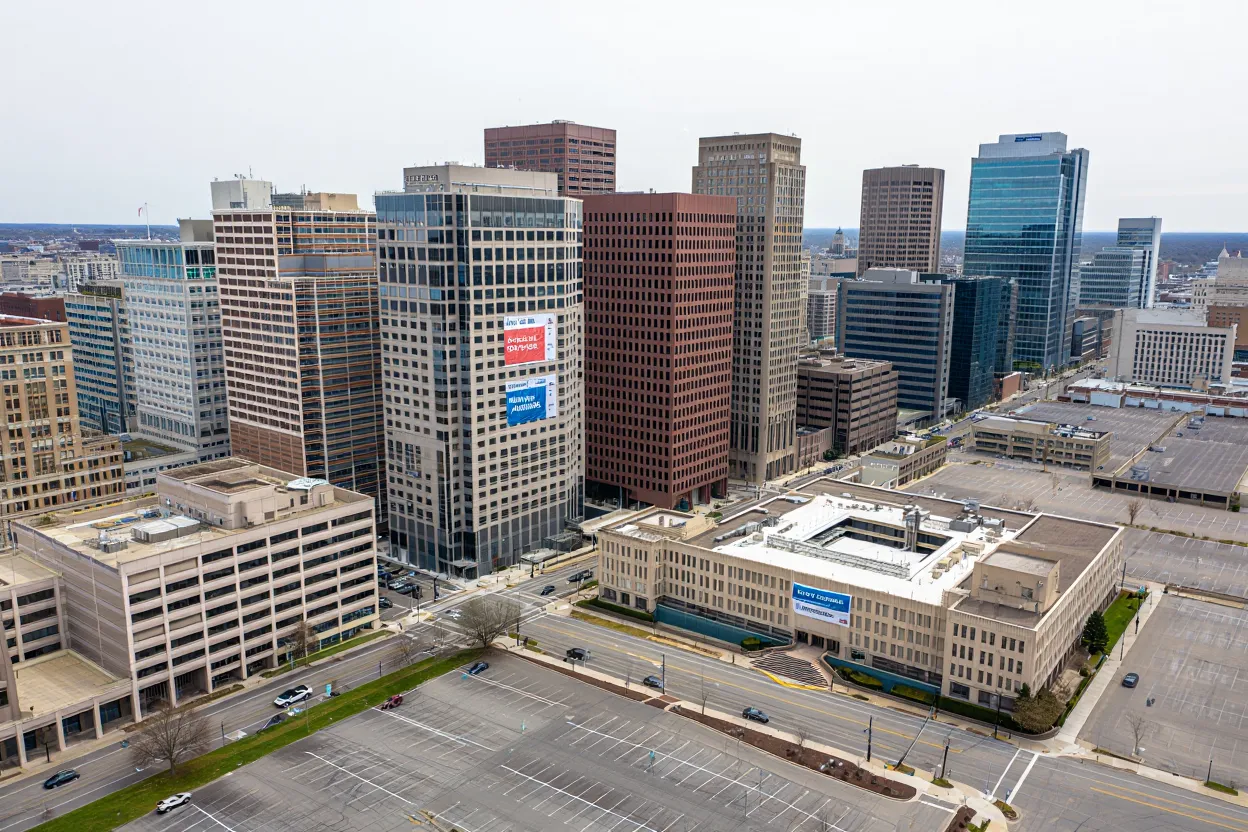
- Distressed office transactions now make up 34.6% of central business district deals nationally since 2024, per Yardi Research.
- Average national office vacancy fell to 17.6% in May, but physical attendance remains stagnant at around 55%.
- Valuation pressures have driven steep discounts on high-rise CBD assets, with some flagship buildings trading at losses of over 50% versus pre-pandemic prices.
Surge in CBD Office Distress
US office markets are showing a marked divergence, as distress and deep pricing discounts cluster in central business districts (CBDs). According to CommercialCafe’s review of Yardi Research data, 19.4% of all office trades since 2024 were distressed, a steep rise from 6.2% during 2021–2023. However, in CBDs, that share has soared to 34.6%, far outpacing the 24.5% in broader urban areas and 12.1% in suburban markets. Notably, the average distressed deal has doubled in size post-pandemic, from 100,000 SF to 200,000 SF, slicing value off larger towers that struggle to adapt to shifting occupier needs. Seattle’s US Bank Center, for instance, is facing a 54% valuation haircut against its 2019 price—an emblem of the pressure felt across primary downtowns.
Get Smarter about what matters in CRE
Stay ahead of trends in commercial real estate with CRE Daily – the free newsletter delivering everything you need to start your day in just 5-minutes
The Details
Yardi’s May 2026 data pins US office vacancy at 17.6%, down 180 basis points year-over-year. Office listing rates averaged $33.61 PSF, 1.4% lower than May 2025 figures. The country’s office construction pipeline ticked up slightly to 28.73M SF underway, while total office sales year-to-date reached over $23B across 1,025 deals, averaging $213 PSF. Manhattan led sales volume ($3.7B YTD), trailed by San Francisco ($2.3B) and the Bay Area ($1.7B). Despite national vacancy improvements, attendance plateaus at 55% per Kastle’s Back-to-Work Barometer. CBD asset values have contracted most: since 2024, 73% of repeat-sale CBD properties traded at discounts, versus 48% in urban and 42% in suburban locations.

Flight to Quality Amplifies Urban Core Pressure
Tenant demand continues to consolidate around top-tier assets, leaving many aging trophy CBD properties exposed. According to Yardi, the pain is exacerbated in markets battling tech layoffs and the entrenchment of hybrid work. In Seattle, for example, layoffs in the tech sector and remote policy have deepened core area vacancy and spurred sharp asset write-downs.

Nuanced market trends are visible: Miami and Manhattan sport the lowest big-market vacancy (13.2% and 13.1%, respectively), while Sun Belt and Midwest metros offer cheaper rents. Western and Northeastern markets are seeing higher asking rents, with San Francisco’s $62.11 PSF and Manhattan’s $69.29 PSF more than doubling the national average.

Why It Matters
The gap between strong CBD assets and distressed towers will shape office investment strategy. Yardi Research found that nearly three-quarters of traded CBD assets sold at losses since 2024. That trend highlights the strength of today’s repricing cycle.
Moreover, vacancy rates alone do not capture deeper usage and valuation issues. Average vacancy has improved, yet office attendance remains near 55% nationwide. That trend suggests occupiers have made lasting behavioral changes.
Tech-focused markets such as San Francisco have slowed vacancy growth through AI demand. However, older towers still face significant risks. In Portland, office sale prices recovered to $119 PSF in 2026. Even so, values remain far below previous peaks after a 73% drop since 2020.
Meanwhile, the flight to quality has lifted values and occupancy in select trophy assets. Most Class B and C buildings still face obsolescence risks. Owners may need to reposition or redevelop them. With only 28.7M SF under construction, supply growth should stay limited. Recovery will depend on owners adapting properties to new workplace needs.
What’s Next
Office landlords show cautious optimism as construction stays muted and vacancies decline. Gateway markets such as San Francisco and Manhattan continue to improve. Recent leasing gains in Manhattan also suggest that top-tier buildings can still attract tenants despite broader CBD weakness. However, fundamentals remain sharply divided.
Asset flexibility will play a key role in attracting tenants and managing risks. Owners may pursue conversions, renovations, or mixed-use projects. At the same time, AI adoption, inflation, and changing work habits will create new challenges. Observers expect more distressed sales as loans mature. Buyers could acquire assets at prices unseen in more than a decade. Successful investors will focus on repositioning and alternative uses rather than waiting for conditions to improve.