



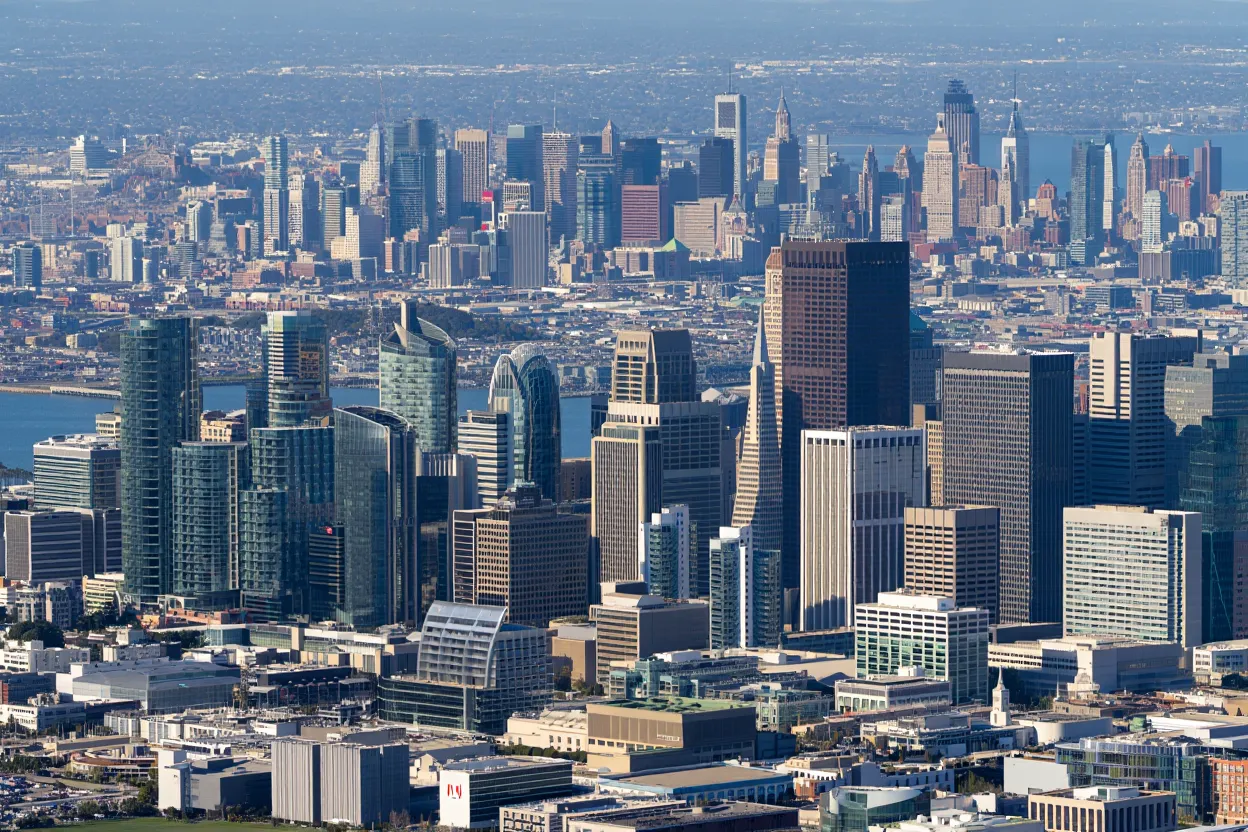



- The Bay Area, Seattle, Boston, and a handful of metros are setting the pace for US AI infrastructure and workforce development, per Hubble and Yardi Research.
- US cities were ranked on metrics including patents, STEM talent, data centers, tech employment, and research hubs, grouping them into four readiness stages.
- The race to become an AI hub is expanding beyond coastal tech capitals, driving demand for data centers, R&D facilities, and flexible workspace in emerging markets.
Four Stages Define America’s AI Landscape
The geography of AI innovation is shifting, with the Bay Area still setting the global benchmark—and a growing roster of US metros rapidly climbing the AI ladder. According to Hubble’s 2026 analysis, the country’s leading 67 metro areas were evaluated on five key AI competitiveness factors: innovation capacity, talent pipeline, tech workforce strength, enterprise innovation footprint, and the concentration of innovation-oriented tech firms. Twenty metros stand out and split into four tiers: AI Capitals (San Jose, San Francisco), National Leaders (including Seattle, Boulder, DC, Durham, Boston), Established Hubs (Austin, Raleigh, NYC, etc.), and High-Potential Ecosystems (San Diego, Ann Arbor, Dallas, among others).
AI sector growth is happening at different speeds and scales across these clusters: while the Bay Area’s dominance is clear, cities like Austin, Durham, and Denver have positioned themselves as viable contenders, each leveraging unique industry specializations and research assets to climb the ranks. The expansion of this ecosystem directly impacts demand for commercial infrastructure—think data centers, lab space, and coworking sites across markets both established and emerging.
Get Smarter about what matters in CRE
Stay ahead of trends in commercial real estate with CRE Daily – the free newsletter delivering everything you need to start your day in just 5-minutes
The Details
The Bay Area maintains pole position in Hubble’s ranking, with San Jose earning the top spot via unrivaled patent output (8,383 AI patents from 2020–2024), a STEM graduation share of 62.5%, and dense R&D center presence. San Francisco follows closely, led by heavy AI headquarters density (home to OpenAI, Anthropic), strong investment activity, and 4,517 patents. National Leaders include Seattle, where 9.3% of all jobs are in tech and AI-specific investment totaled $680M in the first eight months of 2025. Boulder, DC, Durham, and Boston round out this tier, each leveraging elite research universities and high rates of STEM graduates (nearly 50% in Boulder, for instance).
Established Hubs like Austin, Raleigh, New York, Manchester (NH), and Trenton (NJ) combine steady patenting, tech job growth, and growing startup or R&D communities. High-Potential Ecosystems such as San Diego, Dallas, Denver, and Madison (WI) distinguish themselves through rapid tech expansion, defense and applied AI spin-outs, or strong research university presence, even if current overall patent or VC flow lags behind the leaders. Growth in these regions is tightly tied to improvements in co-working density, educational pipeline, and new R&D facilities.
AI Infrastructure and Talent Are Reshaping Metros
Behind these metro-level rankings is a clear trend: the battle for AI leadership is as much about physical infrastructure—data centers, R&D labs, and workspace—as it is about talent. For example, Northern Virginia and Dallas are now two of the nation’s largest data center clusters, with DC’s region outpacing even Silicon Valley in raw capacity. Cities like Durham and Huntsville are mixing university-led research and proximity to defense or biotech sectors to generate new AI companies.
The breadth of use cases, from applied biotech in Raleigh-Durham to media-tech AI in Los Angeles and New York, means sector growth is less concentrated than previous tech waves. Smaller metros, like Manchester and Ann Arbor, are punching far above their weight by leveraging research institutions and STEM pipelines, even as total patent and investment numbers remain comparatively modest. This geographic dispersion is reshaping the calculus for CRE demand, as emerging AI hubs seek lab space, tech campuses, flexible layouts, and connectivity centered around urban universities and data infrastructure.
Why It Matters
The data confirms what many CRE professionals are seeing on the ground: the AI buildout is now national, not just coastal. High-density patenting, deep STEM pipelines, and active VC flows remain strongest in traditional leaders, but cities from Denver to Dallas are fast closing the gap as enterprise AI adoption broadens. Between 2021 and 2025, tech employment in Seattle grew 21.4%, compared to the overall US CRE job base flatlining over the same period, according to Hubble and BLS data. That growth contrasts with Seattle’s challenged office market, where some legacy assets have traded at steep discounts in recent years. In Austin, the local tech company count jumped 30.4%—an outlier among top-20 metros and a strong indicator of startup velocity translating into CRE demand, especially in flexible or shared space.
This decentralization matters for CRE. Tenant demand is no longer bottlenecked in Silicon Valley or Manhattan, with incubators, research consortia, and AI startups seeking both surge capacity and lower-cost space in Sun Belt and Midwest metros. The rising presence of R&D centers, new data center investment, and the rapid increase in coworking density are direct responses to this shift. As the talent and capital fueling AI migrates outward, the real estate footprint—across office, lab, data center, and mixed-use—will follow. According to the report, these metrics will increasingly shape investment, leasing, and development decisions in the next five years.
What’s Next
The CRE outlook for AI-driven metros remains strong, but competition is set to intensify. As more cities invest in data and research infrastructure, the traditional talent advantage of coastal hubs will blur. Expect capital and company formation to keep spreading, with emerging AI ecosystems in places like Dallas, Denver, and Madison leveraging regional strengths for outsized impact. Flexible workspace providers and data center operators will find growth opportunities following this expansion. For CRE stakeholders, monitoring not only where AI patents and startups cluster, but also tracking shifts in educational pipelines, STEM graduation rates, and infrastructure rollouts, will be key to anticipating tenant demand and development priorities in the years ahead.