




- Austin leads the US in office-using employment growth, posting a 34% increase from 2019 to 2025.
- Despite this, the city’s office vacancy rate stands at a high 22.4%, well above the 18.6% national average.
- Experts expect vacancies to gradually decline, but tenant-favorable conditions will likely persist for at least another year.
Sun Belt Strength in Office-Using Job Growth
According to Bisnow, Avison Young’s latest report positions Austin as the country’s most dynamic market for office-using job gains, underscoring a broader Sun Belt trend. The growth narrative includes Raleigh, Nashville, Dallas, and Charlotte—all taking the top five slots. Austin saw office-using employment expand by roughly 34% between 2019 and 2025, outpacing Raleigh’s 23% growth. This robust employment environment has been fueled by ongoing momentum in the professional, technology, and business services sectors—fields closely tied to office occupancy trends. The clustering of Sun Belt cities at the top reflects a longer-term migration of talent and capital away from pricier coastal hubs.
Get Smarter about what matters in CRE
Stay ahead of trends in commercial real estate with CRE Daily – the free newsletter delivering everything you need to start your day in just 5-minutes
The Details
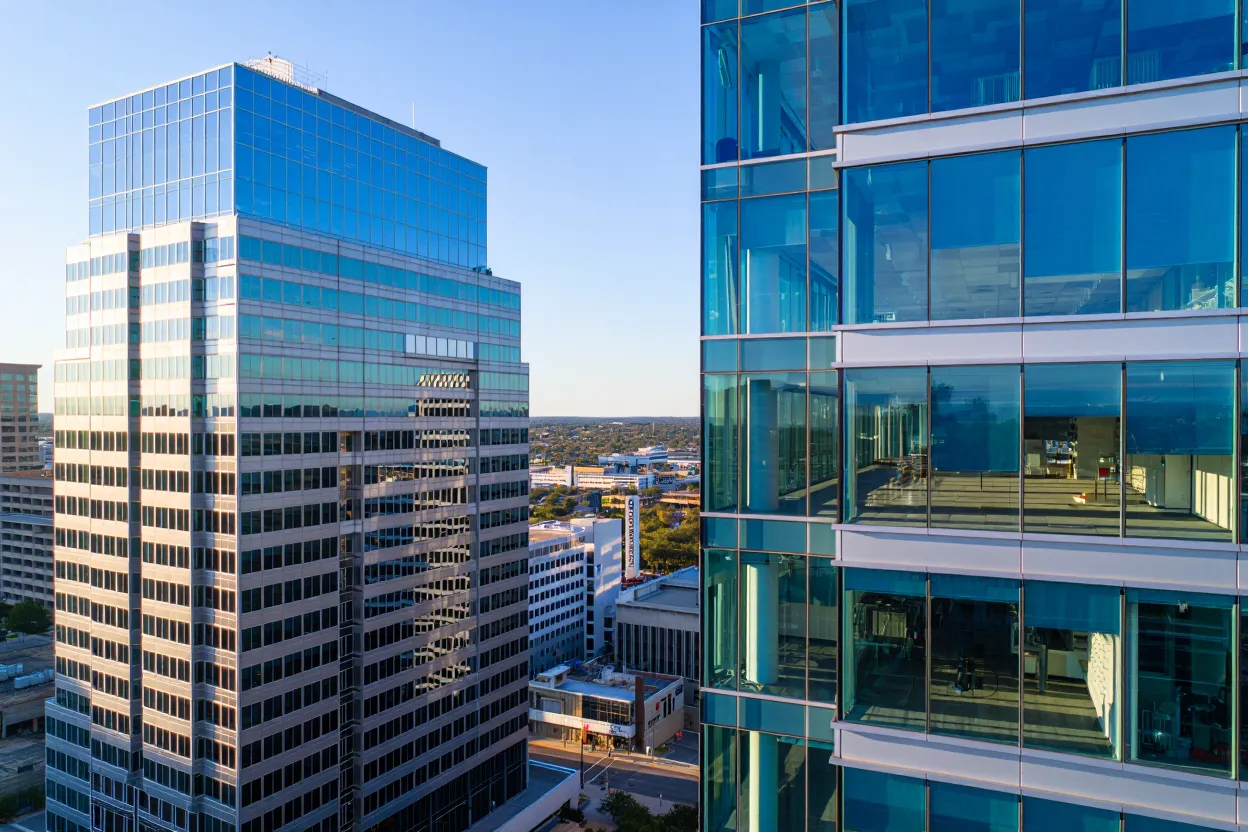
Despite this sustained job growth, Austin’s office real estate tells a very different story. According to Colliers, the Q1 2026 office vacancy rate was 22.4%, nearly unchanged from 22.5% the previous year, and a full 3.8 percentage points above the national average cited by CBRE. The source of the disconnect is clear: since 2020, the city delivered close to 14M SF of new office space—far more than local demand could immediately absorb, per Cushman & Wakefield. Construction has since slowed substantially, with just 756,000 SF set to finish by the end of Q3 according to CBRE. Notably, positive net absorption returned in Q1 as 110 tenants sought 4.4M SF, signaling tenant interest is finally catching up to supply.
A Post-Pandemic Supply Glut
Austin’s supply-demand mismatch is not unique but is among the country’s starkest examples of overbuilding during a period of unprecedented office market uncertainty. Like other high-growth metros, Austin rode a construction boom post-2020, even as remote work and space reductions clouded near-term demand. The oversupply that resulted has depressed occupancy levels and empowered tenants in lease negotiations. Nationally, CBRE recorded eight consecutive quarters of improving demand, but Austin’s overall vacancy remains stubbornly high, requiring more time to burn off new deliveries than some peers.
Why It Matters
Austin highlights the split emerging across the US office market. Colliers reports a 22.4% vacancy rate. Developers added 14M SF since 2020, outpacing even strong job growth. For tenants, this creates a rare opportunity. Landlords must compete harder, offering bigger concessions and more flexible leases. Avison Young’s Ariel Guerrero expects conditions to shift eventually, but premium buildings will benefit first. Trophy and top-tier Class-A properties should fill faster as tenants upgrade. Meanwhile, lower-quality buildings may need renovations or new uses to regain occupancy.
Austin’s trends matter beyond the city. Sun Belt office markets often signal migration patterns, workplace changes, and capital movements. If Austin sustains slower construction and stronger absorption, landlords could regain pricing power by late 2026 or early 2027. For now, tenants still hold the advantage in Austin and many other fast-growing metros.
What’s Next
CRE professionals should expect Austin’s vacancy rate to decline gradually as new supply slows and leasing continues. However, the recovery will remain uneven. Trophy and Class-A buildings will likely stabilize first, reinforcing the nationwide flight-to-quality trend. Recent office market data also shows companies continue favoring newer, amenity-rich buildings over older space. Tenants still have a limited chance to secure favorable lease terms. Avison Young expects the market to become less tenant-friendly over the next year. Absorption rates and the ability of older assets to adapt will determine when balance returns to Texas’ capital.