






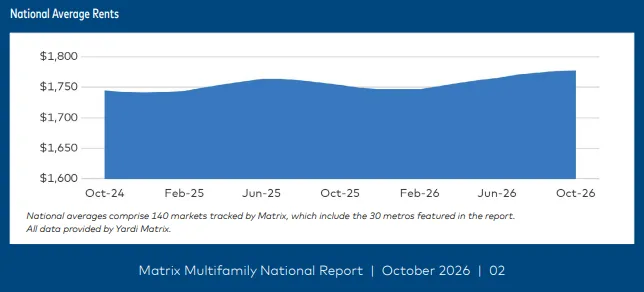
- U.S. advertised apartment rents rose $1 to $1,777 in October, the first October increase since 2022, with annual growth accelerating to 1.4%, the strongest in over three years.
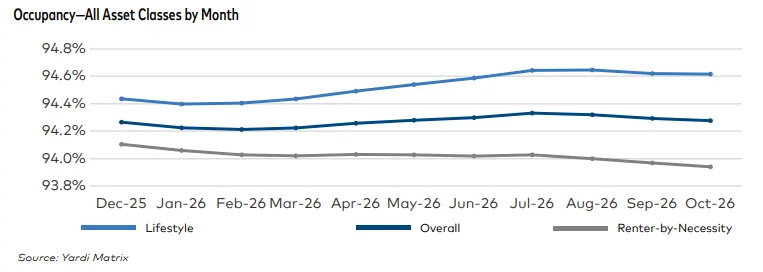
- San Francisco, Chicago and New York lead annual growth, while Sun Belt metros stay negative but are narrowing. Occupancy slipped to 94.3%, down 0.2% from a year ago.
- The 10-year Treasury’s jump from 4.38% to 5.31% erodes values and stalls deals. Sales of $62.6B through Q3 trail last year’s $101.4B full-year total.
Apartment landlords got a small win in October. National advertised rents ticked up $1 to $1,777, according to Yardi Matrix, marking the first gain for the month since 2022.
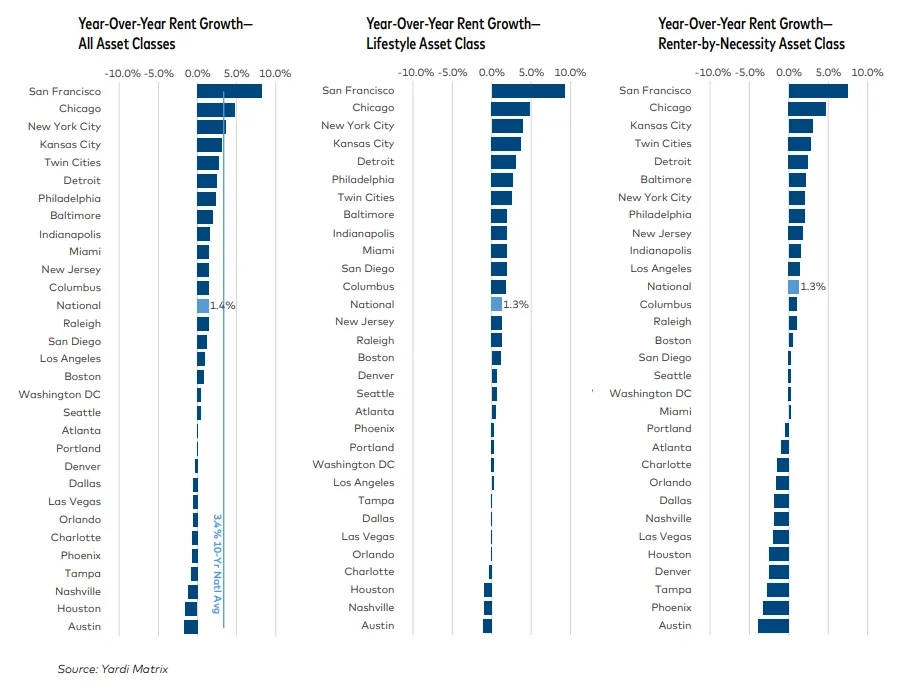
Annual growth sped up to 1.4%, its highest reading in over three years.
Get Smarter about what matters in CRE
Stay ahead of trends in commercial real estate with CRE Daily – the free newsletter delivering everything you need to start your day in just 5-minutes
Gateway and Midwest Lead
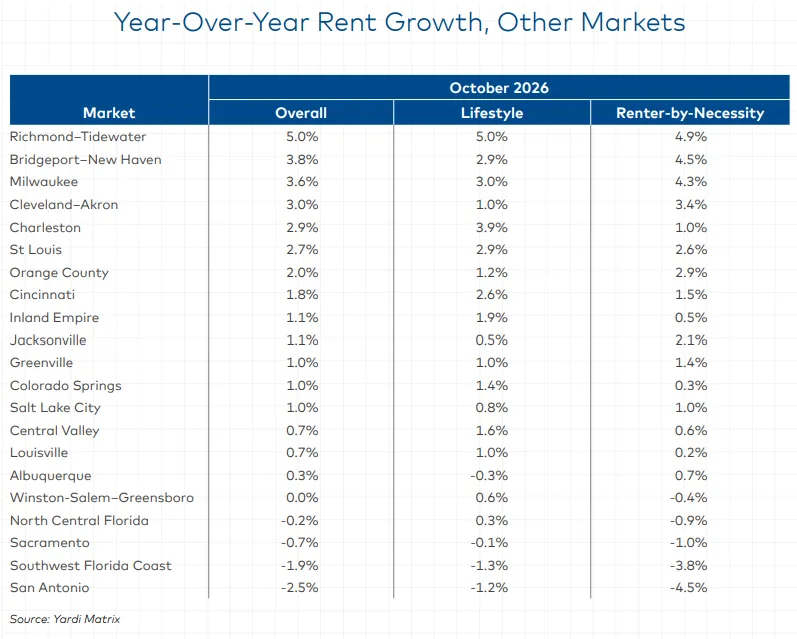
San Francisco paces the country at 8.2% annual growth, helped by AI-related demand, per Yardi Matrix. Next come Chicago at 4.8% and New York at 3.6%, then Kansas City and the Twin Cities at 3.1% and 2.7%.
The Sun Belt is still negative but improving. Austin is down 1.7%, its mildest decline in over three years, with Houston at -1.5%, Nashville at -1.2%, Tampa at -0.8% and Charlotte at -0.7%.
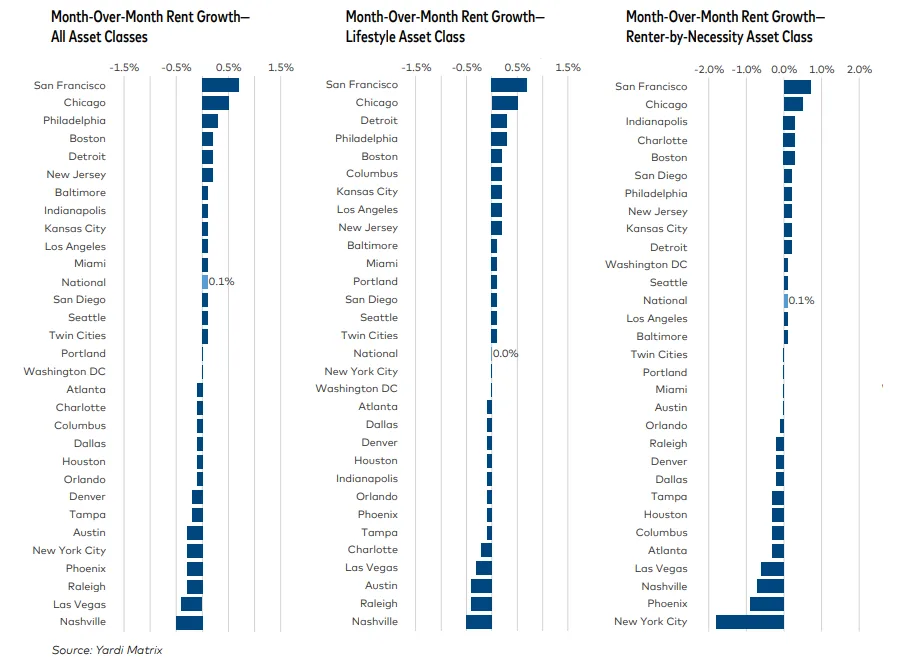
Month to month, rents rose 0.1% and 14 of the top 30 markets gained. New York slipped 0.3%, its third straight monthly decline, though Yardi reads that as leveling off after big gains rather than weakness.
Occupancy Lags Rents
Stabilized occupancy held at 94.3%, down 0.2% from a year ago. Only six of the top 30 markets improved year over year, paced by San Francisco at 0.7% and Austin at 0.4%.
Columbus, Indianapolis and Las Vegas posted the biggest slips, each down 0.6%.
Demand is cooling toward normal. First-half absorption of about 245,000 units fell 27.5% from last year but sits near the 250,000 first-half average of 2017-2019, and Yardi forecasts fewer deliveries through 2027.
Zoom Out
Yardi’s read lines up with what we saw from Apartment List, which found annual rent growth positive again for the first time since mid-2023, with a national median of $1,384, up 0.1%.
The Sun Belt picture is slower to turn. MAA cut its 2026 guidance after Q3 revenue slipped 0.4% on a Sun Belt recovery that is arriving later than expected, as we reported.
Higher Rates Weigh on Values
Investors expected the 10-year Treasury to ease toward 4% this year. Inflation and the Iran conflict pushed it up more than 90 bps instead, to 5.31% in early October from 4.38% in late June, before it eased to about 4.85%.
Deal volume reached $62.6 billion over the first nine months, leaving 2026 on pace to match or trail 2025’s $101.4 billion. Sales peaked at $234.0 billion in 2021 and bottomed at $70.1 billion in 2023.
Yardi notes buyers have historically wanted about 250 bps over the risk-free rate, which implies 7-8% yields today against the 5-6% most recent deals traded at. Sellers may need to cut prices 3-6% to keep contracts from falling apart.
Build-to-Rent Holds Up
Build-to-rent asking rents slipped by $4 to $2,247 last month yet sit 1.1% above a year ago, and occupancy is steady at 94.9%.
Tightest of all is the renter-by-necessity tier, nearly full in Las Vegas, the Twin Cities and Austin (98.5% to 98.9%).
Why It Matters
Rents are healing faster than values. Owners see better top-line trends, but financing costs are keeping buyers and sellers apart.
That tracks with Marcus & Millichap’s view, which we covered, that sellers may soon face a choice between lower prices and fewer deals.
What’s Next
Yardi flags winter seasonality as a near-term drag. It also lists renewed energy disruption from the Iran conflict, worries over an AI-driven equity bubble and possible policy shifts after Democratic congressional wins as risks to apartment demand.