






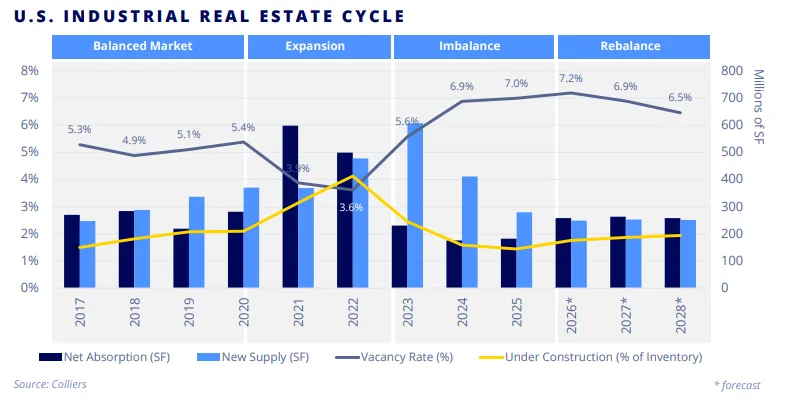
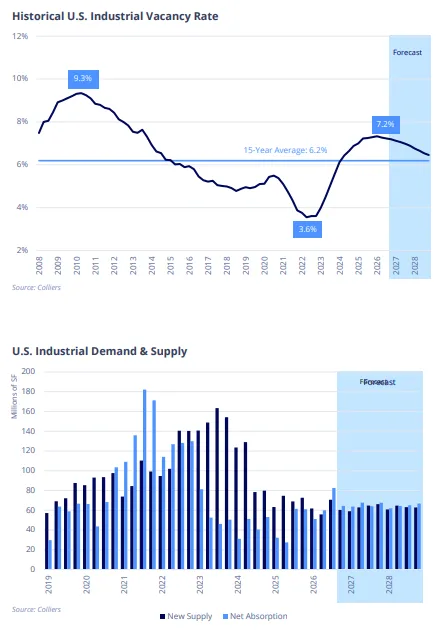
- Colliers reports 83 million square feet of Q3 net absorption, the highest since 2022, against 71 million square feet of new supply, lowering vacancy to 7.2%.
- Dallas-Fort Worth, Chicago and Houston led demand, while the Midwest and South took nearly 80% of absorption and the Northeast and South saw vacancy edge up.
- Construction starts are recovering, with 329 million square feet underway, up 19% year over year yet 54% below the 2022 peak, pointing to a more selective cycle.
U.S. industrial absorption climbed to 83M SF in the third quarter, the strongest quarter since 2022, according to Colliers.
That topped the 71M SF of deliveries again, the second quarter running, and vacancy slid to 7.2%.
Get Smarter about what matters in CRE
Stay ahead of trends in commercial real estate with CRE Daily – the free newsletter delivering everything you need to start your day in just 5-minutes
The Balance Shifts
Over the past 12 months, absorption totaled 255M SF against 261M SF of deliveries. A year earlier, deliveries outran demand by roughly 112M SF.
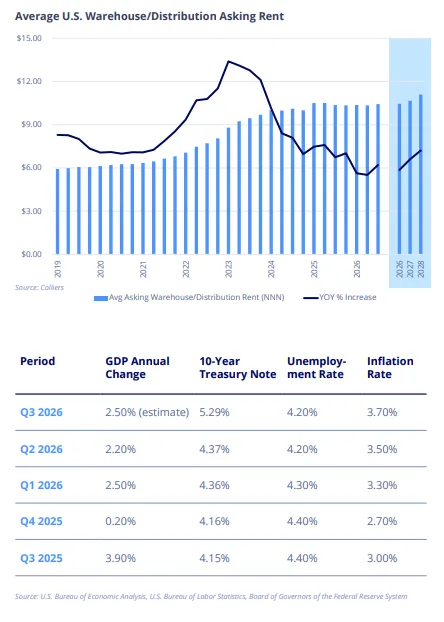
Asking rents for warehouse and distribution space averaged $10.43 per SF, slightly above last year. Colliers says rents have largely stabilized after the supply-driven correction.
Who’s Leading
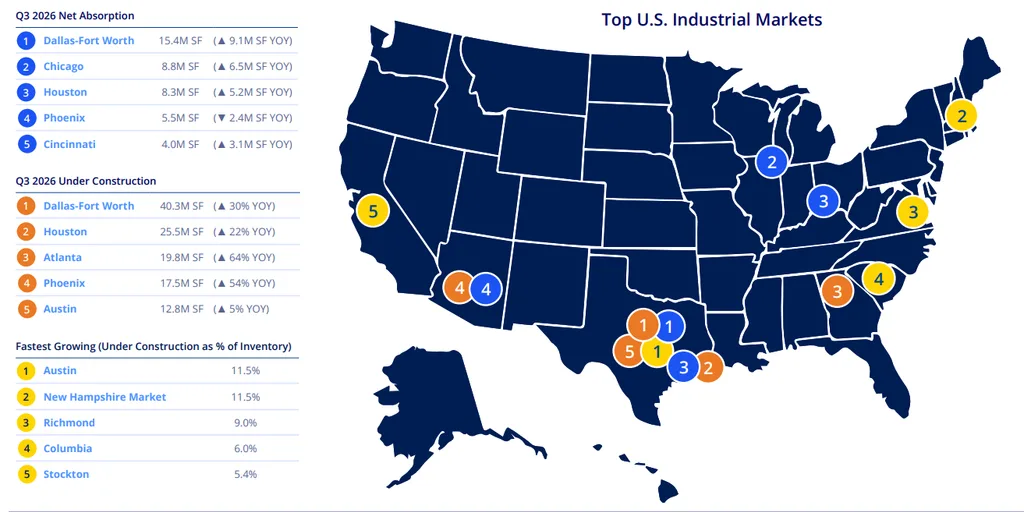
Dallas-Fort Worth absorbed 15.4M SF, followed by Chicago at 8.8M SF and Houston at 8.3M SF. The Midwest and South captured almost 80% of national demand.
The Midwest posted the tightest region at 5.1% vacancy, down 22 bps. The West fell 16 bps to 7.5%, while the South (8.5%) and Northeast (8.1%) edged higher.
Colliers saw lower vacancy in 34 of its 79 markets. The steepest declines came in Columbus, Indianapolis, Stockton, Charleston, Memphis and Phoenix.
Development Returns
Space under construction reached 329M SF, a 19% annual increase, though that is still 54% below the 711M SF peak at the end of 2022. Dallas-Fort Worth has 40.3M SF underway, Houston 25.5M SF and Atlanta 19.8M SF.
Austin stands out with 11.5% of its inventory under construction and a 19.2% vacancy rate.
Zoom Out
Yardi Matrix tells a similar story on supply. We covered its report that industrial starts hit 274.4M SF through three quarters, with power access as the top siting constraint. Yardi’s 9.7% national vacancy reading is higher than Colliers’ 7.2%, since the two firms measure differently.
In Texas, Houston’s 8.3M SF of absorption fits recent deals like the Houston industrial campus sale that Stream Realty Partners said was 98% occupied.
Why It Matters
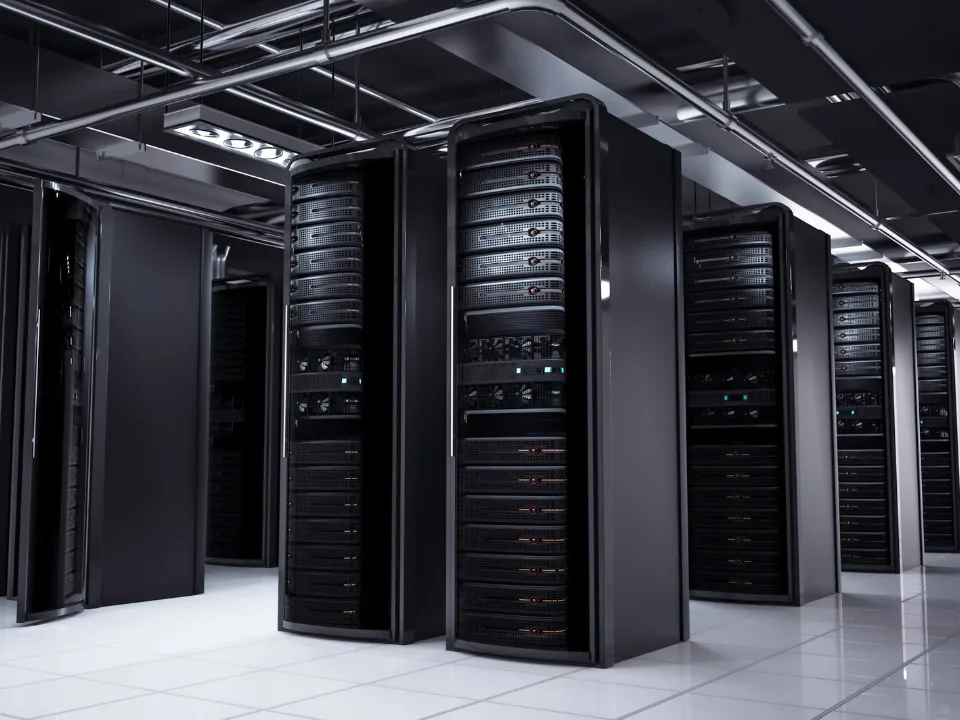
Tighter conditions help landlords in the Midwest and South first. Users tied to data center buildouts, including makers of power, cooling and electrical gear, are a growing source of demand, Colliers says.
Higher interest rates, Treasury yields and policy uncertainty are still tempering business investment, so recovery remains uneven by market.
What’s Next
Colliers expects absorption to keep meeting or beating supply, with vacancy trending lower through 2027 and rent growth improving gradually.